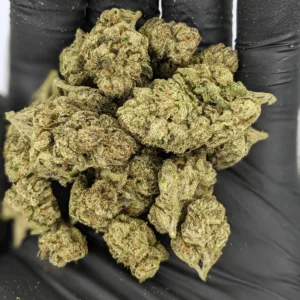
Searching for THCA flower online can lead to many different websites, product descriptions and claims about cannabis-derived products. Some pages focus on cannabinoid percentages, while others discuss product appearance, laboratory reports, hemp terminology or the legal position of THCA in different countries.
However, finding reliable information online requires more than comparing product names or advertised figures. Understanding what THCA is, how it differs from THC, what laboratory reports actually demonstrate and which national regulations apply is essential when researching this category.
At THCa King Europe, clear information and responsible communication are important when discussing cannabis-related products. This guide explains the main considerations involved in researching THCA flower online, with a particular focus on product transparency, laboratory documentation and European regulations.
Whether you are researching cannabinoid terminology or comparing information published by different websites, this article will help you understand the subject more clearly.
What Does THCA Flower Online Mean?
The phrase THCA flower online generally refers to internet searches for information about cannabis flowers containing tetrahydrocannabinolic acid, commonly abbreviated as THCA.
People searching this phrase may want to understand:
- What THCA flower means.
- How THCA differs from THC and CBD.
- What cannabinoid percentages represent.
- How to interpret laboratory reports.
- What product descriptions and batch information mean.
- Which laws apply to cannabis-derived products in Europe.
- How to identify reliable information on websites.
THCA is a cannabinoid acid naturally produced by the cannabis plant. It is chemically related to delta-9 THC, but it is not the same compound.
THCA can be converted into delta-9 THC through a chemical process known as decarboxylation. This distinction is important when interpreting product descriptions and laboratory results.
The European Union Drugs Agency (EUDA) discusses cannabis definitions, chemical composition and the importance of understanding cannabinoid measurements in its Cannabis Laws in Europe FAQ.
For further information about THCa King Europe, visit the official website.
Understanding THCA, THC and CBD
One of the most important things to understand when researching THCA flower online is that THCA, THC and CBD are different cannabinoids.
What is THCA?
THCA stands for tetrahydrocannabinolic acid. It is a cannabinoid acid found naturally in cannabis plants and is the chemical precursor to delta-9 THC.
The presence of THCA in a sample is relevant when understanding its cannabinoid composition. However, a THCA percentage alone does not establish the overall quality, safety or legal classification of a product.
What is THC?
Delta-9 THC is the cannabinoid commonly associated with the intoxicating effects of cannabis.
When THCA undergoes decarboxylation, it can be converted into THC. This is why the two compounds should be distinguished in scientific reports and product documentation.
What is CBD?
CBD stands for cannabidiol. It is another cannabinoid found in cannabis plants, with a chemical structure and properties different from those of THCA and THC.
CBD flower and THCA flower should not be treated as interchangeable product categories. Their cannabinoid profiles and regulatory considerations can differ.
For a more detailed explanation, consult the EUDA’s resource on defining cannabis.
What to Check When Researching THCA Flower Online
Not all online product descriptions provide the same level of information. A responsible approach is to look for clear, verifiable documentation instead of relying entirely on advertising language.
1. Clear product descriptions
A product description should explain what type of material is being discussed.
Cannabis flowers, concentrates, extracts, oils and infused products are different categories. Their composition, testing requirements and legal treatment may differ.
A website should avoid vague descriptions that make it difficult to identify the actual product category.
Visitors can explore the information published on the THCa King Europe homepage and navigate the shop section to review the website’s available product information.
2. Cannabinoid composition
A cannabinoid profile can provide useful analytical information about a sample.
Depending on the laboratory and testing method, a report may include:
- THCA concentration.
- Delta-9 THC concentration.
- CBD concentration.
- CBDA concentration.
- Other measured cannabinoids.
It is important to understand how the laboratory reports these figures. Results may be expressed using different units or analytical conventions.
A cannabinoid percentage should not be interpreted as a complete quality assessment. It does not independently establish purity, batch consistency or legal compliance.
3. Batch identification
Batch identification connects a product lot with its associated production or laboratory documentation.
When reviewing an online product description, check whether the associated documents identify the relevant sample or batch. A report that cannot be connected to the product being described has limited value for evaluating that product.
4. Accurate claims
Be cautious about descriptions containing absolute statements such as:
- Guaranteed legal throughout Europe.
- Completely safe.
- Identical laboratory results for every item.
- Approved for every destination country.
Such statements require strong evidence and may be misleading if they ignore national legal differences or the limitations of laboratory testing.
Why Certificates of Analysis Matter
A Certificate of Analysis, commonly called a COA, is a document that records the results of specified laboratory tests performed on a submitted sample.
When researching THCA flower online, laboratory documentation can help readers understand what has actually been measured.
Depending on the laboratory’s testing programme, a COA may include cannabinoid measurements and selected contaminant tests.
A useful document should identify the laboratory, sample, testing date, analytical methods and results.
Important COA information to examine
Laboratory name: The testing organisation should be clearly identified.
Sample reference: The document should explain which sample was analysed.
Report date: The date helps establish when the analysis took place.
Testing method: The analytical method should be identified where applicable.
Cannabinoid results: THCA and delta-9 THC should be distinguishable in the results.
Contaminant testing: Check exactly which contaminants were included in the testing programme.
Detection limits: Understand the laboratory’s reporting limits and qualifications.
A COA should not be described as a universal safety certificate. It only reports the tests conducted on the submitted sample. It does not establish that every possible contaminant was tested, that every item in a batch is identical or that the product has been authorised for sale.
For more educational material, visit the THCa King Europe blog.
THCA Flower Online and European Regulations
European regulations are an especially important consideration when researching THCA flower online.
There is no single blanket authorisation that makes every THCA-containing cannabis flower product legal throughout Europe. National laws differ, and the legal treatment of cannabis-related materials can depend on their composition, form, intended use and applicable legislation.
The EUDA published its updated Cannabis Laws in Europe FAQ on 21 April 2026. It explains the different approaches taken by European countries and discusses legislation covering recreational, medical, industrial and commercial cannabis-related products.
Understanding EU industrial hemp rules
The European Union has specific agricultural provisions for industrial hemp.
Under the relevant agricultural framework, approved hemp varieties can be cultivated for specified industrial purposes, including fibre and seeds, subject to applicable requirements.
The European Commission provides further information through its official hemp agricultural guidance.
However, these agricultural rules should not be interpreted as blanket permission to market every product derived from cannabis plants.
The EUDA explains that the rules for industrial hemp fibre and seeds do not automatically determine the legal status of all other cannabis-derived products. National controlled-substance legislation and other product regulations may also apply. <sup>Source: EUDA</sup>
Why national laws matter
When researching a cannabis-related product online, it is important to distinguish between the country where a website operates and the country where a visitor is located.
The laws governing a product can vary depending on the destination country.
Relevant questions may include:
- Is the substance controlled under national legislation?
- Does the law distinguish between THCA and delta-9 THC?
- Does the definition of cannabis include the relevant flowering material?
- Are there restrictions on possession, supply or distribution?
- Do import and export rules apply?
- Are there additional requirements for commercial products?
A product being displayed on a website does not establish that it can legally be purchased, possessed or transported in every European country.
The EUDA also explains that some cannabis-derived products may be subject to separate food, cosmetic or medicinal-product rules. See its guidance on medical and commercial cannabis-derived products.
How to Identify Reliable THCA Information Online
Searching for THCA flower online can produce many results, but not every website provides equally reliable information.
Here are several useful principles for evaluating online content.
Look for transparent information
Reliable educational content should distinguish scientific facts from marketing descriptions. It should explain what a cannabinoid measurement means and avoid making unsupported claims about product characteristics.
Check external references
A website discussing European cannabis legislation should reference recognised sources, such as government authorities, EU institutions and national regulatory agencies.
Official references are especially important when legal information may change.
Avoid relying on a single percentage
A cannabinoid percentage is only one part of a laboratory report. It cannot establish every aspect of product quality or legal status.
Understand the difference between hemp and cannabis products
The word hemp is sometimes used broadly in commercial descriptions. However, its presence on a label does not automatically establish that a product is exempt from controlled-substance legislation.
Check when information was published
Cannabis-related laws and regulations can change. An article published several years ago may no longer accurately describe the current position.
For additional educational information and website updates, visit THCa King Europe or browse the blog section.
Common Terms Used in Online THCA Research
Understanding frequently used terms makes it easier to evaluate product descriptions.
THCA flower: A term used for cannabis flower containing tetrahydrocannabinolic acid.
THCA percentage: A laboratory-reported measurement of THCA concentration in a sample.
Delta-9 THC: A cannabinoid associated with the intoxicating effects of cannabis.
Decarboxylation: A chemical process through which cannabinoid acids such as THCA can be converted into neutral cannabinoids such as THC.
CBD: Cannabidiol, a cannabinoid different from THCA and THC.
COA: Certificate of Analysis, a document containing the results of specified laboratory tests.
Cannabinoid profile: A report showing the cannabinoids measured in a sample.
Batch number: An identifier used to connect a product lot with relevant documentation.
These definitions help distinguish scientific terminology from general advertising language.
Frequently Asked Questions About THCA Flower Online
What does THCA flower online mean?
It is a search phrase used by people looking for online information about THCA-containing cannabis flowers, including cannabinoid composition, product descriptions, laboratory testing and applicable laws.
Is THCA flower the same as ordinary hemp flower?
Not necessarily. The terms can describe different materials and cannabinoid profiles. The actual composition and applicable legal definitions matter more than the general label.
Does THCA turn into THC?
Yes. THCA can be converted into delta-9 THC through decarboxylation. This is an important chemical distinction when understanding cannabis products.
Can I assume THCA flower is legal because it contains little delta-9 THC?
No. The legal position depends on the relevant national legislation and the product’s characteristics. A low delta-9 THC measurement does not automatically establish legality.
What should a THCA flower COA include?
A useful COA should identify the laboratory, sample, date, analytical method and reported results. It should also explain the scope and limitations of the tests performed.
Does a COA prove that a product is safe?
No. A COA reports the results of specified tests on a submitted sample. It does not prove that every possible contaminant has been tested or that the product is universally safe.
Are European cannabis regulations the same in every country?
No. European countries have different national laws and regulatory approaches. Always consult the relevant national authority for current requirements.
Where can I find more information about THCA?
You can visit the THCa King Europe homepage, explore the shop section or read further educational content in the blog.
Final Thoughts on THCA Flower Online
Searching for THCA flower online should involve more than comparing product names and advertised cannabinoid percentages. Understanding the chemistry of THCA, reviewing laboratory documentation and checking the applicable national regulations are all important parts of responsible research.
A reliable approach starts with accurate product identification, transparent analytical information and current legal references. It also recognises that a laboratory report is not a universal safety guarantee and that industrial hemp rules do not automatically authorise every cannabis-derived product.
At THCa King Europe, visitors can explore website information and additional educational resources. You can also browse the shop section and discover more articles through the THCa King Europe blog.