Searching for THCA flower strains often leads to a wide variety of product names, cultivar descriptions and cannabis-related terminology. Some names are familiar to experienced readers, while others are marketed as distinctive or exotic varieties. Understanding what these names mean—and what they do not prove—is important when researching cannabis flower products.
THCA flower descriptions commonly refer to the plant’s cultivar, reported cannabinoid content, cultivation environment and other characteristics. However, a strain name alone cannot verify a product’s chemical composition, genetic identity, quality or legal status.
For people researching the European market, there is another important consideration: cannabis laws differ between countries. A product’s classification may depend on its composition, form, intended use and the legislation applicable in the destination country.
At THCa King Europe, visitors can explore THCA-related website content and product categories. This guide explains THCA flower strains, common cultivar terminology, the importance of laboratory testing and the regulatory considerations that readers should understand.
What Are THCA Flower Strains?
The phrase THCA flower strains generally refers to different cannabis cultivars or varieties whose flowers are described by reference to their THCA content.
A strain or cultivar name helps distinguish one named variety from another. Cannabis product listings often use these names as an introduction to a particular flower, but the name does not automatically establish its genetic background or chemical profile.
Two products sold under the same cultivar name may have different laboratory results. Their measured cannabinoid content and other characteristics can vary depending on plant genetics, cultivation conditions, production methods, storage and the specific batch being analysed.
This is why reliable product information should go beyond the strain name. Readers should look for clear descriptions, relevant batch information and laboratory documentation where available.
For additional information about THCA-related products and terminology, visit the THCa King Europe homepage or explore the THCA-related categories in the shop.
Understanding THCA and THC
Before comparing THCA flower strains, it is useful to understand the difference between THCA and THC.
THCA stands for tetrahydrocannabinolic acid. It is an acidic cannabinoid naturally produced by the cannabis plant. Delta-9 THC is a chemically different form associated with the intoxicating effects of cannabis.
When THCA is exposed to heat, it can undergo a process called decarboxylation. This chemical reaction converts some THCA into delta-9 THC.
The distinction is important when interpreting product descriptions and laboratory reports. A product listing that reports THCA content should not be interpreted as proof that the product is non-intoxicating or automatically lawful.
The European Union Drugs Agency explains the relationship between THCA and THC, including the implications of decarboxylation and the challenges involved in measuring cannabinoid content.
Read the official explanation: EUDA – Why is defining cannabis important?.
Popular THCA Flower Strain Names
Cannabis marketplaces use many cultivar names to distinguish different flower descriptions. Names such as Blue Dream, Gelato, Runtz, Wedding Cake and Sour Diesel are examples of familiar names used in cannabis-related discussions and listings.
It is important to distinguish a recognised name from verified product information. A name does not guarantee that a particular batch has the same genetics, cannabinoid profile or other characteristics as another product carrying that name.
Here are some examples of names readers may encounter when researching THCA flower strains.
1. Blue Dream
Blue Dream is a familiar cannabis cultivar name found in many cannabis-related discussions. When researching a product listed under this name, readers should check whether the listing provides a clear cultivar description and batch-specific laboratory information.
The name itself does not establish the chemical composition of a particular product.
2. Gelato
Gelato is another widely recognised cannabis cultivar name. It appears in discussions of cannabis varieties and in product descriptions.
A product using the Gelato name should still be evaluated on its own documentation. The cultivar label is not a substitute for a laboratory report.
3. Runtz
Runtz is a name frequently used in cannabis product listings. Different products may use the name or related naming variations, so it is useful to check the exact product identity and supporting information rather than assuming that all listings are identical.
4. Wedding Cake
Wedding Cake is a familiar name in cannabis cultivar discussions. Product descriptions may use it to identify a particular variety, but any claims about genetics or measured cannabinoids should be supported by appropriate documentation.
5. Sour Diesel
Sour Diesel is another established cannabis-related name. When it appears in a THCA flower listing, the most useful information is the specific product identity, batch details and available laboratory results.
6. Zkittlez
Zkittlez is a cultivar name that readers may encounter in cannabis-related product research. As with other names, the label alone does not establish the composition or characteristics of a specific batch.
7. Ice Cream Cake
Ice Cream Cake is another commonly encountered cultivar name. Readers should distinguish between the name used in a listing and verified information about the actual product.
8. Purple Punch
Purple Punch is a further example of a name used in cannabis cultivar descriptions. A reliable listing should avoid unsupported claims and clearly identify which product and batch are being described.
For more THCA-related information, readers can visit the THCa King Europe website and browse the blog section.
Indica, Sativa and Hybrid: Understanding the Terminology
THCA flower strain descriptions sometimes use the terms indica, sativa and hybrid.
Historically, these labels have been used to describe different cannabis plant types and are still common in commercial product descriptions. However, they should not be treated as precise scientific predictions of a product’s chemical composition or effects.
Indica is a traditional classification used in cannabis descriptions.
Sativa is another traditional classification commonly used to distinguish named cannabis varieties.
Hybrid generally describes a variety presented as having ancestry associated with more than one traditional cannabis group.
These terms can be useful for understanding how a retailer categorises a product, but they do not replace laboratory analysis. A more complete product description should identify measurable characteristics rather than relying only on traditional labels.
Indoor, Greenhouse and Outdoor THCA Flower Strains
Another common distinction in THCA flower listings concerns cultivation environments.
Indoor cultivation
Indoor cultivation generally means that plants are grown inside a controlled building or growing environment. Product listings may use the term to describe the stated production setting.
However, indoor cultivation does not automatically guarantee a particular cannabinoid profile, purity or quality level.
Greenhouse cultivation
Greenhouse cultivation takes place in a structure that allows natural light while providing some control over environmental conditions.
The term describes a production environment rather than a scientific quality grade.
Outdoor cultivation
Outdoor cultivation refers to plants grown in an open-air environment. The conditions can vary depending on the location, season and agricultural practices.
As with indoor and greenhouse descriptions, the cultivation label does not establish the chemical composition of a specific batch.
When comparing THCA flower strains, readers should consider cultivation descriptions alongside product identity and relevant testing documentation.
Why Cannabinoid Profiles Matter
A cannabinoid profile provides information about the cannabinoids measured in a cannabis sample.
Depending on the laboratory analysis, a report may include THCA, delta-9 THC, CBD and other cannabinoids.
The results can help distinguish between products that share a similar cultivar name. They also provide a more factual basis for understanding the chemical composition of the submitted sample.
When reviewing cannabinoid information, consider:
- Which cannabinoids were measured?
- Are THCA and delta-9 THC reported separately?
- Is the result expressed as a percentage or another unit?
- Does the report identify the tested sample?
- Is the laboratory and testing date clearly stated?
- Does the report explain the analytical method?
A cannabinoid profile should not be treated as a complete safety assessment or a legal certificate. Its meaning depends on the sample, laboratory method and scope of testing.
The Importance of Certificates of Analysis
A Certificate of Analysis, or COA, is a laboratory document reporting the results of specified tests performed on a submitted sample.
For people researching THCA flower strains, a COA can help verify certain product claims when it is clearly connected to the relevant batch.
Useful details to check include:
Laboratory identity: The report should identify the organisation responsible for the analysis.
Sample information: The sample or batch should be identifiable.
Testing date: This helps establish when the analysis was carried out.
Cannabinoid measurements: The report should identify which compounds were measured.
Testing method: Analytical methods can influence how results are obtained and interpreted.
Additional tests: The report should make clear whether it includes other analyses, such as testing for pesticides, heavy metals or microbial contamination.
A COA has limitations. It describes the sample that was submitted and the tests performed. It does not automatically prove that every item in a batch has identical composition or that every possible contaminant was assessed.
It also does not establish that a product is legally authorised for sale or possession.
The EUDA discusses the analytical challenges associated with determining THCA and THC content in cannabis products in its official cannabis definitions guidance.
How to Compare THCA Flower Strains
Comparing strain descriptions can be confusing when different websites use similar names but provide different levels of information.
A useful comparison should focus on verifiable details.
| Comparison point | What to check |
|---|---|
| Cultivar name | Is the product identity clearly stated? |
| Product description | Are the claims factual and specific? |
| Cultivation information | Is the indoor, greenhouse or outdoor description explained? |
| Cannabinoid profile | Are the measured compounds identified? |
| Batch identification | Can the laboratory report be linked to the product? |
| Testing date | Is the report sufficiently recent for the stated batch? |
| Laboratory details | Is the testing organisation identified? |
| Legal information | Are national regulatory restrictions addressed? |
This approach helps readers separate measurable information from promotional language.
For further educational content, visit the THCa King Europe blog or explore the website’s shop categories.
THCA Flower Strains and European Regulations
European cannabis laws differ between countries. It is therefore inaccurate to assume that every THCA flower strain is lawful throughout Europe.
The European Union has specific agricultural rules relating to industrial hemp, including provisions for approved varieties and THC limits in certain agricultural contexts. These provisions should not be interpreted as general permission to sell every cannabis flower, extract or THCA product.
The European Union Drugs Agency explains that national approaches to cannabis control vary and that low-THC cannabis products can also be subject to other regulatory requirements.
A product’s legal classification may depend on several factors:
- Its chemical composition.
- Whether it is a flower, extract or another product form.
- Its intended use.
- The relevant national controlled-substance legislation.
- Applicable rules concerning trade, food, cosmetics or medicinal products.
- Import and export requirements where relevant.
Before purchasing, possessing, importing, exporting or transporting a THCA product, readers should check the current rules in the relevant country and seek qualified legal advice where necessary.
Useful official resources include:
- EUDA – Cannabis Laws in Europe: Frequently Asked Questions.
- EUDA – Medical and Commercial Cannabis-Derived Products.
- EUDA – National Responses to Illegal Cannabis Use and Supply.
These sources help explain why agricultural hemp rules, commercial product requirements and controlled-cannabis laws should not be confused.
What Makes a THCA Flower Strain Description Reliable?
A reliable product description should provide enough information for readers to understand what is being claimed.
It should identify the product clearly, explain any cultivation terminology and avoid presenting unverified strain genetics or cannabinoid percentages as established facts.
If laboratory results are provided, they should be relevant to the product or batch being described. The report should also make clear which tests were performed.
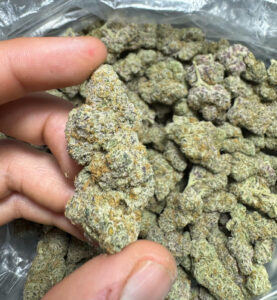
Photographs can help illustrate a listing, but appearance alone cannot verify a cannabinoid profile or establish legal status.
Retailers should also avoid making unsupported claims about effects, medical benefits, product safety or availability.
For visitors researching THCA-related topics, THCa King Europe provides a starting point for exploring the website, its shop and its educational blog.
Frequently Asked Questions About THCA Flower Strains
What are THCA flower strains?
THCA flower strains are cannabis cultivars or varieties whose flowers are described by reference to their THCA content. A strain name helps identify a named variety but does not independently verify its composition.
What are some popular THCA flower strain names?
Names frequently encountered in cannabis-related discussions include Blue Dream, Gelato, Runtz, Wedding Cake, Sour Diesel, Zkittlez, Ice Cream Cake and Purple Punch. A product using one of these names still needs its own supporting documentation.
Are all THCA flower strains the same?
No. Products may differ in their reported cannabinoid profiles, batch information, cultivation descriptions and other characteristics. Even products carrying the same name can have different laboratory results.
What is the difference between THCA and THC?
THCA is tetrahydrocannabinolic acid, while delta-9 THC is a different chemical form. Heat can convert THCA into THC through decarboxylation.
What does hybrid mean in THCA flower descriptions?
Hybrid is a traditional cannabis classification generally used for varieties presented as having ancestry associated with more than one traditional cannabis group. It does not establish a particular chemical profile.
Does indoor cultivation guarantee better THCA flower quality?
No. Indoor describes the cultivation environment, not a recognised quality grade. Product documentation and relevant laboratory testing are more useful for evaluating specific claims.
How can I check the cannabinoid content of a THCA flower strain?
Look for a relevant Certificate of Analysis that identifies the tested sample, laboratory, testing date, measured cannabinoids and analytical method.
Are THCA flower strains legal throughout Europe?
No blanket answer applies to all European countries and all THCA products. National legislation differs, and the product’s composition, form and intended use may affect its legal classification.
Where can I find more THCA flower information?
Visit THCa King Europe and explore the THCa King Europe blog for additional educational content about THCA terminology and product descriptions.
Final Thoughts on THCA Flower Strains
THCA flower strains cover a wide range of cultivar names and product descriptions. Familiar names can help readers navigate cannabis-related information, but they should never be treated as proof of genetics, cannabinoid content, quality or legal status.
The most useful approach is to examine each product’s identity, available laboratory documentation, cultivation description and relevant regulatory requirements.
European cannabis legislation also requires careful attention. Agricultural hemp provisions do not automatically authorise every THCA flower product, and the legal position can differ considerably between countries.
For more information, visit THCa King Europe, browse the shop section and explore additional educational resources in the THCa King Europe blog.
Clear product descriptions, reliable evidence and accurate legal information are essential when researching THCA flower strains.