Interest in THCA flower Germany has created questions about cannabis terminology, product composition, laboratory testing and the legal framework governing cannabis in Germany. People researching this subject often want to understand what THCA flower is, how it differs from conventional THC-containing cannabis and what German regulations mean for cannabis-derived products.
However, understanding THCA flower requires more than reading a product description or looking at a cannabinoid percentage. THCA and delta-9 THC are chemically related but distinct substances, and the legal classification of cannabis materials depends on the relevant legislation.
Germany introduced its Cannabis Act, known as the Konsumcannabisgesetz (KCanG), in 2024. The legislation established specific rules for personal possession, private cultivation and non-commercial cultivation associations. It did not establish an unrestricted commercial retail market for recreational cannabis flower.
At THCa King Europe, visitors can explore THCA-related information and educational resources. This guide explains the meaning of THCA flower, important quality considerations and the legal questions people should understand when researching the German market.
What Is THCA Flower?
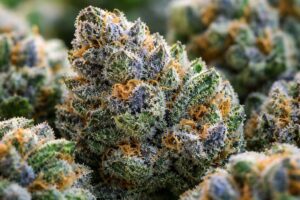
THCA flower refers to cannabis flower containing tetrahydrocannabinolic acid, commonly abbreviated as THCA.
THCA is a naturally occurring acidic cannabinoid produced by cannabis plants. It is chemically related to delta-9 tetrahydrocannabinol, or THC, but the two compounds have different chemical structures.
THCA is commonly discussed in relation to cannabis flower because it is one of the cannabinoids that can be measured in laboratory analyses.
When THCA is exposed to sufficient heat, it can undergo decarboxylation. This chemical process removes a carboxyl group and converts THCA into delta-9 THC.
This distinction is important when reading product descriptions and laboratory reports. A product with a high reported THCA concentration should not automatically be described as a product with no relevant THC-related legal implications.
For further background on cannabis terminology, explore the THCa King Europe website and its THCA educational blog.
THCA Flower Germany: Understanding the German Cannabis Act
Anyone researching THCA flower Germany should understand the country’s legal framework before making assumptions about product availability or commercial distribution.
Germany’s Cannabis Act, the Konsumcannabisgesetz (KCanG), regulates various activities involving cannabis. The legislation distinguishes between permitted activities and activities that remain prohibited or subject to specific authorisation.
Under Section 2 of the KCanG, activities including unauthorised cannabis trading, import, export, distribution and acquisition are generally prohibited, subject to the exceptions established by the law.
The legislation provides limited exceptions for certain activities, including personal possession within statutory limits, private cultivation and regulated non-commercial cultivation associations.
The distinction is important: the legalisation of certain personal activities does not mean that every cannabis product can be freely sold through commercial websites or distributed across Germany.
The German Federal Ministry of Health explains that online trade, shipping and delivery of recreational cannabis remain prohibited under the Cannabis Act.
Readers should consult the current legislation and official government guidance rather than relying on general statements about cannabis legalisation.
Is THCA Flower Legal in Germany?
This is one of the most important questions associated with the keyword THCA flower Germany.
It would be inaccurate to state that every THCA flower product is automatically legal in Germany simply because it is described as hemp-derived or because a laboratory report shows a particular delta-9 THC concentration.
The legal assessment must consider the applicable statutory definitions, the composition of the material and the relevant activity.
The KCanG defines cannabis in terms that include plant parts and cannabis products, subject to statutory exclusions and exceptions. Consequently, a product’s description as THCA flower does not, by itself, remove it from the scope of German cannabis regulation.
Section 2 establishes prohibitions on a range of activities involving cannabis, including unauthorised trade, import, export and distribution.
The law also establishes a separate framework for non-commercial cultivation associations. These organisations may distribute qualifying cannabis to members only under specific statutory conditions. Distribution must take place within the association’s secured premises, and shipping and delivery are prohibited.
The German Federal Ministry of Health provides an official explanation of the rules in its Cannabis Act FAQ.
Important: This article is educational information, not individual legal advice. Anyone dealing with a THCA-containing product in Germany should obtain a product-specific legal assessment before assuming that possession, import, sale or distribution is permitted.
Understanding the Difference Between THCA and THC
THCA and THC are often mentioned together, but they should not be treated as interchangeable terms.
What Is THCA?
THCA is the acidic precursor of delta-9 THC. It occurs naturally in cannabis plants and has a different chemical structure from delta-9 THC.
What Is Delta-9 THC?
Delta-9 THC is the cannabinoid most commonly associated with the intoxicating effects of cannabis.
Why Does the Difference Matter?
The distinction matters for three reasons:
- Laboratory analysis: THCA and delta-9 THC can be reported as separate measurements.
- Product descriptions: A cannabinoid profile should accurately distinguish the compounds being measured.
- Legal classification: A legal framework may consider specific cannabinoids, broader cannabis definitions or total THC calculations.
A low delta-9 THC result should not be interpreted as automatic proof that a cannabis flower product falls outside German cannabis legislation.
This is particularly important for online information that describes THCA products as universally legal because they contain little delta-9 THC.
Laboratory Testing and THCA Flower Quality
Laboratory documentation is an important consideration when researching cannabis flower.
A Certificate of Analysis, commonly known as a COA, is a document showing the results of specified tests performed on a submitted sample.
Depending on the laboratory and the testing scope, a report may contain information about:
- THCA concentration.
- Delta-9 THC concentration.
- CBD concentration.
- Other measured cannabinoids.
- Certain pesticide residues.
- Heavy metals.
- Microbiological contaminants.
- Residual solvents, where relevant.
Not all certificates cover every category. Therefore, it is important to examine the actual tests performed rather than relying on a general statement that a product is laboratory tested.
What Should a COA Include?
A useful report should make it possible to identify:
- The laboratory responsible for testing.
- The sample identification.
- The date of analysis.
- The cannabinoid measurements.
- The analytical methods used.
- The limits of detection or quantification, where provided.
- The batch reference, where applicable.
A COA has limitations. It does not automatically prove that every item in a batch has the same composition as the submitted sample. It also does not establish that the product is legally authorised in Germany.
Laboratory analysis and legal compliance are separate matters.
Product Transparency and Accurate Descriptions
When researching THCA flower Germany, readers may encounter product descriptions containing strain names, cannabinoid percentages, cultivation claims and quality statements.
These descriptions should be assessed carefully.
A strain name such as Blue Dream, Gelato, Sour Diesel or Wedding Cake does not independently verify the genetic identity of a particular sample.
Similarly, photographs cannot establish the chemical composition, laboratory results or legal classification of a product.
Responsible product information should distinguish between verified facts and descriptive marketing language.
For additional educational material, visitors can explore the THCa King Europe blog and the general information available on the THCa King Europe homepage.
Personal Possession and Private Cultivation in Germany
Germany’s Cannabis Act introduced limited permissions for adults concerning personal possession and private cultivation.
Under Section 3 of the KCanG, adults may possess up to 25 grams of cannabis in public for personal consumption. At their residence or habitual abode in Germany, the permitted amount is up to 50 grams of dried cannabis, subject to the statutory combined limit.
Section 9 also allows adults who meet the statutory requirements to cultivate up to three cannabis plants simultaneously for personal consumption.
These permissions are subject to conditions and do not establish a general commercial supply system.
In particular, cannabis from private cultivation may not be passed on to third parties.
Readers should check the official German Cannabis Act for the exact statutory wording and any applicable amendments.
Cannabis Cultivation Associations and Distribution Rules
Germany also provides for non-commercial cultivation associations under the KCanG.
These associations operate under a regulated framework and must meet specific requirements. Their activities should not be confused with those of ordinary commercial cannabis retailers or online flower shops.
Under Section 19, qualifying associations may distribute cannabis cultivated through their collective cultivation activities to members under controlled conditions.
Important restrictions include:
- Distribution is restricted to eligible members.
- Distribution takes place within the association’s secured premises.
- Age and membership checks are required.
- Statutory quantity limits apply.
- Shipping and delivery of cannabis are prohibited.
- Members cannot pass on the cannabis they receive to third parties.
These provisions demonstrate why Germany’s cannabis framework should not be described as unrestricted commercial legalisation.
Researching THCA Flower Online: What Should You Check?
Online searches for THCA flower Germany can produce websites with different product descriptions, laboratory claims and legal explanations.
A careful approach involves checking the quality of the information rather than accepting every advertised claim.
Consider these questions:
Is the Product Clearly Identified?
Descriptions should accurately identify the material and avoid unsupported claims about its composition or origin.
Is Laboratory Documentation Available?
Where laboratory reports are presented, check the sample identification, testing date and actual test panel.
Is the Business Transparent?
Look for identifiable business information and clear contact details. A professional website is not, by itself, evidence of regulatory authorisation.
Are Legal Claims Supported?
Statements such as “100% legal in Germany” should be treated cautiously unless supported by an appropriate legal assessment of the exact product and activity.
Are Shipping and Distribution Claims Accurate?
Germany has specific restrictions on the commercial distribution, shipping and delivery of recreational cannabis. A website’s delivery promise should not be confused with legal authorisation.
Visitors can find additional THCA-related information through the THCa King Europe website and its shop section. Website information should not be interpreted as a substitute for checking German law.
Why German Cannabis Regulations Matter for European Research
Germany is one of Europe’s most closely watched countries in discussions about cannabis policy.
However, its domestic legislation should not be assumed to apply throughout the European Union.
Each country has its own legal framework concerning cannabis possession, cultivation, distribution and commercial cannabis-derived products.
The European Union Drugs Agency’s Cannabis Laws in Europe FAQ provides an overview of the different national approaches.
For businesses and researchers, this means that a product’s classification in Germany may differ from its classification in another European country.
Cross-border activities can also involve additional import, export and controlled-substance requirements.
Understanding the relevant national legislation is therefore essential before making assumptions about the European market.
Frequently Asked Questions About THCA Flower Germany
Is THCA flower legal in Germany?
There is no blanket rule that makes every product marketed as THCA flower legal in Germany. The legal assessment depends on the statutory definition of cannabis, the material’s composition, applicable exceptions and the activity involved.
Is THCA the same as THC?
No. THCA is the acidic precursor of delta-9 THC. It has a different chemical structure and can convert into delta-9 THC through decarboxylation.
Does low delta-9 THC content make THCA flower legal in Germany?
Not automatically. German law must be considered as a whole, including its definitions and restrictions. A laboratory result alone cannot establish legal status.
Can cannabis be purchased online in Germany?
The German Federal Ministry of Health states that online trade, shipping and delivery of recreational cannabis remain prohibited under the Cannabis Act. Specific rules apply to different categories of cannabis-related products and activities.
Can cultivation associations ship cannabis to members?
No. Under Section 19 of the KCanG, cannabis distribution by cultivation associations must take place within their secured premises. Shipping and delivery are prohibited.
How much cannabis may an adult possess in Germany?
Under Section 3 of the KCanG, adults may possess up to 25 grams in public and up to 50 grams at their residence or habitual abode, subject to the statutory conditions and combined limit.
Does a Certificate of Analysis prove legal compliance?
No. A COA reports the results of specified tests on a sample. It does not replace legal authorisation or establish that the product may be sold, imported or distributed in Germany.
Where can I find more THCA-related information?
You can visit THCa King Europe and explore the blog section for additional educational information about THCA and related subjects.
Final Thoughts on THCA Flower Germany
Researching THCA flower Germany requires a clear understanding of cannabinoid terminology, product documentation and German cannabis legislation.
THCA and delta-9 THC are chemically distinct, but this distinction does not mean that every THCA-containing flower product falls outside German cannabis regulation. The KCanG establishes specific restrictions on commercial trade, import, export and distribution, alongside limited permissions for personal possession, private cultivation and non-commercial cultivation associations.
Laboratory reports can help explain a sample’s measured composition, but they do not independently establish legal authorisation.
For readers exploring THCA-related subjects, THCa King Europe provides a starting point for further website information. Additional resources are available through the THCa King Europe blog and shop section.
The most responsible approach is to check authoritative sources, assess product documentation carefully and verify the applicable German rules before making decisions involving cannabis-derived materials.