Searching for a reliable THCA flower review can be challenging because online product descriptions often focus on cannabinoid percentages, strain names and photographs without explaining how product quality is assessed. A useful review should go beyond promotional claims and examine the information that helps readers understand a product’s composition, documentation, transparency and regulatory status.
THCA flower has attracted attention in cannabis-related discussions because it contains tetrahydrocannabinolic acid (THCA), a naturally occurring cannabinoid associated with the cannabis plant. However, not every product advertised as premium, exotic or high-THCA necessarily offers the same characteristics. Laboratory results, batch information and accurate product descriptions are important when evaluating claims.
At THCa King Europe, visitors can explore THCA-related information and website resources. This guide explains how to approach a THCA flower review, what laboratory reports can tell you, which quality claims deserve closer examination and why European regulations should never be overlooked.
What Is THCA Flower?
THCA flower refers to cannabis flower containing tetrahydrocannabinolic acid, commonly abbreviated as THCA.
THCA is chemically related to delta-9 THC, but the two compounds have different chemical structures. THCA can convert into delta-9 THC through a process called decarboxylation, which occurs when the compound is exposed to sufficient heat.
This distinction is important when reading laboratory reports and comparing product descriptions.
A THCA flower review should identify THCA and delta-9 THC as separate measurements rather than treating them as interchangeable. It should also explain that a product’s cannabinoid composition does not independently establish its legal classification.
For more information about THCA terminology, visit the THCa King Europe homepage and explore the THCa King Europe blog.
Why Read a THCA Flower Review?
A useful review helps readers evaluate the information available about a product instead of simply repeating its advertising description.
Product names and photographs can create an initial impression, but they do not establish chemical composition, batch consistency or laboratory quality.
A detailed THCA flower review should consider several areas:
- Product identification and description.
- Available cannabinoid information.
- Laboratory testing and Certificates of Analysis.
- Batch traceability.
- Accuracy of advertised quality claims.
- Transparency about cultivation and origin.
- Storage and packaging information, where documented.
- Applicable national regulations.
These factors provide a more meaningful basis for evaluating product information than cannabinoid percentages alone.
1. Cannabinoid Profile: Understanding the Numbers
One of the first things people notice when reading a THCA flower review is the advertised cannabinoid percentage.
However, a percentage should always be interpreted in context.
A laboratory report may list several cannabinoids, including:
THCA: The acidic cannabinoid commonly associated with THCA flower.
Delta-9 THC: A separate cannabinoid that should be reported independently.
CBD: Cannabidiol, another naturally occurring cannabis cannabinoid.
CBG: Cannabigerol, which may also appear in cannabinoid analyses.
CBN: Cannabinol, which can be present in certain cannabis samples.
A report may also include a calculated total THC figure. One commonly used analytical calculation is:
Total THC = delta-9 THC + (THCA × 0.877)
The conversion factor accounts for the molecular mass lost when THCA is converted into THC. The result is an estimate based on the measured cannabinoid concentrations, not a guarantee of the exact composition of every finished product.
The European Union Drugs Agency discusses the analytical challenges involved in determining THCA and THC content in cannabis products.
When comparing two products, it is important to establish whether the laboratory figures use the same measurement basis and analytical approach.
2. Laboratory Testing: An Essential Part of a THCA Flower Review
Laboratory documentation is one of the most useful sources of evidence when evaluating a cannabis-related product.
A Certificate of Analysis, commonly called a COA, is a document reporting the results of specified laboratory tests performed on a submitted sample.
Depending on the laboratory and testing scope, a COA may contain:
- Cannabinoid concentrations.
- THCA and delta-9 THC measurements.
- CBD and other cannabinoid results.
- Pesticide testing.
- Heavy-metal testing.
- Microbiological testing.
- Residual-solvent testing, where relevant.
A responsible review should not simply say that a product is laboratory tested. It should explain what was actually tested and whether the available report relates to the material being described.
How to Evaluate a Certificate of Analysis
When examining a COA, check the following:
Laboratory identity: Is the testing laboratory clearly identified?
Sample identification: Does the report identify the material that was analysed?
Batch number: Can the report be connected to the relevant product batch?
Testing date: Is the date of analysis visible?
Cannabinoid profile: Are THCA and delta-9 THC reported separately?
Testing methodology: Does the report explain the analytical methods used?
Contaminant testing: Does the document show which additional tests were performed?
The Illinois Department of Agriculture provides a useful educational resource explaining how to read cannabis Certificates of Analysis. Although its regulatory framework is specific to Illinois, its explanation of sample identification, cannabinoid profiles and laboratory results is helpful for understanding the structure of a COA.
Importantly, a laboratory certificate does not automatically prove that a product is legally authorised or that every item in a batch has identical characteristics.
3. Appearance and Product Descriptions
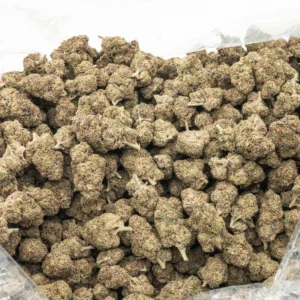
Photographs are often used to present cannabis flower online. They may show colour, visible plant structures and other physical characteristics.
However, photographs should be treated as illustrations rather than laboratory evidence.
A photograph cannot establish:
- The actual THCA concentration.
- The delta-9 THC concentration.
- The presence or absence of pesticides.
- The product’s genetic authenticity.
- The precise cultivation origin.
- The legal classification of the material.
A credible THCA flower review should distinguish visible characteristics from claims that require independent verification.
The same principle applies to strain names. Names such as Blue Dream, Gelato, Sour Diesel, Wedding Cake and Purple Punch are widely used in cannabis-related descriptions. A name alone does not prove that a particular sample has verified genetics or a specific chemical profile.
4. Terpene Information and Product Transparency
Terpenes are naturally occurring aromatic compounds found in many plants, including cannabis.
Cannabis laboratory reports may include terpene measurements, although not every COA contains a terpene panel.
Commonly discussed cannabis-associated terpenes include:
- Myrcene.
- Limonene.
- Caryophyllene.
- Pinene.
- Linalool.
A terpene report can provide additional information about the compounds measured in a sample. However, it should not be used to make unsupported medical or therapeutic claims.
When reviewing terpene information, check whether the results are based on an actual laboratory analysis or simply a general description associated with a strain name.
Transparency is more valuable than an impressive-sounding list of compounds that cannot be verified.
5. Packaging, Storage and Batch Information
Packaging and batch identification are also relevant when assessing product documentation.
A well-organised product information system should make it possible to identify the relevant material and connect it to the appropriate records.
Useful details may include:
- Product name.
- Batch or lot number.
- Packaging identification.
- Relevant laboratory documentation.
- Production or analysis dates, where available.
- Storage information.
- Responsible business contact details.
Batch traceability is particularly important because cannabis is an agricultural material. Its chemical composition can vary between samples and cultivation cycles.
A report relating to one batch should not automatically be treated as proof of the composition of a different batch carrying the same product name.
6. Does a High THCA Percentage Mean Better Quality?
Not necessarily.
A high THCA percentage is one measurement of cannabinoid composition. It is not a complete assessment of overall product quality.
Two samples with similar reported THCA concentrations may differ in their laboratory documentation, terpene measurements, physical characteristics, storage history and other analytical results.
A responsible review should therefore avoid ranking products solely by the largest advertised percentage.
Instead, consider whether the product information is complete, consistent and supported by relevant documentation.
The quality of a review depends on the evidence behind its conclusions, not how impressive its marketing language sounds.
7. European Regulations and THCA Flower Reviews
Anyone researching THCA flower in Europe should understand that national cannabis laws are not identical.
A product described as hemp-derived or low in delta-9 THC is not automatically legal in every European country.
Legal classification may depend on:
- The relevant national definition of cannabis.
- The presence of controlled cannabinoids.
- The composition of the material.
- The intended purpose.
- Whether the activity involves possession, sale, import or distribution.
- Any applicable licence or exemption.
The European Union Drugs Agency provides an overview of cannabis laws across Europe and explains why different national approaches matter.
This is particularly important when reading online reviews that describe a THCA product as legal throughout Europe. Such a statement should not be accepted without a country-specific legal basis.
A Certificate of Analysis provides analytical information; it does not replace legal authorisation.
For further educational material, readers can visit the THCa King Europe blog.
8. How to Write a Trustworthy THCA Flower Review
A strong review should be transparent about what has actually been examined.
If a reviewer has not personally inspected a product, they should not claim to have tested its appearance, smell, packaging or other physical characteristics.
Similarly, a reviewer should not invent cannabinoid percentages, laboratory results or customer experiences.
A useful review structure can include:
- Product identification: State the exact product name and format.
- Available documentation: Identify whether a COA or other supporting documents are available.
- Cannabinoid information: Report only figures supported by the relevant laboratory document.
- Testing scope: Explain which tests were performed and which were not.
- Product description: Separate verified characteristics from marketing descriptions.
- Regulatory considerations: Avoid blanket claims about legality.
- Review limitations: Explain when the assessment is based on documents rather than independent physical inspection.
This approach helps readers understand the difference between an independent assessment, a product description and a customer testimonial.
THCA Flower Review: Frequently Asked Questions
What should a THCA flower review include?
A useful review should cover product identification, cannabinoid information, laboratory testing, batch traceability, available product documentation and applicable legal considerations.
Does a higher THCA percentage mean better quality?
No. THCA concentration is only one measurement. It does not independently establish overall quality, purity, consistency or legal status.
What is a THCA flower Certificate of Analysis?
A COA is a laboratory report showing the results of specified tests on a submitted sample. It may include cannabinoid measurements and additional testing, depending on the laboratory.
Can a COA prove that THCA flower is legal?
No. A COA reports laboratory findings. Whether a product is lawful depends on the applicable national legislation and the specific material and activity involved.
Is THCA the same as delta-9 THC?
No. THCA is the acidic precursor of delta-9 THC. It can convert into delta-9 THC through decarboxylation.
Are all THCA flower reviews independent?
No. Some online reviews are written by sellers, some are based on customer submissions, and others are independent assessments. Readers should check whether the author has disclosed their relationship with the business and whether the conclusions are supported by evidence.
Where can I find more THCA-related information?
Visit THCa King Europe and explore the blog section for additional educational information about THCA and related topics.
Final Verdict: What Makes a Useful THCA Flower Review?
A useful THCA flower review should provide clear information rather than repeat advertising claims. It should explain cannabinoid measurements, examine laboratory documentation, consider batch traceability and distinguish verified product characteristics from unsupported descriptions.
THCA concentration alone cannot establish overall quality. A laboratory report can provide valuable information about a sample, but its testing scope and limitations must be understood. Equally, laboratory results cannot independently determine whether a cannabis-derived product is legal in a particular European country.
For readers exploring THCA-related subjects, THCa King Europe provides a starting point for additional website information. Further educational resources are available through the THCa King Europe blog and shop section.
The most reliable approach to reviewing any THCA flower product is to prioritise accurate documentation, transparent claims and current regulatory information.