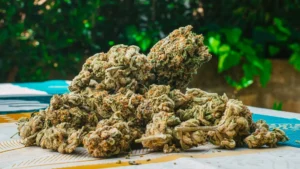
The search for THCA flower Netherlands reflects growing interest in cannabis-related products and the differences between THCA, THC and industrial hemp. The Netherlands is particularly interesting because it has a distinctive cannabis policy involving controlled substances, coffeeshops and a system of tolerance under specific conditions.
However, the Dutch approach is often misunderstood. The fact that certain cannabis sales are tolerated in coffeeshops does not mean that every cannabis product is legal, that commercial distribution is unrestricted or that products containing THCA can automatically be imported or sold.
At THCa King Europe, we believe that reliable information should come before assumptions. This guide explains what THCA flower is, how it differs from THC, what laboratory certificates can tell you and which aspects of Dutch law are important when researching cannabis flowers in the Netherlands.
You can explore more educational resources on the THCa King Europe website, visit our blog and information section or consult our shop pages.
What Is THCA Flower?
THCA flower refers to cannabis flower containing tetrahydrocannabinolic acid, commonly abbreviated as THCA.
THCA is a naturally occurring cannabinoid found in the cannabis plant. It is chemically related to delta-9-tetrahydrocannabinol, commonly known as THC, but the two substances are not identical.
THCA is the acidic precursor of THC. Under certain conditions, including exposure to heat, THCA can undergo a chemical process called decarboxylation. During this process, a carboxyl group is removed and THCA is converted into THC.
This distinction is important when examining product descriptions, laboratory reports and legal classifications.
A flower advertised as containing a high percentage of THCA may have a different analytical profile from one with a high concentration of delta-9-THC. Nevertheless, a low delta-9-THC result does not automatically establish that the flower is lawful under Dutch law.
For further background, visit our guide to THCA flowers.
THCA vs THC: What Is the Difference?
One of the most common questions about THCA flower in the Netherlands concerns the difference between THCA and THC.
Although they are chemically related, they have different molecular structures.
| Feature | THCA | Delta-9-THC |
|---|---|---|
| Full name | Tetrahydrocannabinolic acid | Delta-9-tetrahydrocannabinol |
| Chemical form | Acidic cannabinoid | Neutral cannabinoid |
| Relationship | Precursor of THC | Form produced through decarboxylation |
| Naturally present in cannabis | Yes | Yes, in varying quantities |
| Laboratory measurement | Can be measured separately | Can be measured separately |
The distinction matters because product labels sometimes highlight THCA percentages without explaining the delta-9-THC concentration or the potential total THC content.
A complete cannabinoid profile can provide a more useful picture than a single percentage.
Understanding the Netherlands Cannabis Policy
The Netherlands is widely associated with coffeeshops and its distinctive approach to cannabis. However, the country’s policy is more complicated than the popular idea that cannabis is simply legal.
According to the Dutch government, possessing, producing and dealing in drugs are criminal offences. Cannabis is treated as a soft drug under the Dutch Opium Act, but the government applies a policy of tolerance to certain limited activities under defined conditions.
Official information is available through the Dutch government’s explanation of drug possession, production and dealing.
What Does Cannabis Tolerance Mean?
The Dutch tolerance policy, commonly called gedoogbeleid, means that certain activities that remain technically prohibited are not normally prosecuted when specific conditions are met.
For coffeeshops, the tolerance framework includes restrictions such as:
- No sales to people under 18.
- No more than 5 grams sold to an individual per day.
- No hard drugs on the premises.
- No advertising beyond permitted limitations.
- No public nuisance.
- No sale of more than 500 grams of cannabis stock at any one time under the general coffeeshop criteria.
These conditions do not create an unrestricted cannabis market.
The Dutch government’s official explanation is available here: Am I committing a criminal offence if I possess, produce or deal in drugs?.
Is Cannabis Completely Legal in the Netherlands?
No. Cannabis remains regulated under the Opium Act.
The Dutch government explains that possession, production and dealing are prohibited, even though small-scale possession for personal use and sales through qualifying coffeeshops may receive different enforcement treatment.
For adults, possession of up to 5 grams is generally treated as a low-priority matter under the tolerance policy. Police can still confiscate the cannabis.
The distinction between legalisation and tolerance is important. Tolerance does not mean that every form of possession, sale, production, distribution or importation is authorised.
You can also read the Dutch police explanation of rules concerning drugs and possession.
THCA Flower Netherlands: What Does Dutch Law Mean for THCA Products?
When researching THCA flower Netherlands, it is important to distinguish the chemistry of THCA from the legal classification of the plant material containing it.
The Dutch Opium Act includes hemp or cannabis on List II. The Dutch government explains that cannabis flower buds and leaves are used to produce what is commonly called weed or marijuana.
This means that a seller cannot establish the legal status of a cannabis flower simply by pointing to a low delta-9-THC percentage or describing it as a hemp-derived product.
The relevant questions include:
- Is the product cannabis plant material or another type of preparation?
- What substances does the product contain?
- Which provisions of the Opium Act apply?
- Does a specific statutory exception or exemption apply?
- Does the activity involve possession, sale, processing, transport or importation?
The official Dutch government explanation of the distinction between cannabis, weed, hemp and hash is available at What is the difference between cannabis, weed, hemp and hash?.
Does a Low THC Percentage Automatically Make THCA Flower Legal?
No. A low delta-9-THC result should not be treated as a universal exemption from Dutch cannabis legislation.
There are different regulatory frameworks for agricultural hemp, cannabis plant material and finished products. A threshold used in agricultural legislation does not automatically determine whether a particular flower can be possessed, sold or imported.
This distinction is especially important for THCA products because THCA can be converted into THC.
There is also an important ongoing legal development. On 10 February 2026, the Dutch Supreme Court asked the Court of Justice of the European Union to clarify aspects of EU law concerning the possession and importation of certain hemp cultivated from certified seed or containing no more than 0.3% THC.
The questions concern the relationship between EU agricultural rules and Dutch Opium Act provisions. They should not be interpreted as a final judgment that all low-THC cannabis flowers or THCA products are exempt from Dutch law.
The official announcement is available from the Dutch Supreme Court.
How to Read a THCA Flower Certificate of Analysis
A Certificate of Analysis, usually abbreviated as COA, is a laboratory document presenting results from tests performed on a submitted sample.
When researching THCA flower, laboratory documentation can help readers understand the reported chemical composition.
A useful report may include the following information.
1. THCA Concentration
The THCA percentage indicates the measured concentration of tetrahydrocannabinolic acid in the tested sample.
It should be distinguished from the delta-9-THC percentage. The two values describe different chemical compounds.
2. Delta-9-THC Concentration
Delta-9-THC may be reported separately in the cannabinoid profile.
A report showing a low delta-9-THC percentage does not necessarily provide a complete picture of the potential THC content when substantial THCA is present.
3. Total THC
Some laboratories calculate an estimated total THC value using the following formula:
Total THC = delta-9-THC + (THCA × 0.877)
The factor 0.877 accounts for the theoretical mass loss associated with decarboxylation.
This calculation is an analytical estimate. It should not be confused with a legal determination, and the applicable regulatory measurement method must always be checked separately.
4. Other Cannabinoids
A laboratory report may also include measurements for:
- CBD;
- CBDA;
- CBG;
- CBGA;
- CBN;
- Other cannabinoids included in the testing method.
A complete profile can help explain the composition of the sample more accurately than a single headline percentage.
5. Contaminant Testing
Depending on the laboratory’s testing programme, the report may include results for pesticides, heavy metals, residual solvents and microbiological contaminants.
A cannabinoid-only report does not establish that all these substances have been tested.
6. Batch Identification
The sample reference, batch number, collection date and testing date help establish which material was examined.
A COA should not be assumed to represent every product or batch sold under the same commercial name.
Why Laboratory Transparency Matters
Laboratory transparency is important because product descriptions and marketing terminology are not substitutes for measurable information.
A reliable report should identify the laboratory, the sample, the methods used and the substances tested.
Readers should also consider the limitations of testing. Different laboratories may use different methods, reporting units and detection limits.
For that reason, a certificate should be interpreted in context rather than treated as universal proof of product safety, quality or legal authorisation.
For more educational information, visit the THCa King Europe blog and our THCA flower information page.
THCA Flower Netherlands and Cross-Border Transport
Another important topic is the movement of cannabis products across national borders.
A product that is sold or tolerated under certain conditions in one country is not automatically permitted to be imported into another.
Dutch Customs explains that bringing goods covered by the Opium Act across the Dutch border is prohibited unless an applicable licence or legal exception exists.
This is particularly relevant for businesses and individuals researching international THCA flower distribution.
Before any cross-border transaction, it is necessary to establish:
- The legal classification of the exact product.
- The rules of the country of origin.
- The Dutch import requirements.
- Whether an exemption or licence is required.
- Whether additional rules apply to the intended activity.
Official information is available from Dutch Customs – Opium Act drugs.
Businesses working with controlled substances should also review the official guidance on applying for an exemption from the Dutch Opium Act.
How to Find Reliable Information About THCA Flower in the Netherlands
Online searches for THCA flower Netherlands can produce different types of information, from scientific explanations to product descriptions and legal opinions.
To evaluate these sources carefully, consider the following points.
Check official sources. Government websites, customs authorities and judicial decisions are more useful for understanding the legal framework than unsupported marketing statements.
Check publication dates. Cannabis legislation and enforcement guidance can change. Older articles may not reflect recent legal developments.
Understand laboratory terminology. THCA, delta-9-THC and total THC are different measurements and should not be treated as interchangeable.
Check the product description. A commercial name or a claim such as low THC does not establish the product’s legal classification.
Avoid universal legal claims. Statements that all THCA flowers are legal in the Netherlands should be treated cautiously unless supported by applicable legislation and reliable legal analysis.
For additional background, explore THCa King Europe, our THCA flower guides and the THCA flower Europe information page.
Frequently Asked Questions About THCA Flower Netherlands
Is THCA flower legal in the Netherlands?
There is no general rule establishing that every flower containing THCA is legal. Cannabis plant material is regulated under the Dutch Opium Act. The exact product, its composition and the activity involved must be assessed under the applicable rules.
Is cannabis legal in the Netherlands?
Cannabis is not fully legal. The Netherlands applies a tolerance policy under which certain limited activities, including sales by qualifying coffeeshops, are tolerated subject to strict conditions.
What is the difference between THCA and THC?
THCA is the acidic precursor of delta-9-THC. It can be converted into THC through decarboxylation. They are chemically different substances.
Does the 0.3% THC threshold mean THCA flower is legal?
No. The 0.3% threshold is relevant to particular agricultural hemp rules. It should not be treated as a blanket exemption for cannabis flowers or THCA products.
What does a THCA Certificate of Analysis show?
A COA presents the results of tests performed on a sample. It may include THCA, delta-9-THC, other cannabinoids and selected contaminants, depending on the laboratory’s testing programme.
Can THCA flower be imported into the Netherlands?
Importation of goods covered by the Opium Act is restricted. Dutch Customs states that a licence or applicable legal exception is required. A low THC claim alone does not establish permission to import.
Are Dutch coffeeshops allowed to sell every cannabis product?
No. Coffeeshops operate under a specific tolerance framework and must comply with strict conditions. That framework should not be interpreted as permission for unrestricted cannabis sales or distribution.
Are Dutch cannabis rules the same as rules in other European countries?
No. Each country has its own national laws and regulatory framework. Dutch tolerance policies do not automatically apply in Germany, France, Belgium or other European countries.
Conclusion: Understanding THCA Flower in the Netherlands
The topic of THCA flower Netherlands requires a careful distinction between scientific information, laboratory measurements and legal rules.
THCA is a naturally occurring acidic cannabinoid that can be converted into THC. Laboratory reports can help explain the chemical composition of a sample, but they do not independently establish legal status.
The Netherlands has a distinctive cannabis tolerance policy, but cannabis remains regulated under the Opium Act. The rules governing coffeeshops, possession, production and cross-border transport must be considered separately.
The ongoing European legal questions concerning certain low-THC hemp products also demonstrate why broad claims about automatic legality should be avoided.
For more educational information about cannabinoids and European cannabis regulations, visit THCa King Europe, explore our blog and consult our THCA flower information.