Interest in THCA flower in the Czech Republic has grown alongside wider European interest in hemp-derived cannabinoids. People researching the subject often want to understand what THCA is, how it differs from conventional THC and CBD, what laboratory reports reveal, and how Czech regulations apply to cannabis flowers and related products. THCA flower Czech Republic.
However, understanding the legal position is just as important as understanding the chemistry. Czech cannabis legislation changed significantly in 2026, and rules concerning personal possession should not be confused with permission to manufacture, distribute, advertise or sell cannabis products.
This guide from THCa King Europe explains the main concepts, outlines important legal considerations and provides a practical framework for evaluating information about THCA products.
What Is THCA Flower?
THCA stands for tetrahydrocannabinolic acid. It is a cannabinoid naturally found in raw cannabis plants and is chemically related to delta-9 THC.
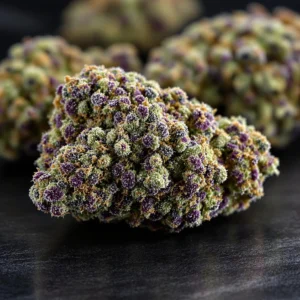
The term THCA flower generally describes cannabis flower containing measurable tetrahydrocannabinolic acid. The amount of THCA can vary depending on the plant variety, cultivation conditions, harvesting process, storage and laboratory testing method.
THCA and delta-9 THC are not identical. THCA is the acidic precursor to delta-9 THC. When exposed to heat, THCA can undergo a chemical process called decarboxylation, which converts some of it into delta-9 THC.
This distinction is important when reading product descriptions and laboratory reports. A product advertised as having a low delta-9 THC result may still contain substantial THCA. Its legal classification cannot safely be determined from one headline percentage.
For more general information about the subject, visit the THCA Flowers guide and the THCA Flower Europe resource.
THCA vs THC vs CBD: What Is the Difference?
THCA, THC and CBD are three different cannabinoids, and they should not be treated as interchangeable.
THCA
THCA is the naturally occurring acidic form associated with the cannabis plant before decarboxylation. It is often discussed in connection with raw cannabis material and laboratory cannabinoid profiles.
Delta-9 THC
Delta-9 tetrahydrocannabinol is the principal intoxicating cannabinoid commonly associated with cannabis. It can affect perception, mood, attention, coordination and reaction time. Its legal status is regulated differently across European countries.
CBD
Cannabidiol, commonly called CBD, is another cannabinoid. It is not intoxicating in the same way as delta-9 THC, although CBD products remain subject to applicable product, safety, food and medicinal-product rules.
The Czech Police provide an overview of cannabis products, cannabinoids and the risks associated with psychoactive products in their official information resource: Czech Police – Cannabis and Cannabis Products.
Is THCA Flower Legal in the Czech Republic?
The question “Is THCA flower legal in the Czech Republic?” requires careful consideration. It is not responsible to answer with a simple yes or no based only on the word THCA or a product’s advertised delta-9 THC percentage.
The Czech Republic introduced significant amendments through Act No. 270/2025 Coll., with relevant changes taking effect on 1 January 2026. The revised framework allows adults over 21 to cultivate and possess limited amounts of cannabis for personal use, subject to statutory conditions. The legislation specifies limits that include up to three cannabis plants and possession limits of up to 100 grams at home and 25 grams outside the home for qualifying adults.
These provisions concern defined personal-use situations. They do not create a general commercial licence for selling cannabis flower, nor do they establish that every product marketed as THCA flower is lawful.
The Czech Police explain that unauthorised distribution of cannabis above the applicable 1% THC threshold remains unlawful. The precise classification of a particular THCA-containing flower or preparation may depend on its composition, the applicable statutory definitions, the laboratory method and the circumstances of the activity.
Read the current legal text through the official Czech e-Sbírka legislation portal – Act No. 270/2025 Coll.. You can also consult the Czech Ministry of Agriculture legal information and the Czech Police cannabis guidance.
Does the 1% THC threshold automatically make THCA flower legal?
No. A threshold used in the Czech framework for technical hemp or particular legal provisions should not be interpreted as a universal authorisation for every cannabis flower or cannabinoid product.
It is especially important to distinguish between:
- The delta-9 THC concentration reported by a laboratory.
- The THCA concentration reported in the same sample.
- The total THC value calculated or reported under a particular testing method.
- The legal definition and classification applicable to the product and activity.
A product’s label is not a legal determination. Anyone considering commercial activity should obtain advice from a qualified Czech legal professional who can assess the exact product and intended transaction.
Understanding THCA Laboratory Reports
Laboratory testing is an important part of evaluating information about cannabinoid products. A Certificate of Analysis, commonly abbreviated as COA, can provide details about the sample submitted to a laboratory.
A useful report should make it possible to identify the tested sample, laboratory, date, analytical method and measured cannabinoid concentrations. Depending on the scope of the analysis, it may also contain results for selected contaminants.
When reviewing a COA, pay attention to the following details:
1. Sample identification: Check whether the report clearly identifies the tested sample and whether it can be connected to the product or batch being described.
2. THCA concentration: Look for the measured THCA percentage or concentration and check the units used.
3. Delta-9 THC concentration: This is a separate measurement. It should not be confused with THCA.
4. Analytical method: Different methods can produce results that are not directly interchangeable. The method and its suitability for the relevant regulatory question matter.
5. Testing scope: A cannabinoid profile does not necessarily mean the sample was tested for pesticides, heavy metals, microbial contamination, residual solvents or every other possible contaminant.
6. Laboratory information: Check the laboratory’s identity, accreditation claims and the scope of any accreditation rather than relying on a logo alone.
A COA describes the sample tested. It does not automatically prove that every item in a batch is identical, that the product is legally authorised or that every possible safety concern has been assessed.
What Does Total THC Mean?
Some laboratory reports distinguish between THCA and delta-9 THC, while others also provide a calculated total THC figure.
A commonly used theoretical calculation is:
Total THC = delta-9 THC + (THCA × 0.877)
The factor 0.877 accounts for the molecular-weight difference associated with the conversion of THCA into THC.
This formula is useful for understanding why a sample with a low delta-9 THC measurement may still have a substantial theoretical THC potential. However, it should not be treated as a universal legal test. Regulatory definitions and prescribed analytical methods may differ.
For that reason, a seller’s statement that a product is “THC-free” or “legal because it is below a particular percentage” should be checked against the actual report and the relevant law.
How to Assess THCA Flower Quality
Quality descriptions can be useful, but marketing terms alone are not evidence. Anyone researching THCA flower in the Czech Republic or elsewhere in Europe should look for transparent, verifiable product information.
Consider these factors when evaluating claims:
- Traceability: Is there a clear product or batch identification?
- Laboratory documentation: Is a relevant, authentic report available?
- Accurate cannabinoid information: Are THCA and delta-9 THC reported separately?
- Clear product descriptions: Are claims specific and supported rather than exaggerated?
- Contaminant testing: Does the documentation explain which additional tests were performed?
- Storage and packaging information: Is the information clear and consistent with the product category?
- Legal transparency: Does the supplier avoid claiming that one certificate or THC figure guarantees legality in every country?
You can explore general information on the THCA Flower Europe page and the THCA Flower Supplier Europe guide.
THCA Flower and the Wider European Market
European consumers and businesses often assume that a product permitted in one country can automatically be sold throughout the European Union. That assumption can create serious legal problems.
Cannabis and cannabinoid rules are not completely harmonised across Europe. National laws may differ in how they classify cannabis flowers, extracts, finished products, food products and substances with psychoactive properties.
The rules governing agricultural hemp cultivation also do not automatically authorise every finished product made from hemp. Product composition, intended use, processing, marketing and national controlled-substance laws can all be relevant.
For businesses, this means that a supplier should not rely on a single country’s rules when assessing a proposed shipment to the Czech Republic. Import, export, transport, storage, distribution and retail activity may each raise separate legal questions.
THCa King Europe’s broader educational resources include:
These resources provide background on European market terminology and supplier considerations. They should not be interpreted as confirmation that a particular transaction is permitted under Czech law.
THCA Flower Czech Republic: Questions to Ask Before Trusting a Product Claim
When researching a product or supplier, it is useful to ask specific questions rather than relying on broad claims such as “legal hemp” or “EU compliant.”
- Is the product’s exact cannabinoid composition documented?
- Does the laboratory report identify both THCA and delta-9 THC?
- Is the report linked to the relevant batch?
- Which contaminants, if any, were included in the analysis?
- What legal definition is the supplier relying on?
- Does that legal analysis cover the actual flower product, rather than only the source plant or agricultural variety?
- Has the supplier considered Czech rules for the specific activity, including commercial distribution or cross-border movement?
If these questions cannot be answered clearly, treat the legal and quality claims with caution.
Why Accurate Information Matters
The cannabis and cannabinoid market changes quickly. Product names, marketing descriptions and online discussions can make different substances appear legally interchangeable when they are not.
The Czech Republic’s 2026 reforms are particularly important because they changed certain personal-use rules without creating unrestricted commercial access to cannabis products. The distinction between personal possession, cultivation, supply and commercial distribution should remain clear.
For official information, consult the Czech Police guidance on cannabis, the Czech e-Sbírka legislation database and the Ministry of Agriculture legal portal.
You can also visit the THCa King Europe homepage and THCa King Europe blog for additional educational material about cannabinoids, laboratory documentation and the European hemp market.
Frequently Asked Questions About THCA Flower in the Czech Republic
1. What is THCA flower?
THCA flower is cannabis flower containing tetrahydrocannabinolic acid, a naturally occurring acidic cannabinoid. Its cannabinoid profile varies between samples and should be verified through appropriate laboratory testing.
2. Is THCA the same as THC?
No. THCA and delta-9 THC are chemically different. THCA can convert into delta-9 THC through decarboxylation, including when exposed to heat.
3. Is THCA flower legal in the Czech Republic in 2026?
There is no safe blanket answer for every product. Czech law changed in 2026 to permit limited personal-use cultivation and possession for qualifying adults under specific conditions. Those changes do not automatically authorise commercial THCA flower sales or cross-border supply. The exact product and activity require legal assessment.
4. Does a low delta-9 THC result prove that a product is legal?
No. A low delta-9 THC result does not by itself establish legality. THCA concentration, product classification, applicable legal definitions and the analytical method may also matter.
5. What is a Certificate of Analysis?
A Certificate of Analysis is a laboratory report showing the results of tests performed on a submitted sample. It can help verify measured cannabinoid concentrations and, where included, selected contaminant results. It is not a general legal authorisation.
6. Can Czech rules be applied to other European countries?
No. Each country may have its own controlled-substance, product-safety and commercial rules. A product’s treatment in the Czech Republic does not determine its status elsewhere in Europe.
7. Where can I learn more about THCA in Europe?
Visit the THCa King Europe website and browse the THCA educational blog for further information.
Final Thoughts on THCA Flower in the Czech Republic
Research into THCA flower Czech Republic should begin with accurate chemistry, reliable laboratory information and a clear understanding of the law. THCA is different from delta-9 THC, but that distinction alone does not settle the legal status of a cannabis flower or finished product.
The Czech Republic’s 2026 reforms introduced specific personal-use allowances for qualifying adults, while unauthorised distribution remains subject to legal restrictions. Consumers and businesses should therefore check the exact composition of a product and obtain current Czech legal advice before relying on claims about its sale, possession or transportation.
THCa King Europe aims to make European cannabinoid information easier to understand through educational resources, transparent terminology and responsible discussion of product documentation.