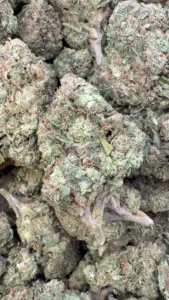
Interest in THCA flower in Poland is part of a wider European conversation about cannabinoids, hemp-derived products and changing cannabis regulations. People searching online for THCA in Poland often want to understand what tetrahydrocannabinolic acid is, how it differs from THC and CBD, what laboratory reports reveal and how Polish legislation treats cannabis flowers. THCA flower Poland.
However, understanding the science is only one part of the subject. Poland has specific rules governing industrial hemp, cannabis cultivation and products containing controlled cannabinoids. Recent amendments have also made the relationship between THCA and delta-9 THC particularly important when assessing a product’s legal classification.
This guide from THCa King Europe explains the main concepts, examines the Polish regulatory framework and provides a practical overview of laboratory testing and product documentation.
What Is THCA Flower?
THCA stands for tetrahydrocannabinolic acid. It is a cannabinoid naturally present in cannabis plants and is chemically related to delta-9 tetrahydrocannabinol, commonly known as THC.
The term THCA flower generally describes cannabis flower containing measurable amounts of tetrahydrocannabinolic acid. Its cannabinoid profile can vary depending on the plant variety, cultivation conditions, harvesting, storage and laboratory testing method.
THCA and delta-9 THC are different chemical compounds. THCA is the acidic precursor to delta-9 THC. Through a process called decarboxylation, THCA can lose a carboxyl group and convert into THC. Heat can cause this transformation.
This distinction is important when evaluating product descriptions. A product may show a low delta-9 THC measurement while containing a higher THCA concentration. Therefore, looking at only one cannabinoid percentage does not provide a complete picture of the sample.
For more background, visit the THCA Flowers guide and the THCA Flower Europe resource.
THCA vs THC vs CBD: Understanding the Differences
THCA, THC and CBD are three distinct cannabinoids. Although they are all associated with cannabis, they have different chemical structures and properties.
THCA
THCA is the acidic precursor to delta-9 THC. It is naturally found in cannabis plant material and is commonly measured separately in cannabinoid laboratory reports.
Delta-9 THC
Delta-9 THC is the cannabinoid most commonly associated with the intoxicating effects of cannabis. It can affect perception, attention, memory, coordination and reaction time. Its legal status varies according to national legislation.
CBD
CBD, or cannabidiol, is another cannabinoid found in cannabis and hemp. It is not intoxicating in the same way as delta-9 THC. However, CBD products are not automatically exempt from regulation. Their classification may depend on composition, intended use, product category and applicable food, cosmetic or medicinal-product rules.
The European Union Drugs Agency provides useful background in its Cannabis Laws in Europe FAQ.
Is THCA Flower Legal in Poland?
The question “Is THCA flower legal in Poland?” requires careful consideration of the country’s legislation. It is not sufficient to rely on a product label, a seller’s description or a low delta-9 THC percentage.
Poland regulates cannabis under the Act of 29 July 2005 on Counteracting Drug Addiction, together with subsequent amendments.
A particularly important change came through the Act of 3 July 2026, published as Journal of Laws 2026, item 1004. The amendment entered into force on 27 August 2026.
The revised legal definitions specify that industrial hemp is cannabis sativa in which the combined content of delta-9 THC and delta-9 THCA in the relevant flowering or fruiting tops does not exceed 0.3% of dry weight, subject to the statutory rounding rule.
The definition of non-fibre cannabis also refers to plant material containing more than 0.3% of the combined delta-9 THC and THCA concentration.
This is a significant detail for anyone researching THCA flower Poland. It means that a product’s THCA concentration cannot simply be ignored when considering the Polish legal threshold.
Read the official legislation here:
- Polish Legal Information System – Act of 3 July 2026, Journal of Laws 2026, item 1004
- Polish Parliament – Legislative text of the 2026 amendment
- Polish Ministry of Agriculture – Industrial Hemp Market
Does the 0.3% threshold mean every THCA product is legal?
No. The 0.3% figure must be understood in the context of the actual statutory definitions and the relevant product.
It is not a universal permission to sell, import, distribute or possess every product marketed as hemp or THCA flower.
Polish law also regulates the cultivation of cannabis. The Ministry of Agriculture explains that industrial hemp cultivation is subject to the applicable registration framework. It also states that cultivation of cannabis other than industrial hemp is prohibited, with a specific exception for certain pharmaceutical raw-material production by authorised research institutes.
Consequently, the legal status of a particular product may depend on:
- Its botanical and legal classification.
- The combined delta-9 THC and THCA concentration.
- The relevant dry-weight calculation and sampling method.
- Whether the product is raw plant material, an extract or another preparation.
- Whether the activity involves cultivation, possession, processing, import or commercial distribution.
- Any applicable authorisations or statutory exceptions.
A laboratory report can help establish composition, but it does not itself grant legal permission.
Understanding the Polish Industrial Hemp Framework
Poland permits regulated industrial hemp activity under specified conditions. The Ministry of Agriculture explains that industrial hemp cultivation and purchasing from producers are subject to entry in the relevant industrial hemp register.
The ministry lists permitted purposes that include textile, chemical, paper, cosmetic, pharmaceutical, energy, seed-production and scientific research activities, among others.
It also explains that cultivation of cannabis other than industrial hemp is prohibited, apart from the specified pharmaceutical research exception.
For agricultural businesses, this means that compliance involves more than selecting a plant variety with a particular cannabinoid profile. Registration, permitted purposes and the applicable cultivation rules must also be considered.
Official information is available on the Polish Ministry of Agriculture’s Industrial Hemp Market page.
How to Read a THCA Certificate of Analysis
A Certificate of Analysis, commonly known as a COA, is a laboratory report describing tests performed on a submitted sample.
For people researching THCA flower in Poland, laboratory documentation can help clarify the measured cannabinoid composition. It is particularly important where the legal definition refers to a combined THC and THCA concentration.
When examining a COA, consider the following points.
1. Sample identification
The report should identify the sample tested. A batch number or sample reference helps establish whether the document relates to the product being described.
2. THCA concentration
Look for the measured THCA concentration and the units used. Check whether the value is expressed as a percentage by weight or in another unit.
3. Delta-9 THC concentration
Delta-9 THC is a separate measurement. It should not be confused with THCA or treated as the only relevant cannabinoid when assessing a product.
4. Testing method
The analytical method matters. Different testing procedures can produce results that are not directly interchangeable. Where a legal threshold applies, the relevant regulatory sampling and analytical requirements should be followed.
5. Additional safety tests
A cannabinoid profile does not automatically mean that a sample has been tested for pesticides, heavy metals, microbial contamination or residual solvents.
Check the report to determine which tests were actually conducted.
6. Laboratory information
Look for the laboratory’s name, report date, sample identification and accreditation details. If accreditation is claimed, check its scope rather than relying on a logo alone.
A COA describes the sample tested. It does not prove that every item in a batch is identical, that every possible contaminant was examined or that the product is legally authorised in Poland.
Why THCA and Total THC Measurements Matter in Poland
THCA and delta-9 THC are separate measurements, but some laboratory reports also provide a calculated total THC figure.
A commonly used theoretical calculation is:
Total THC = delta-9 THC + (THCA × 0.877)
The factor 0.877 accounts for the molecular-weight difference associated with the conversion of THCA into delta-9 THC.
This calculation helps explain why a sample with a low delta-9 THC measurement may still have a substantial theoretical THC potential.
It is important, however, not to assume that this formula automatically replaces the analytical method or calculation required by Polish law. The Polish statutory definition specifically refers to the sum of delta-9 THC and THCA, with its own dry-weight and rounding requirements.
For this reason, a general total-THC calculation should not be substituted for a legally prescribed Polish assessment.
How to Evaluate THCA Flower Quality Claims
People researching THCA flower in Poland may encounter descriptions such as premium, indoor, greenhouse, exotic or high-THCA. These terms are frequently used in marketing, but they are not independent proof of product quality or legal compliance.
A more reliable assessment should consider verifiable documentation.
- Traceability: Is there a clear batch or sample identification?
- Cannabinoid transparency: Are THCA and delta-9 THC reported separately?
- Laboratory documentation: Is a relevant, authentic report available?
- Testing scope: Does the report explain which additional safety tests were performed?
- Accurate descriptions: Are claims supported by evidence?
- Legal transparency: Does the supplier explain the relevant legal framework without making unsupported guarantees?
- Product classification: Is the exact product category clearly identified?
A high cannabinoid percentage does not independently establish quality, safety or legality.
For additional educational material, explore the THCA Flower Supplier Europe guide and the THCA Flower Wholesale resource.
THCA Flower Poland and the Wider European Market
Poland is part of the European Union, but that does not mean every cannabis-related product is regulated identically across Europe.
The European Commission explains that EU agricultural rules establish requirements for industrial hemp, including a 0.3% THC threshold for relevant agricultural provisions and certified seed conditions. However, those agricultural rules should not be confused with general authorisation for finished cannabis products.
The European Union Drugs Agency also explains that national legislation can continue to affect trade in hemp products within the EU.
This distinction is important for businesses and individuals researching cross-border products. A product’s treatment in one country does not automatically determine its status in Poland.
Import, export, transport, processing, storage and commercial distribution may each involve separate legal requirements.
Useful European references include:
- European Commission – Hemp and Agricultural Rules
- European Union Drugs Agency – Cannabis Laws in Europe
- European Union Drugs Agency – Medical and Commercial Cannabis-Derived Products
For broader market information, visit the THCA Flower Europe page and the THCA Flower Distributor guide.
Important Questions Before Relying on a THCA Product Claim
When evaluating a product or supplier, ask specific questions rather than relying on phrases such as “legal hemp” or “EU compliant.”
- Does the laboratory report identify the exact sample?
- Are delta-9 THC and THCA reported separately?
- Does the assessment consider their combined concentration?
- Is the result expressed on the correct dry-weight basis?
- Is the laboratory method suitable for the relevant regulatory assessment?
- Which additional safety tests were performed?
- Does the supplier explain how the product is classified under Polish law?
- Does the legal assessment cover the actual activity, including commercial distribution or cross-border movement?
If these questions cannot be answered clearly, product and legal claims should be treated cautiously.
Frequently Asked Questions About THCA Flower Poland
1. What is THCA flower?
THCA flower is a term used for cannabis flower containing tetrahydrocannabinolic acid. The concentration varies between samples and should be verified through appropriate laboratory testing.
2. Is THCA the same as THC?
No. THCA is the acidic precursor to delta-9 THC. It can convert into THC through decarboxylation, including when exposed to heat.
3. Is THCA flower legal in Poland in 2026?
The legal classification depends on the product’s composition and the applicable Polish legislation. Since 27 August 2026, the amended statutory definitions have referred to the combined delta-9 THC and THCA concentration when distinguishing industrial hemp from non-fibre cannabis. A product’s label or low delta-9 THC result alone does not establish legality.
4. What is the THC and THCA threshold in Poland?
The amended Polish definition of industrial hemp refers to a combined delta-9 THC and THCA concentration not exceeding 0.3% of dry weight in the specified flowering or fruiting tops. The law also includes a rounding rule. The complete statutory wording should be consulted when assessing a specific sample.
5. Does a COA prove that THCA flower is legal?
No. A Certificate of Analysis documents tests performed on a submitted sample. It can help establish cannabinoid composition, but it does not grant legal authorisation or replace an assessment under Polish law.
6. Can industrial hemp be cultivated freely in Poland?
No. The Polish Ministry of Agriculture explains that industrial hemp cultivation is subject to registration and statutory conditions. Cultivation of cannabis other than industrial hemp is generally prohibited, subject to a specific pharmaceutical research exception.
7. Does the EU 0.3% hemp threshold automatically apply to all cannabis products?
No. EU agricultural hemp rules are not a blanket authorisation for every finished cannabis product. National legislation and product-specific requirements remain relevant.
8. Where can I learn more about THCA in Europe?
Visit the THCa King Europe homepage and browse the THCa King Europe blog for further educational material about cannabinoids, laboratory documentation and European hemp regulations.
Final Thoughts on THCA Flower Poland
Researching THCA flower Poland requires an understanding of both cannabinoid chemistry and Polish legislation. THCA and delta-9 THC are different compounds, but Polish law now explicitly considers their combined concentration in its industrial hemp and non-fibre cannabis definitions.
The amendment effective from 27 August 2026 makes it especially important to examine laboratory reports carefully. A low delta-9 THC result alone is not enough to establish that a cannabis flower or finished product is lawful.
THCa King Europe aims to make European cannabinoid information easier to understand through educational resources, clear terminology and responsible discussion of laboratory documentation.
For more information, visit THCa King Europe and explore the THCA educational blog.