THCA Flower UK: Complete Guide to Cannabinoids, Quality and Regulations
Interest in THCA flower UK has increased as people research cannabis varieties, cannabinoid chemistry and the differences between THCA and THC. Searches for THCA flower United Kingdom, THCA UK and THCA flower legal UK reflect a growing need for clear information about the subject.
However, understanding THCA flower in the United Kingdom requires more than looking at product names or advertised cannabinoid percentages. It is important to understand how THCA differs from THC, what laboratory reports can establish, how cannabis flower is classified under UK legislation and why rules in the United Kingdom should not be confused with those in other European countries.
This guide from THCa King Europe explains the essential information about THCA flower, including cannabinoid profiles, quality indicators, laboratory testing and UK legal considerations.
Whether you are researching cannabis terminology or comparing information about different cannabis varieties, this article provides an educational overview of the subject.
What Is THCA Flower?
THCA stands for tetrahydrocannabinolic acid. It is a naturally occurring cannabinoid found in cannabis plants and is chemically related to delta-9-tetrahydrocannabinol, commonly known as THC.
Although these compounds are related, they have different chemical structures.
THCA contains an additional carboxyl group. When exposed to sufficient heat, it can undergo a chemical process called decarboxylation, converting into delta-9-THC.
This difference is important when interpreting laboratory reports and product descriptions. A stated THCA percentage is not necessarily the same as the measured delta-9-THC percentage.
THCA flower generally refers to cannabis flowering material containing THCA. This distinction is particularly important in the UK because cannabis flowers are subject to controlled-drug legislation, regardless of whether their advertised THC concentration is low.
For more general information about the European market, explore our THCA flower Europe guide.
Why Are People Searching for THCA Flower UK?
The UK has a tightly regulated cannabis framework, while public interest in cannabinoids and cannabis-derived products continues to generate questions.
People searching for THCA flower UK may want to understand:
- What THCA means.
- How THCA differs from THC.
- How cannabinoid percentages are measured.
- What a certificate of analysis contains.
- How cannabis flower is classified under UK law.
- What distinguishes CBD flower from THCA flower.
- How UK rules differ from regulations in other European countries.
- Why product documentation matters.
These questions are relevant to anyone researching the subject, especially because a product’s marketing description does not determine its legal status.
The THCa King Europe website provides additional educational information about THCA terminology and the wider European market.
THCA vs THC: Understanding the Difference
One of the most important topics in any THCA flower UK guide is the difference between THCA and THC.
THCA is the acidic precursor to THC. It occurs naturally in cannabis plant material and can convert into THC through decarboxylation.
The main differences include:
Chemical structure: THCA and THC have different molecular structures.
Heat exposure: THCA can convert into THC through a chemical process involving heat.
Laboratory measurements: A laboratory report may list THCA and delta-9-THC separately.
Product composition: Cannabis samples can contain different amounts of THCA, THC and other cannabinoids.
Legal classification: The chemical distinction does not automatically mean that a cannabis flower product is outside controlled-drug legislation.
A commonly used calculation for total potential THC is:
Total potential THC = delta-9-THC + (THCA × 0.877)
The factor 0.877 accounts for the molecular mass lost during decarboxylation. This is a chemical estimate, not a guarantee of the amount of THC that will be produced or absorbed in real-world conditions.
Understanding these differences helps readers interpret laboratory results without confusing the measurement of one cannabinoid with another.
What Influences THCA Flower Quality?
When researching cannabis flower, it is important to consider several characteristics rather than relying on a single advertised percentage.
1. Genetics and cultivar information
Cannabis cultivars can have different characteristics depending on their genetic background and growing conditions.
Some commonly discussed variety names include:
- Blue Dream
- Gelato
- Wedding Cake
- Runtz
- Zkittlez
- Purple Punch
- Oreoz
- Lemon Cherry Gelato
- White Runtz
- Permanent Marker
These names are commonly used in cannabis catalogues, but a cultivar name does not guarantee identical cannabinoid or terpene concentrations between different growers and batches.
Specific genetic claims should be supported by reliable information rather than assumed from a product name.
2. Appearance and physical condition
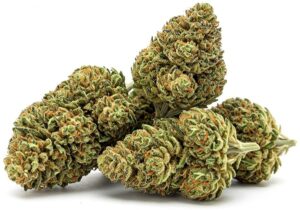
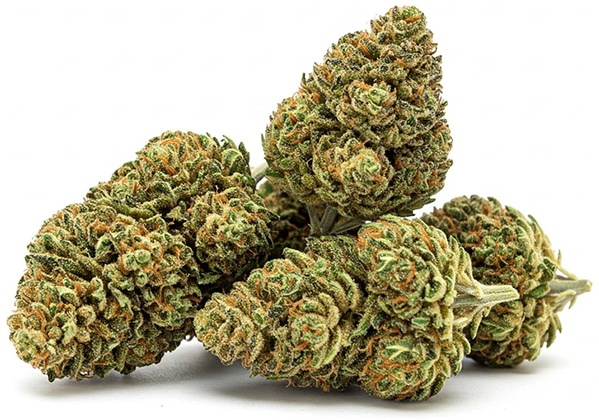
Cannabis flowers can differ in colour, shape, density and visible surface characteristics.
When reading a product description, consider whether the photographs are representative and whether the material is described accurately.
Visual appearance alone cannot establish cannabinoid concentration, purity or the absence of contaminants. Laboratory testing is needed to verify important chemical information.
3. Aroma and terpene profiles
Terpenes are naturally occurring aromatic compounds found in many plants, including cannabis.
Commonly discussed cannabis terpenes include:
- Myrcene: Often associated with earthy and herbal aromas.
- Limonene: Commonly associated with citrus-like aromas.
- Caryophyllene: Often described as spicy or peppery.
- Pinene: Associated with pine-like aromas.
- Linalool: Commonly associated with floral aromas.
Terpene concentrations can vary between samples. A general description of a strain’s aroma should not be treated as a laboratory-confirmed terpene profile.
4. Handling and storage
Drying, handling and storage can influence the physical condition of botanical material.
Exposure to excessive heat, moisture, direct sunlight and air may contribute to deterioration. Clear product information should describe relevant storage conditions without making unsupported claims about guaranteed freshness or quality.
You can explore our educational resource on top-shelf THCA flower Europe for further information about product descriptions and quality terminology.
Why Laboratory Testing Matters
Laboratory testing helps establish the chemical composition of a particular sample.
A Certificate of Analysis, commonly known as a COA, is a document recording the results of laboratory analysis. Depending on the testing programme, it may include cannabinoid measurements and selected contaminant screening.
What information can a COA contain?
A laboratory report may include:
- THCA concentration.
- Delta-9-THC concentration.
- CBD and CBDA measurements.
- CBG and CBN measurements.
- Terpene concentrations.
- Selected pesticide screening.
- Heavy-metal screening.
- Microbiological testing.
Not every COA includes all these tests. A report should therefore be examined carefully rather than treated as a universal guarantee of product safety.
How to read a certificate of analysis
When reviewing a laboratory report, consider the following:
- Sample identification: Does the report clearly identify the sample?
- Batch information: Can the report be linked to the relevant batch?
- Laboratory details: Is the laboratory clearly identified?
- Testing date: Is the date provided?
- Cannabinoid results: Are THCA and delta-9-THC listed separately?
- Units: Are the measurements clearly explained?
- Contaminant testing: Does the report identify which additional tests were performed?
- Detection limits: Are the reporting limits understandable?
A report for a different product or batch should not automatically be treated as evidence about another sample.
For further reading, consult the Illinois Department of Agriculture’s guide to understanding a COA.
THCA Flower UK: What Does British Law Say?
The legal position is one of the most important parts of researching THCA flower in the United Kingdom.
Under the Misuse of Drugs Act 1971, cannabis is a Class B controlled drug. The statutory definition of cannabis covers the plant and parts of the plant, subject to limited exceptions such as mature stalk, fibre produced from mature stalk and seeds.
This means that cannabis flowers and leaves are controlled irrespective of their THC concentration.
A written answer published by the UK Parliament on 26 November 2025 specifically confirmed that flowers and leaves of the cannabis plant are controlled drugs regardless of THC content.
Consequently, describing a flower product as low-THC, hemp-derived or THCA-rich does not automatically establish that it can legally be possessed, supplied or imported in the UK.
Is THCA flower legal in the UK?
The answer requires a distinction between the plant material and isolated chemical substances.
The Home Office’s October 2024 drug licensing factsheet explains that pure, isolated THCA was not controlled under the Misuse of Drugs Act 1971 at the time of publication. However, the same document explains that THCA can degrade into THC and that cannabis plant material is separately controlled.
The distinction is important: the legal position of an isolated chemical should not be confused with the legal position of cannabis flowers containing that chemical.
In May 2026, the government announced that it intended to proceed with controlling THCA-A and THCA-B as named Class B substances. A draft amendment was subsequently laid before Parliament in September 2026, withdrawn on 21 October 2026, and replaced by a new draft laid on 27 October 2026.
As of 4 November 2026, the replacement draft has not yet become law. Its proposed wording would add THCA-A and THCA-B to the list of Class B controlled substances, subject to the wording of the draft.
For this reason, anyone researching THCA flower UK should check the current legislation rather than relying on older online articles that may describe the previous position.
Does the low-THC hemp threshold make flower legal?
This is a common source of confusion.
Industrial hemp licensing rules concern particular cultivation and permitted uses. The Home Office explains that its industrial hemp regime is directed towards the use of non-controlled parts of the plant, such as mature stalk and seeds, for industrial purposes.
The licence does not provide general permission to use cannabis flowers and leaves as ordinary retail products.
A low THC percentage therefore does not automatically make cannabis flower lawful in the UK.
Can THCA flower be imported into the UK?
Importing controlled cannabis material or products containing controlled cannabinoids can require Home Office licensing.
The Home Office factsheet explains that products containing controlled cannabinoids imported from the EU, the USA or elsewhere may require an import licence unless the applicable exempt-product definition is satisfied.
That exemption has specific legal conditions and should not be assumed to apply to cannabis flower. Product composition, presentation, intended use and testing may all be relevant.
Anyone considering commercial activity involving cannabis-derived products should obtain specialist legal advice before proceeding.
Official UK legal resources
For reliable information, consult:
- GOV.UK: Cannabis, CBD and Other Cannabinoids Drug Licensing Factsheet
- GOV.UK: Industrial Hemp Licensing
- UK Parliament: Written Answer on Cannabis Flowers and THC Content
- GOV.UK: Government Response on THCA Control
- UK Parliament: Statutory Instruments
These official resources provide more reliable information than general marketing claims about UK cannabis law.
THCA Flower vs CBD Flower in the UK
THCA flower and CBD flower are different terms, even though both may be used in discussions about cannabis and hemp.
THCA flower
THCA flower generally describes cannabis flowering material containing tetrahydrocannabinolic acid. THCA can convert into THC through decarboxylation.
CBD flower
CBD flower is generally described in relation to cannabidiol, another naturally occurring cannabinoid found in cannabis plants.
However, the legal position of a CBD product depends on its composition, the presence of controlled cannabinoids and whether it meets applicable exemptions and other regulatory requirements.
Neither the product name nor its advertised cannabinoid percentage automatically determines its legal status.
How to Research Cannabis Product Information Responsibly
When evaluating information about cannabis products, it is useful to distinguish between verified measurements and general descriptions.
A reliable educational resource should:
- Explain the difference between THCA and THC.
- Identify which cannabinoid measurements are being discussed.
- Avoid unsupported claims about potency or purity.
- Explain what a certificate of analysis can and cannot establish.
- Avoid presenting a strain name as proof of genetic identity.
- Distinguish product chemistry from legal classification.
- Link to current official legal guidance.
The THCa King Europe website offers additional information about THCA terminology and the wider European cannabis market.
You can also explore the THCa King Europe blog for related educational articles.
Common Mistakes When Researching THCA Flower UK
There are several misunderstandings that can lead to inaccurate conclusions.
Assuming THCA and THC are identical: They are chemically related but have different structures.
Assuming THCA flower is automatically legal: Cannabis flowers are controlled under UK law regardless of their THC content.
Confusing isolated THCA with cannabis flower: The legal status of a pure isolated substance should not be assumed to determine the status of plant material containing it.
Relying on a low-THC percentage: A low THC result does not automatically remove cannabis flowers from controlled-drug legislation.
Assuming an EU product can automatically be imported: UK import rules apply independently of the laws in the country where a product originates.
Trusting a certificate of analysis as proof of legality: A COA reports analytical findings; it does not grant legal permission to possess, supply or import a controlled substance.
Using outdated legal information: The UK government has announced proposed changes concerning THCA, so older online explanations may no longer reflect the latest legislative developments.
Frequently Asked Questions About THCA Flower UK
1. What is THCA flower?
THCA flower refers to cannabis flowering material containing tetrahydrocannabinolic acid. THCA is a naturally occurring cannabinoid that can convert into THC through decarboxylation.
2. Is THCA the same as THC?
No. THCA is the acidic precursor to THC. The compounds have different chemical structures, although THCA can convert into THC when exposed to sufficient heat.
3. Is THCA flower legal in the UK?
Cannabis flowers and leaves are controlled under the Misuse of Drugs Act 1971 irrespective of THC content. The government has also announced its intention to control THCA-A and THCA-B as named Class B substances, with a replacement draft amendment laid in October 2026. Check current legislation before relying on any legal interpretation.
4. Does low THC content make cannabis flower legal in the UK?
No. UK legislation controls cannabis flowers and leaves irrespective of their THC content. Industrial hemp rules do not provide general permission to sell or possess cannabis flowers.
5. What is a THCA flower COA?
A Certificate of Analysis is a laboratory document recording analytical results for a particular sample. It may include cannabinoid measurements and selected contaminant screening.
6. Does a COA prove that THCA flower is legal?
No. A laboratory report provides information about chemical composition. It does not establish that possession, supply, importation or another activity is lawful.
7. Can cannabis products be imported into the UK?
Importing controlled cannabis material or products containing controlled cannabinoids may require Home Office licensing. The applicable rules and any exemptions depend on the product and circumstances.
8. What is the difference between THCA flower and CBD flower?
THCA flower is generally described by its THCA content, while CBD flower is described in relation to cannabidiol. Their chemical compositions and regulatory treatment can differ.
9. Where can I learn more about THCA flower in Europe?
You can explore educational resources at THCa King Europe, including our THCA flower Europe guide and top-shelf THCA flower resource.
Conclusion: Understanding THCA Flower UK
Researching THCA flower UK requires a clear understanding of cannabinoid chemistry, laboratory testing and the country’s controlled-drug legislation.
THCA and THC are chemically different, but that distinction should not be used to make unsupported claims about the legal status of cannabis flower. UK law controls cannabis flowers and leaves irrespective of THC concentration, and the government has also announced proposed changes specifically concerning THCA-A and THCA-B.
Laboratory testing can help establish cannabinoid composition, but a certificate of analysis is not a legal authorisation. Similarly, a low-THC description or an overseas product listing does not automatically establish that a product can lawfully be possessed, supplied or imported into the UK.
At THCa King Europe, our educational resources aim to help visitors understand THCA terminology, product descriptions and the wider European market. Explore our THCA flower Europe guide and THCa King Europe blog for more information.
Stay informed, consult official government guidance and always verify the current law before making decisions involving cannabis-derived products.