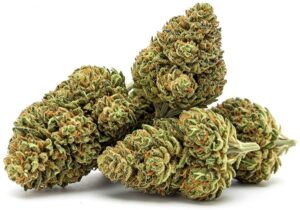
THCA flower characteristics are the physical, aromatic and chemical features that help describe cannabis flower. These include colour, bud structure, trichome coverage, texture, aroma, terpene composition and cannabinoid content. Understanding these characteristics makes it easier to interpret product descriptions, compare laboratory reports and distinguish observable qualities from claims that require scientific testing.
At THCa King Europe, we believe that clear product information and cannabinoid education are important. This guide explains the main characteristics associated with THCA flower, what causes them and why laboratory analysis is more reliable than appearance alone.
Whether you are researching the science behind THCA, learning about cannabis flower terminology or exploring our THCA flower Europe guide, the sections below provide a useful introduction.
What Is THCA Flower?
THCA flower refers to the flowering material of the Cannabis sativa plant that contains tetrahydrocannabinolic acid (THCA). THCA is a naturally occurring cannabinoid produced by the plant. It is the acidic precursor to delta-9 THC.
THCA and THC are related but chemically different compounds. When THCA is exposed to sufficient heat, it can undergo a process called decarboxylation, in which it loses a carboxyl group and converts into THC. This chemical process is one reason laboratory analysis needs to distinguish between acidic cannabinoids and their neutral forms.
A scientific review available through PubMed discusses THCA’s chemical relationship with THC and the process of decarboxylation.
For more background on cannabinoids and flower terminology, visit the THCa King Europe website and explore our THCA flower information.
Main THCA Flower Characteristics
THCA flower can be described through several observable and measurable features. No single characteristic provides a complete assessment. A useful evaluation considers the flower’s appearance, aroma, texture, cannabinoid profile and available laboratory documentation together.
1. Colour and Visual Appearance
One of the first noticeable THCA flower characteristics is its colour. Cannabis flowers can display different shades depending on genetics, growing conditions, maturity, drying and storage.
Commonly observed colours include:
- Green: Flowers may range from light green to deeper forest-green shades.
- Purple: Some varieties develop purple or violet pigmentation.
- Orange: Orange or amber-coloured pistils can contrast with the surrounding flower.
- White or frosty-looking surfaces: These appearances may result from dense coverage of visible glandular trichomes.
- Brown or yellow areas: These can occur for different reasons, including ageing, oxidation, handling or plant material characteristics.
Colour should not be treated as a reliable indicator of THCA concentration. A purple flower is not automatically more potent than a green flower, and a bright, frosty appearance does not prove a particular cannabinoid percentage.
When comparing products through the THCa King Europe shop, use the product information and available laboratory documentation rather than relying on photographs alone.
2. Trichome Coverage
Trichomes are tiny structures found on cannabis flowers and other parts of the plant. Glandular trichomes are especially important because they produce and store cannabinoids and terpenes.
Under magnification, some trichomes look like small stalks with rounded heads. Their appearance can create the familiar frosted or crystal-like surface associated with cannabis flowers.
Researchers have studied the structure and chemical activity of these glandular trichomes. A 2024 scientific review explains how trichome structures contain the cellular machinery and storage areas associated with cannabinoid and terpene production. Read the research through PubMed.
Trichome coverage is an interesting visual characteristic, but it is not a laboratory measurement. The amount of visible resin does not establish the exact THCA content, terpene concentration or purity of a sample.
3. Bud Structure and Density
Flower structure is another feature used to describe THCA flower. Buds may appear compact, rounded, elongated, irregular or relatively airy.
Several terms are commonly used in product descriptions:
- Dense buds: Flowers with a relatively compact structure.
- Airy buds: Flowers with a looser or less compact structure.
- Small buds: Smaller individual flower pieces.
- Large buds: Larger flower formations, sometimes referred to as top buds.
- Trimmed flower: Flower material from which excess leaf material has been removed.
Bud density can be influenced by genetics and growing conditions. It can also be affected by drying, handling and storage.
It is important not to confuse density with cannabinoid concentration. A compact flower does not necessarily contain more THCA than a less compact one. Laboratory testing is required to establish cannabinoid content.
For more information about different flower categories, see the THCA flower Europe guide.
4. Aroma and Terpene Profile
Aroma is one of the most recognisable THCA flower characteristics. Cannabis flowers can have different aromatic profiles, ranging from citrus-like and fruity to earthy, herbal, woody or spicy.
Much of this aromatic variation is associated with terpenes. Terpenes are naturally occurring compounds found in many plants, including cannabis. They contribute to the characteristic scents of flowers, herbs, fruits and trees.
Some commonly discussed cannabis terpenes include:
| Terpene | Commonly described aroma |
|---|---|
| Myrcene | Earthy, herbal and musky |
| Limonene | Citrus-like |
| Pinene | Pine-like and fresh |
| Linalool | Floral and lavender-like |
| Beta-caryophyllene | Spicy, woody and peppery |
| Humulene | Earthy and woody |
The terpene profile can vary significantly between cannabis varieties and individual batches. A strain name alone does not establish the exact terpene composition.
A scientific review, The Cannabis Terpenes, examines the diversity of terpene compounds and their contribution to cannabis aroma.
For THCA flower descriptions, it is better to use specific aroma language only when it reflects the actual batch or reliable product information. For example, describing a sample as citrus-scented should be based on an observed or documented aromatic profile, not simply on a strain name.
5. Texture and Moisture
Texture is another feature used when describing cannabis flower. Depending on its condition, flower may feel relatively firm, slightly springy, dry or brittle.
Moisture content and storage conditions can influence texture. Excessive dryness may make plant material brittle, while unsuitable storage can affect the condition of the flower over time.
Texture alone cannot establish whether a sample is safe, uncontaminated or properly stored. A visual or physical inspection is not a substitute for appropriate quality testing.
For responsible product evaluation, look for clear storage information and batch-specific documentation where available.
6. Pistils and Flower Formation
Pistils are hair-like reproductive structures associated with female cannabis flowers. They can appear white, cream, orange, red or brown as flowers develop and mature.
Their colour and appearance are often mentioned in descriptions of cannabis flower. However, pistil colour alone cannot confirm the age, cannabinoid concentration or overall quality of a product.
The arrangement of the flower’s bracts, calyxes, leaves and pistils also contributes to its overall structure. These botanical features help explain why different cannabis varieties can look noticeably different.
THCA Content and Cannabinoid Characteristics
The chemical profile is one of the most important measurable characteristics of THCA flower. While visual features can be described by observation, cannabinoid concentrations should be established through laboratory analysis.
Understanding THCA and THC
THCA is the acidic precursor to THC. The two compounds should not be treated as interchangeable when reading a laboratory report.
A product’s cannabinoid report may list:
- THCA
- Delta-9 THC
- CBDA
- CBD
- CBGA
- CBG
- CBN
- Other cannabinoids detected by the laboratory
The compounds listed depend on the sample and the laboratory’s testing method.
What Does THCA Percentage Mean?
A THCA percentage represents the measured proportion of THCA in the tested sample, usually expressed by weight. It is not the same as the total cannabinoid percentage, and it should not be confused with a product’s total potential THC figure.
Some laboratory reports also calculate total potential THC using a conversion factor to account for the mass lost during decarboxylation. The precise reporting convention should be checked before comparing figures from different laboratories.
For reliable interpretation, consult the original certificate of analysis (COA), including its sample identification, test date, units and analytical method.
Why Laboratory Testing Matters
Appearance and aroma can provide descriptive information, but neither can confirm the complete chemical composition of THCA flower. Laboratory testing provides a more objective way to examine cannabinoid concentrations and, where included in the testing scope, other quality and safety parameters.
A useful certificate of analysis may include:
- Cannabinoid profile: Results for THCA, THC, CBD and other measured cannabinoids.
- Sample identification: A batch number or other identifier connecting the report to the tested material.
- Testing date: Information showing when the sample was analysed.
- Laboratory details: The name and relevant information about the testing laboratory.
- Analytical method: The method used to identify and quantify compounds.
- Contaminant screening: Where performed, results for substances such as pesticides, heavy metals, microbial contaminants or residual solvents.
Not every COA includes every category. Always check what was actually tested and whether the report relates to the specific batch being described.
The United Nations Office on Drugs and Crime (UNODC) publishes recommended analytical methods for identifying and analysing cannabis and cannabis products.
THCA Flower Characteristics Compared With CBD Flower
THCA flower and CBD flower are often discussed together because both refer to cannabis flower, but their cannabinoid profiles can differ.
| Feature | THCA flower | CBD flower |
|---|---|---|
| Main cannabinoid of interest | THCA | CBDA and/or CBD |
| Acidic cannabinoid | THCA | CBDA |
| Aroma | Depends on terpene profile | Depends on terpene profile |
| Appearance | Varies by variety and batch | Varies by variety and batch |
| Chemical composition | Must be confirmed by laboratory testing | Must be confirmed by laboratory testing |
Appearance alone cannot reliably distinguish a THCA-dominant flower from a CBD-dominant flower. A laboratory cannabinoid profile is needed to identify the measured composition.
What Influences THCA Flower Characteristics?
Several factors can influence the characteristics of cannabis flower. These include:
Genetics: Different varieties can have different growth patterns, flower structures, pigmentation and chemical profiles.
Growing environment: Light, temperature, humidity and other environmental conditions can influence plant development.
Flower maturity: The development of floral structures and glandular trichomes changes during the plant’s life cycle.
Drying and storage: Post-harvest conditions can affect moisture, texture, aroma and the stability of certain compounds.
Batch variation: Even products carrying the same variety or strain name may differ in their measured chemical composition.
These factors explain why a strain name or photograph should not be treated as a guarantee of identical characteristics across every batch.
How to Evaluate THCA Flower Product Information
If you are researching THCA flower products, consider using a consistent checklist rather than relying on a single feature.
- Read the full product description.
- Check whether the cannabinoid percentage is supported by a batch-specific COA.
- Look for the testing date and sample identification.
- Review the reported terpene profile if one is available.
- Check whether contaminant screening has been performed.
- Distinguish observable appearance from measured chemical composition.
- Confirm that the product complies with the laws that apply in the destination country.
You can explore educational resources on the THCa King Europe blog and browse the THCa King Europe website for further product and cannabinoid information.
THCA Flower and European Legal Considerations
The legal status of cannabis flower and THCA-containing products varies across Europe. It is important not to assume that a product is legal simply because it is described as hemp-derived, low-THC or THCA-rich.
The European Union’s agricultural rules for qualifying hemp varieties concern specific agricultural uses and conditions. They do not automatically establish that every finished cannabis flower product can be sold, possessed, imported or transported throughout the EU.
The European Union Drugs Agency explains that national approaches to cannabis and low-THC products differ, and that other regulatory requirements may apply. Its Cannabis Laws in Europe FAQ provides useful background on the differences between national approaches.
The European Commission’s hemp guidance also explains the agricultural rules and THC conditions that apply to qualifying hemp.
Before buying, possessing, importing or transporting any THCA flower product, check the current laws in the relevant country. Rules can change, and requirements may differ between countries.
Frequently Asked Questions About THCA Flower Characteristics
What are the main characteristics of THCA flower?
The main characteristics include colour, bud structure, trichome coverage, aroma, texture, pistil appearance and cannabinoid composition. Laboratory testing is needed to establish the chemical profile.
Does frosty-looking THCA flower always have a high THCA percentage?
No. A frosty appearance can be associated with visible glandular trichomes, but it cannot establish an exact THCA percentage. A laboratory report is needed to confirm cannabinoid concentration.
What causes the aroma of THCA flower?
Terpenes contribute significantly to cannabis flower aroma. Different terpene combinations can produce citrus-like, earthy, floral, herbal, woody or spicy aromatic profiles.
Can you identify THCA content by looking at a flower?
No. Visual inspection cannot accurately determine THCA concentration. Laboratory analysis is required to measure the amount of THCA in a sample.
Are purple THCA flowers stronger than green ones?
Not necessarily. Colour is influenced by plant genetics and growing conditions, among other factors. Purple pigmentation does not prove higher cannabinoid concentration.
What is a COA for THCA flower?
A certificate of analysis is a laboratory report showing the results of tests performed on a sample. Depending on the laboratory and test scope, it may include cannabinoid concentrations and contaminant screening.
Is THCA flower legal throughout Europe?
No single statement applies to every European country. Cannabis laws and product regulations vary by jurisdiction. The legal status of a specific flower product must be assessed under the current rules of the relevant country.
Conclusion: Understanding THCA Flower Characteristics
Understanding THCA flower characteristics means looking beyond appearance. Colour, bud structure, trichome coverage, aroma, texture and pistils can all help describe a flower, but they do not independently establish its cannabinoid concentration or safety.
The most useful approach combines accurate product descriptions with reliable, batch-specific laboratory information. Understanding the difference between THCA and THC, recognising the role of terpenes and checking the relevant legal requirements can also help readers interpret cannabis flower information more responsibly.
For more cannabinoid education and product information, visit THCa King Europe, explore our THCA flower Europe guide and read more articles on our blog.
Disclaimer: This article is for general educational and informational purposes only. It is not medical or legal advice and does not confirm the legality, safety or suitability of any particular product. Always consult current local regulations and relevant qualified professionals.