What Is THCA? The Ultimate Beginner’s Guide to Raw Hemp 1
The botanical landscape across continental Europe is undergoing a monumental shift in consumer education. For years, general discussions surrounding hemp and cannabis plants focused almost exclusively on Cannabidiol (CBD) or the primary psychoactive compound Delta-9 Tetrahydrocannabinol (THC). However, a sophisticated generation of European wellness enthusiasts has turned its attention to raw, unheated plant chemistry, uncovering a powerful crystalline compound that forms the absolute foundation of the entire species.
If you have spent any time exploring premium boutique indoor cultivars or looking at laboratory analysis reports online, you have likely run into this abbreviation and asked yourself: What Is THCA? To help you navigate this fascinating market with confidence, this comprehensive beginner’s guide breaks down the underlying cellular science, explains the crucial process of thermal transformation, highlights modern usage methods, and clarifies active European compliance guidelines.
Chapter 1: The Basics of Tetrahydrocannabinolic Acid
To establish a clear definition right out of the gate when asking What Is THCA, it is essential to look at the living plant. Tetrahydrocannabinolic Acid (THCA) is a non-intoxicating, naturally occurring cannabinoid synthesized inside the glandular trichomes of living cannabis and industrial hemp canopies. It represents the organic, acidic precursor from which active Delta-9 THC is eventually derived. When a consumer looks at a raw, freshly harvested boutique bud glistening with frosty white crystals, the plant is not actually packed with active THC. Instead, it natively holds a massive concentration of raw plant matter where the primary chemical profile reflects exactly What Is THCA.
The single most vital concept for a beginner to grasp when answering the question of What Is THCA is its absolute lack of psychoactive intoxication in its native state. If you were to pluck a raw, unheated hybrid bud straight from an indoor living canopy and consume it, it would not trigger a standard mind-altering “high.” Anyone looking into What Is THCA will find that this clean, non-intoxicating nature exists because of a distinct spatial layout at the molecular level.
The raw chemical structure features an extra carboxyl acid chain attached to its core ring structure. This microscopic biological fence physically blocks the molecule from binding or fitting cleanly into the CB1 receptors located within the human central nervous system. Because it cannot activate these specific internal neural receptors on its own, learning What Is THCA reveals that the raw botanical compound leaves your cognitive functions completely unchanged, making it a highly compelling option for individuals seeking natural, functional everyday lifestyle support.
Chapter 2: The Molecular Mirror — THCA vs. THC
To truly master the question of What Is THCA, we must examine how it mirrors and differs from its famous chemical sibling, Delta-9 THC. Though they share a tightly linked genetic origin story, their physical properties, physiological behaviors, and legal designations across the single market create two entirely unique experiences.
+------------------------------------------------------------+
|                  THE CANNABINOID MUTATION                  |
+------------------------------------------------------------+
|  RAW BOTANICAL STATE:          |  THERMAL COIL / FLAME:    |
|  [THCA]                        |  [DECARBOXYLATION]        |
|  - Has Carboxyl Acid Chain     |  - Heat Strips CO2 Chain  |
|  - Non-Intoxicating            |  - Becomes Psychoactive   |
|  - Fits Poorly in CB1          |  - Binds Securely to CB1  |
+------------------------------------------------------------+
When analyzing raw flowers, the primary difference remains entirely structural. Think of the carboxyl acid group as an organic padlock. As long as that molecular padlock stays completely intact, the compound behaves like an entirely different wellness agent, interacting gently with peripheral pathways without shifting perception or slowing downstream focus.
The moment that padlock is broken, the compound alters its shape entirely, instantly converting into a psychoactive layout. This structural division is key to understanding What Is THCA, which is why premium growers go to great lengths to monitor dry-weight ratios in laboratory conditions, ensuring that boutique harvests remain perfectly preserved in their acidic, raw form until the exact moment an adult end-user chooses to unleash the active profile.
Chapter 3: Decarboxylation — How Heat Triggers the Shift
If raw flower is naturally non-intoxicating, why do selective smokers and vaping chasers seek it out so aggressively? The answer lies within an immediate, heat-driven chemical reaction known across the agricultural world as decarboxylation. For anyone researching What Is THCA, this chemical reaction is the most important bridge between raw hemp and active enjoyment.
                       [ 180°C - 210°C Heat ]
     Raw THCA Molecule ---------------------> Active Delta-9 THC
 (Carboxyl Acid Chain Attached)             (CO2 Stripped Away)
Decarboxylation occurs when raw flower tissue is exposed to thermal energy, such as a flame from a traditional lighter, an integrated electronic coil, or hot convection air within a specialized dry-herb vaporizer unit. When the flower crosses specific thermal boundaries, the intense heat instantly breaks the delicate molecular bonds holding the carboxyl group, releasing it as a tiny burst of carbon dioxide ($CO_2$).
This fast-acting thermal shift completely alters the geometry of the plant compound, reshaping it into active Delta-9 THC in a fraction of a second. As you inhale the clean vapor or smoke, you are no longer absorbing the raw acidic precursor; instead, you are taking in a fully activated cannabinoid that can bind seamlessly with your body’s CB1 pathways. This immediate conversion allows consumers to enjoy a classic, full-bodied wave of uplifting cerebral euphoria and heavy physical relaxation. Knowing What Is THCA helps consumers understand exactly how this heat-activated process unlocks the latent properties of the raw bud.
physical relaxation.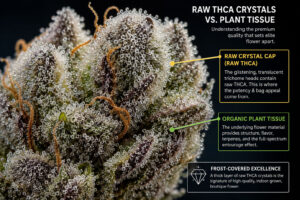
hapter 4: Common Consumption Methods for Beginners
Understanding What Is THCA also requires looking at how consumers interact with the plant in daily life. Because the molecule changes drastically based on whether heat is utilized, the way you use it determines the type of baseline experience you create.
1. Rolling and Pipe Smoking (Thermal Activation)
This remains the most traditional approach for long-time flower chasers across Europe. Rolling dense, hand-ground nuggets into classic papers or packing them into clean glass pipes subjects the material to direct combustion. The extreme heat of the flame instantly converts the raw chemical structure into an intensely potent, fast-acting inhale, delivering immediate body relaxation and mental decompression.
2. Dry-Herb Vaporizing (Controlled Activation)
Selective connoisseurs who prioritize clean lifestyle habits frequently turn to desktop or portable convection vaporizers. By dialing a device to a steady temperature range between 180 and 210 degrees Celsius, you can activate the raw crystals cleanly. This optimal window extracts the underlying terpene profiles (like Myrcene, Limonene, or Terpinolene) flawlessly without burning the organic plant tissue, preventing harsh smoke from irritating your lungs. Consumers who fully comprehend What Is THCA find that vaporizing offers the most efficient way to enjoy active cannabinoids.
To explore elite, frosty choices designed precisely for clean vaporizing grids, you can check out our top-tier selection of /product/mac-1-indoor-thca/] or experience the deep, savory attributes of our popular /product/dantes-wrath-indoor-thca/] profile to enhance your session.
3. Cold Juicing and Raw Edibles (Non-Intoxicating Consumption)
For those who wish to absorb the raw botanical benefits without any psychoactive effects, consuming raw flower is an emerging wellness practice. Some users blend raw buds directly into fresh morning green juices, while others craft cold infusions. This allows the body’s digestive system to absorb the unaltered raw compound directly into peripheral pathways, capturing pure antioxidant support without any cognitive changes. This raw intake demonstrates exactly What Is THCA in its purest, unheated form.
If you are planning a large batch of raw extracts or domestic kitchen infusions, ordering full colas can become costly; instead, smart buyers frequently use budget-friendly /product/cheap-thca-flower-trim/] or opt for the highly aromatic, citrus-driven /product/lemon-haze-indoor-thca-trim/] shake options to maximize value.
Chapter 5: Navigating Legal Frameworks and Compliance within Europe
For any beginner learning about What Is THCA, navigating the complex web of cross-border transport and legal definition is absolutely paramount to guaranteeing a stress-free experience. The core legality of premium hemp flower inside continental borders relies heavily on the plant’s natural composition at the time of transit.
Because raw flower contains almost zero active Delta-9 THC in its unheated state, it neatly aligns with industrial agricultural definitions. To be distributed safely within the single market, the crop must be harvested from certified agricultural hemp varieties that possess a total dry-weight Delta-9 THC concentration safely below the region’s mandatory 0.3% limit. This quantitative limit is fundamental to defining What Is THCA under regional trade guidelines.
+-----------------------------------------------------------------------+
|                       EU LEGAL STANDARDS (2026)                       |
+-----------------------------------------------------------------------+
| MAXIMUM DELTA-9 THC THRESHOLD: | 0.3% Total Dry-Weight Basis          |
| REQUIRED DOCUMENTATION:        | 3rd-Party Lab Report (CoA)           |
| MONITORED BY:                  | European Union Drugs Agency (EUDA)    |
+-----------------------------------------------------------------------+
To prevent shipping delays and protect consumer safety, every single batch must be independently verified by third-party laboratories. These organizations issue a comprehensive Certificate of Analysis (CoA) validating that the product complies with regional guidelines.
For definitive overviews regarding current drug policies, international transport mandates, and technical definitions for commercial cannabinoid derivatives across European borders, consumers can review the up-to-date parameters managed directly by the European Union Drugs Agency (EUDA). Understanding What Is THCA from a legal standpoint allows buyers to review official regulatory documentation and see how tracking models handle unheated agricultural biomass.
Chapter 6: Reported Benefits and the Power of Terpenes
While premium vendors prioritize pure consumer care and make no definitive medical claims, anecdotal reviews and emerging cannabinoid studies suggest that raw plant profiles offer substantial wellness potential. When you understand What Is THCA, you discover that it does not work in a vacuum; rather, it thrives through a biological synergy called the “entourage effect,” where cannabinoids and aromatic terpenes amplify one another.
Because high-end indoor crops are cured slowly to preserve these fragile volatile compounds, the combined profile is frequently explored by individuals seeking:
-
Physical Relaxation and Comfort: Easing deep muscle soreness and melting away structural body tension after intense physical exertion or demanding industrial shifts.
-
Nervous System Decompression: Assisting a racing, overstimulated mind to naturally quiet down background chatter and find balance amid everyday stress.
-
Calming Daytime Focus: Enjoying the functional clarity of raw profiles or clean, micro-dosed vapor sessions that maintain full daytime productivity. Buyers who study What Is THCA appreciate how these qualities support an active lifestyle.
Chapter 7: Essential Quality Flags for Smart Buyers
As the market grows, beginners must learn to spot the clear operational differences between top-shelf, luxury indoor crops and mass-produced low-tier industrial biomass. Many unverified digital shops distribute low-grade outdoor material that contains heavy metals, harsh pesticide residues, or excess water leaves that make the smoke incredibly irritating to your throat. When evaluating product listings, checking for a clear explanation of What Is THCA is a great indicator of vendor transparency.
+-----------------------------------------------------------------------+
|                       THE PREMIUM CHECKLIST                           |
+-----------------------------------------------------------------------+
| 1. Clear Lab Tracking:   | Verifiable, QR-coded third-party CoA.      |
| 2. Immaculate Visuals:   | Tight, dense bud architecture with zero    |
|                          | visible seeds or large, ragged fan leaves. |
| 3. Loud Terpene Profile: | Immediate pungent aroma of gas, fruit, or  |
|                          | pine upon opening the sealed package.       |
+-----------------------------------------------------------------------+
When you look for elite attributes and learn What Is THCA, remember that a fair price does not require sacrificing real potency. Beginners looking for an exceptional, all-around introductory option can check out our well-balanced /product/budget-buds-thca-flower/] line, or experience the ultra-sweet, candied profile of our premium /product/pink-runtz-exotic-thca/] selections to begin their collection with true royal standards.
Chapter 8: Securing Smell-Proof, Professional Shipping
The final piece of the puzzle for a beginner learning What Is THCA is ensuring a safe, secure checkout. Top-tier providers ship every single order inside thick, multi-layered, completely smell-proof vacuum seals hidden within entirely unbranded boxes. Your parcel moves swiftly from automated fulfillment hubs straight to your destination address within 2 to 3 business days, completely hassle-free. By choosing lab-certified, premium flowers, you take full control of your botanical journey. Treat yourself like royalty and elevate your collection today!