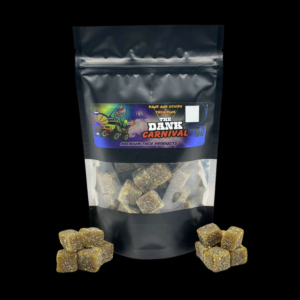
If you are searching for Buy Magic Mushroom Gummies, you may be looking for information about mushroom-infused sweets, their ingredients, product testing or their legal status in Europe. However, not every product advertised as a magic mushroom gummy contains the same substances. Some products are associated with psilocybin, others contain different psychoactive mushroom compounds, and some are marketed as non-psychoactive functional mushroom supplements.
Understanding these differences is essential. The name on a packet does not establish what a gummy contains, whether its ingredients have been independently tested or whether it is legally permitted in your country.
THCa King Europe publishes information about the European cannabinoid and related product markets. You can visit the THCa King Europe homepage, explore the THCa King Europe shop and read additional educational content through the THCa King Europe blog.
This guide explains the different types of mushroom gummies, the substances associated with psychedelic mushrooms, product transparency and the legal considerations that matter when researching this category.
What Are Magic Mushroom Gummies?
Magic mushroom gummies are edible products marketed as containing mushroom-derived ingredients associated with psychedelic or other psychoactive effects.
The expression is used broadly in online advertising, so it does not identify one standard formulation. Products sold under similar descriptions may contain very different substances.
Some of the categories encountered in this market include:
- Psilocybin-related products: Associated with psilocybin or psilocin, the psychoactive compounds found in certain mushroom species.
- Amanita-related products: Associated with compounds such as muscimol and ibotenic acid.
- Functional mushroom gummies: Products containing ingredients from mushrooms such as lion’s mane or reishi, which are marketed as non-psychoactive supplements.
- Mixed mushroom products: Products combining multiple mushroom-derived ingredients.
These categories are not interchangeable. A functional mushroom gummy should not be assumed to contain psilocybin, while a product advertised as a psychedelic mushroom gummy should not be assumed to contain the ingredients stated in its marketing.
For general information about the website and its published product categories, visit THCa King Europe.
Understanding Psilocybin and Psilocin
Psilocybin and psilocin are the principal psychoactive compounds associated with many hallucinogenic mushroom species.
Psilocybin is converted into psilocin in the body. Psilocin interacts with serotonin receptors and can alter perception, mood, cognition and sensory experiences.
The effects can be unpredictable. They may include changes in how a person experiences time, emotions, sounds and visual information. Some experiences can also involve anxiety, confusion or psychological distress.
The European Union Drugs Agency’s Hallucinogenic Mushrooms Drug Profile provides scientific background on these compounds, the mushroom species associated with them and their legal treatment.
It is important to distinguish scientific research into psilocybin from general commercial approval. Research into potential medical applications does not mean that psychedelic gummies are approved medicines or unrestricted consumer products.
Buy Magic Mushroom Gummies: What Should You Know About Ingredients?
People searching for Buy Magic Mushroom Gummies may encounter a wide variety of product descriptions. The most important starting point is understanding which substances a product actually claims to contain.
1. Psilocybin-containing gummies
Psilocybin is controlled under the United Nations Convention on Psychotropic Substances of 1971. European countries apply national laws governing its possession, production and supply.
A gummy containing psilocybin should not be treated as an ordinary confectionery product. Its ingredients and legal classification can raise controlled-substance issues, regardless of its sweet appearance or packaging.
The United Nations Office on Drugs and Crime provides information about international drug-control conventions.
2. Amanita and muscimol gummies
Some products advertised as magic mushroom gummies are associated with Amanita muscaria rather than psilocybin-containing mushroom species.
Amanita muscaria contains compounds including muscimol and ibotenic acid. These are different from psilocybin and psilocin, and their effects and risks should not be confused.
The European Commission’s TRIS notification concerning mushroom-derived products records serious intoxication cases involving Amanita mushrooms and muscimol, including cases associated with gummies.
This is an important reminder that a product marketed as a mushroom sweet is not necessarily harmless or accurately labelled.
3. Functional mushroom gummies
Functional mushroom products are a different category. They may contain ingredients from mushrooms such as:
- Lion’s mane.
- Reishi.
- Cordyceps.
- Chaga.
These products are commonly marketed as food supplements or wellness ingredients. They should not automatically be described as psychedelic products.
Their legality and suitability for sale still depend on the ingredients, applicable food regulations, product claims and national requirements.
For more educational content about the wider European product market, explore the THCa King Europe blog.
Why Product Labelling and Laboratory Testing Matter
A product description is not a substitute for reliable evidence about its ingredients.
When researching mushroom gummies, it is important to distinguish between information printed on packaging, manufacturer statements and independently verified laboratory results.
Clear ingredient declarations
A product should identify its ingredients clearly. Vague phrases such as natural mushroom blend or proprietary psychedelic formula do not provide enough information to establish what a gummy contains.
Where psychoactive substances may be involved, uncertainty about ingredients is especially concerning.
Independent laboratory documentation
A Certificate of Analysis, or COA, is a laboratory report recording the results of specified tests on a submitted sample.
Depending on the testing programme, a report may provide information about identified substances, concentrations or contaminants.
However, a COA has limitations. It does not automatically prove that every gummy in a batch has the same composition, that all possible contaminants were tested or that the product is legally authorised.
Accurate product claims
Be cautious about descriptions promising guaranteed effects, exact potency or medical benefits without reliable evidence.
A product should not be promoted as a treatment for depression, anxiety, addiction or other medical conditions unless the relevant medical and regulatory requirements have been satisfied.
Are Magic Mushroom Gummies Legal in Europe?
The legal status of magic mushroom gummies is an important consideration for anyone researching this keyword.
There is no single general permission that allows the sale of every mushroom gummy throughout Europe. National legislation differs, and the legal assessment can depend on the substances present, the mushroom species, the preparation and the activity involved.
Psilocybin and international controls
Psilocybin and psilocin are listed under Schedule I of the United Nations Convention on Psychotropic Substances of 1971.
EU Member States have implemented national controls concerning these substances. However, the way national laws treat the mushrooms themselves and different preparations can vary.
The EUDA explains these differences in its Hallucinogenic Mushrooms Drug Profile.
National laws must be checked separately
A product’s status in one country does not establish that it can legally be sold, possessed, imported or delivered in another.
For example, the Netherlands has specific rules covering prohibited magic mushroom species. The Dutch Public Prosecution Service explains that both processed and unprocessed mushrooms containing certain psychoactive substances fall within the relevant controls.
Its official policy is available here: Dutch Public Prosecution Service – Opium Act Policy.
The Dutch government’s general guidance also explains that possessing, producing or dealing in controlled drugs can constitute a criminal offence: Government.nl – Drugs and the law.
These examples demonstrate why it is important to check the law of the specific country rather than assume that an online listing is evidence of legal availability.
Food supplement regulations
Some mushroom gummies are marketed as food supplements rather than psychedelic products. This does not automatically mean they can be marketed without regulatory checks.
The European Union’s Novel Food framework covers certain foods and ingredients that were not consumed to a significant degree within the EU before 15 May 1997.
The European Commission explains the framework and authorisation requirements here: European Commission – Novel Food.
Food regulations and controlled-substance laws are separate issues. A product may need to comply with both, depending on its ingredients and intended use.
Health and Safety Considerations
Mushroom gummies should not be assumed to be safe simply because they resemble ordinary sweets.
There are several important considerations.
Uncertain composition
Products from unregulated sources may not contain the substances or concentrations stated on their packaging. This creates uncertainty about their potential effects.
Psychoactive effects
Psilocybin and other psychoactive compounds can affect perception, mood and cognition. Experiences may be unpredictable and can involve distressing psychological effects.
Risks from mislabelled products
A product described as a natural mushroom gummy may contain a different psychoactive substance from the one a consumer expects. The European Commission’s documented muscimol-related intoxication cases illustrate why accurate identification matters.
Medical claims
Research into psychedelic substances is ongoing, but research findings do not automatically establish that a commercial gummy is an authorised treatment.
The EUDA’s FAQ on the Therapeutic Use of Psychedelic Substances explains the difference between clinical research, medical authorisation and unregulated psychedelic practices.
Anyone experiencing severe confusion, seizures, loss of consciousness or other serious symptoms after an unknown mushroom product should seek urgent medical assistance.
Magic Mushroom Gummies Compared With Functional Mushroom Gummies
Understanding the difference between psychedelic and functional mushroom products can prevent confusion when researching online listings.
| Category | Typical ingredients or description | Main consideration |
|---|---|---|
| Psilocybin-related gummies | Products associated with psilocybin or psilocin | Controlled-substance legislation may apply |
| Amanita-related gummies | Products associated with muscimol or ibotenic acid | Distinct psychoactive effects and safety concerns |
| Lion’s mane gummies | Functional mushroom ingredient | Food and supplement compliance |
| Reishi gummies | Functional mushroom ingredient | Ingredient and product-claim requirements |
| Cordyceps gummies | Functional mushroom ingredient | Verify composition and applicable food rules |
A product’s category should be established from its actual ingredients rather than its advertising name.
For more information about the material published on our website, visit THCa King Europe or browse the THCa King Europe blog.
Frequently Asked Questions About Buy Magic Mushroom Gummies
What are magic mushroom gummies?
Magic mushroom gummies are edible products marketed as containing mushroom-derived ingredients. Depending on the product, they may be associated with psilocybin, other psychoactive mushroom compounds or non-psychoactive functional mushroom ingredients.
Do all magic mushroom gummies contain psilocybin?
No. The term is used broadly in marketing. Some products are associated with psilocybin, others with Amanita-related compounds such as muscimol, and some contain functional mushroom ingredients. The actual formulation must be checked.
Are psilocybin gummies legal throughout Europe?
No. Psilocybin and psilocin are controlled under international drug-control conventions, and European countries apply national legislation. The rules concerning mushrooms and processed products can vary between jurisdictions.
Are functional mushroom gummies the same as psychedelic gummies?
No. Functional mushroom gummies commonly contain ingredients such as lion’s mane, reishi or cordyceps. They should not automatically be treated as products containing psilocybin or other psychedelic substances.
Does a Certificate of Analysis prove that mushroom gummies are safe?
No. A COA only reports the results of the tests performed on a submitted sample. It does not guarantee that every product in a batch is identical, that every potential contaminant was tested or that a product is legally authorised.
Are magic mushroom gummies approved medicines?
A product marketed as a magic mushroom gummy is not automatically an authorised medicine. Clinical research into psilocybin does not establish that commercial gummies are approved treatments.
Where can I find more information about THCa King Europe?
Visit the THCa King Europe homepage, explore the shop section and browse the THCa King Europe blog for information published on the website.
Final Thoughts on Buy Magic Mushroom Gummies
Searching for Buy Magic Mushroom Gummies requires more than comparing product names and packaging. It is important to understand which mushroom-derived substances a product may contain, whether its ingredients are clearly identified and which national regulations apply.
Psilocybin, psilocin and muscimol are not interchangeable substances. Products associated with these compounds can have different effects, risks and legal classifications. Functional mushroom gummies are another distinct category and should not be confused with psychedelic products.
European regulations also differ between countries. A product advertised online should never be assumed to be legal simply because it is described as natural, a supplement or a mushroom edible.
For more information about the European cannabinoid market and educational material published on our website, visit THCa King Europe, explore the shop and read additional articles through the blog.
Editorial note: This article is educational and does not advertise psilocybin or other controlled psychoactive mushroom products as available through THCa King Europe. Do not add claims about stock, potency, ingredients, medical benefits or legal availability unless independently verified and compliant with the relevant laws.