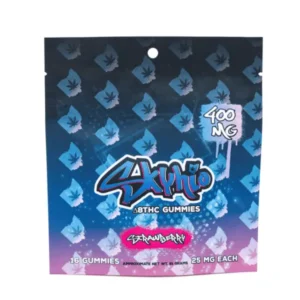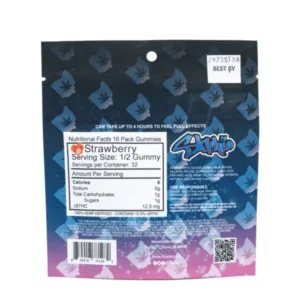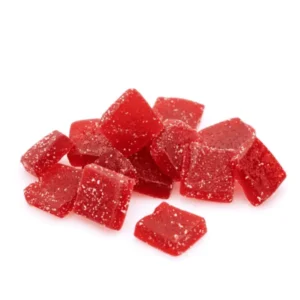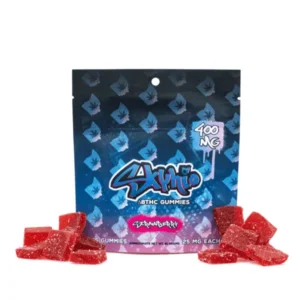
Delta 8 gummies are edible products associated with Delta-8 tetrahydrocannabinol (Delta-8 THC), a cannabinoid found naturally in small quantities in the cannabis plant. They have attracted attention because they are presented in a familiar confectionery format, but their contents are very different from ordinary sweets. Delta-8 THC is psychoactive, meaning it can affect perception, mood, memory and coordination.
Understanding Delta 8 gummies requires more than reading the product label. It is important to know how Delta-8 THC differs from Delta-9 THC and CBD, why manufacturing and laboratory testing matter, what scientific authorities say about potential risks and how European regulations may apply.
At THCa King Europe, readers can explore educational information about cannabinoids and cannabis-derived products. This guide provides an overview of Delta 8 gummies, their ingredients, testing considerations, potential risks and the importance of checking the law in the country concerned.
What Are Delta 8 Gummies?
Delta 8 gummies are edible products formulated with Delta-8 THC. Delta-8 THC is one of several cannabinoids associated with Cannabis sativa. It is structurally related to Delta-9 THC, another well-known cannabinoid, but the two compounds have a slightly different chemical structure.
Although Delta-8 THC occurs naturally in cannabis, it is generally present in very small quantities. Commercially concentrated Delta-8 THC is often produced by converting hemp-derived CBD through chemical processes. This makes manufacturing quality, purification and independent laboratory analysis particularly important considerations.
Delta 8 gummies may resemble conventional fruit-flavoured sweets, but they should not be confused with ordinary confectionery or non-intoxicating CBD products.
For more information about cannabinoid terminology and cannabis-derived product categories, visit the THCa King Europe homepage and explore the THCa King Europe blog.
What Is Delta-8 THC?
Delta-8 THC, also known as delta-8-tetrahydrocannabinol, is a psychoactive cannabinoid. Its chemical structure is similar to Delta-9 THC, although the position of a double bond differs.
This small structural difference does not mean Delta-8 THC is non-intoxicating. It can affect cognitive and psychomotor abilities, and scientific authorities have highlighted similarities between its effects and those of Delta-9 THC.
The US Centers for Disease Control and Prevention (CDC) describes Delta-8 THC as psychoactive and notes that its health effects are not yet fully understood.
Read the CDC’s official information here:
https://www.cdc.gov/cannabis/faq/
Delta-8 THC should therefore not be described as harmless, non-psychoactive or automatically safe simply because it may be derived from hemp.
Delta 8 Gummies vs Delta 9 Gummies
One of the most common questions about cannabinoid edibles concerns the difference between Delta-8 and Delta-9 THC.
Both compounds are psychoactive cannabinoids, but they are not chemically identical.
Chemical structure
Delta-8 THC and Delta-9 THC have similar molecular structures. The difference is the position of a double bond within the molecule.
This difference affects how the compounds interact with the body, but it does not make Delta-8 THC equivalent to CBD or a non-intoxicating ingredient.
Scientific understanding
Delta-9 THC has a longer history of scientific study. Research into Delta-8 THC is more limited, and questions remain about its effects, product composition and potential contaminants.
In November 2025, the European Food Safety Authority (EFSA) published an assessment explaining that Delta-8 THC and Delta-9 THC have similar potency for the purposes of its acute reference-dose assessment. EFSA recommended applying the existing acute reference dose for Delta-9 THC to the combined intake of Delta-8 and Delta-9 THC.
This reference value is a scientific risk-assessment measure, not a recommended serving size or a guarantee that a particular product is safe.
Read EFSA’s announcement:
https://www.efsa.europa.eu/en/news/delta-8-thc-efsa-sets-safe-intake-level
Labelling and product information
A product label should clearly identify the cannabinoid it contains. Consumers and researchers should not assume that a product described simply as a hemp edible contains CBD alone.
The actual cannabinoid profile should be established through suitable analytical testing.
Delta 8 Gummies vs CBD Gummies
Delta-8 THC and cannabidiol (CBD) are different cannabinoids and should not be treated as interchangeable.
CBD is generally not associated with the same intoxicating effects as THC. Delta-8 THC, by contrast, is psychoactive and may affect attention, memory, perception and coordination.
The distinction matters because products marketed under the broad category of hemp-derived products can contain very different ingredients.
A label using words such as “hemp”, “natural” or “cannabinoid” does not establish that a product is non-intoxicating.
Readers interested in learning more about cannabinoids can browse the THCa King Europe website for additional educational information.
Why Is Delta-8 THC Used in Edible Products?
Delta-8 THC has appeared in different product formats, including gummies, other confectionery-style edibles and oils.
Edibles are a distinct product category because they are consumed rather than inhaled. Their effects can differ from those of inhaled cannabis, including the time it takes for effects to become noticeable and how long those effects may last.
The CDC explains that cannabis edibles can take between 30 minutes and two hours to produce noticeable intoxicating effects. Their effects can also last longer than expected.
This delayed onset can contribute to accidental overconsumption. It is one reason why THC-containing edible products require clear identification, responsible storage and careful safety controls.
Official information:
https://www.cdc.gov/cannabis/health-effects/poisoning.html
Why Manufacturing Quality Matters
Manufacturing quality is an important issue when evaluating Delta-8 THC products.
Because concentrated Delta-8 THC is often produced through chemical conversion from other cannabinoids, the manufacturing process may involve additional substances and purification steps.
If production is poorly controlled, unwanted reaction by-products, residual chemicals or other contaminants may remain in the final material.
The US Food and Drug Administration (FDA) has raised concerns about Delta-8 THC products, including inconsistent formulations, inaccurate labelling and potentially harmful contaminants associated with certain manufacturing processes.
The FDA’s consumer guidance explains these concerns:
A product description alone cannot demonstrate that manufacturing has been properly controlled. Independent testing and transparent documentation are important parts of evaluating product quality.
Understanding Certificates of Analysis for Delta 8 Gummies
A Certificate of Analysis (COA) is a laboratory document that reports analytical findings for a tested sample.
For cannabinoid products, a COA may provide useful information about the compounds detected and their measured concentrations. Depending on the laboratory and testing panel, it may also include information about certain contaminants.
When examining a laboratory report, consider the following areas.
1. Cannabinoid profile
The cannabinoid profile identifies the cannabinoids detected in the sample. It can help distinguish Delta-8 THC from Delta-9 THC, CBD and other compounds.
2. Measured concentration
A report may state the measured cannabinoid concentration in a particular sample. This information should be clear and consistent with the product documentation.
3. Residual solvents and impurities
Depending on the analytical panel, testing may include screening for residual solvents or other impurities associated with manufacturing.
This is particularly relevant for products containing concentrated cannabinoids produced through chemical conversion.
4. Heavy metals and pesticides
Some laboratory panels also examine heavy metals and pesticide residues. The presence or absence of these tests should be checked directly in the report.
5. Batch identification
A COA should identify the tested sample or batch clearly enough to establish which product it relates to.
A report from a different batch does not automatically establish the composition of the product being described.
For further information about cannabinoid product categories and testing terminology, visit THCa King Europe.
Are Delta 8 Gummies Legal in Europe?
The legal status of Delta 8 gummies is an important consideration, particularly because laws governing cannabis-derived products differ between European countries.
There is no universal rule that makes every Delta-8 THC product lawful throughout Europe.
The European Union has several legal frameworks that may apply to cannabis-derived products, including controlled-substance legislation, food regulations and rules governing medicinal products. National legislation can also impose additional restrictions.
The European Union Drugs Agency (EUDA) explains that cannabis-derived products may be treated differently depending on their composition, intended use and legal classification.
Its guidance also makes clear that the EU’s industrial hemp framework should not be interpreted as general permission to market all cannabis-derived products.
Read the EUDA’s official information:
https://www.euda.europa.eu/publications/faqs/cannabis-laws-in-europe-faq_en
Delta-8 THC and European food regulations
The European Food Safety Authority published a specific assessment of Delta-8 THC in food in November 2025.
EFSA explained that Delta-8 THC is a psychoactive cannabinoid that can be detected in some hemp-derived food products, including candies and supplements marketed as hemp products.
The assessment is important because it demonstrates that Delta-8 THC is not simply an alternative name for non-intoxicating hemp ingredients.
The European Commission also explains that novel foods must meet applicable EU authorisation requirements before being placed on the EU market.
Official information:
https://food.ec.europa.eu/food-safety/novel-food_en
Businesses and consumers should not assume that a product is authorised for sale as food merely because it is described as hemp-derived.
Always check the current requirements in the relevant country. Product availability, online advertising or a supplier’s location does not establish that possession, sale, importation or consumption is lawful in another jurisdiction.
Potential Risks and Safety Considerations
Delta-8 THC is psychoactive, and its effects can be unpredictable. The scientific evidence is still developing, so it is important to avoid exaggerated claims about its safety or benefits.
Potential adverse effects associated with Delta-8 THC exposure may include:
- Anxiety or panic
- Dizziness
- Confusion
- Vomiting
- Changes in perception
- Impaired memory and attention
- Reduced coordination
- Drowsiness
The FDA has received adverse-event reports involving Delta-8 THC products, including reports associated with edible products. These reports do not establish the risk for every product or individual, but they are an important safety signal.
The FDA also warns that some Delta-8 products may be packaged in ways that resemble ordinary sweets or popular food brands, creating a risk of accidental ingestion.
Keep products away from children and pets
THC-containing gummies should never be left where children or pets can access them. Their confectionery-like appearance can make accidental ingestion particularly concerning.
Products should be clearly identified and securely stored. Packaging should not imitate familiar sweets or encourage children to mistake the contents for ordinary food.
Avoid driving while impaired
THC can affect reaction time, coordination, attention and decision-making. Anyone affected by THC should not drive or operate machinery.
Seek medical help when necessary
If accidental ingestion occurs, particularly involving a child, or someone experiences a severe or unexpected reaction, seek appropriate medical or emergency assistance.
For more information, consult the FDA’s official guidance:
How to Evaluate Delta 8 Gummies Information
When researching Delta 8 gummies, it is useful to look beyond advertising descriptions and consider the evidence behind a product’s claims.
Here are several questions worth asking:
- Is the cannabinoid clearly identified? The product information should distinguish Delta-8 THC from Delta-9 THC and CBD.
- Is there independent laboratory documentation? Look for a relevant analytical report rather than relying only on a marketing statement.
- Does the report identify the tested batch? The documentation should correspond to the sample or batch being described.
- Are the ingredients transparent? Product information should not conceal relevant ingredients or potential allergens.
- Are manufacturing claims supported? Claims about purity, safety or quality should have appropriate supporting evidence.
- Are the legal requirements understood? Check the applicable national rules rather than assuming that hemp-derived products are automatically permitted.
For more educational content about cannabinoids, visit the THCa King Europe blog or return to the THCa King Europe homepage.
Frequently Asked Questions About Delta 8 Gummies
1. What are Delta 8 gummies?
Delta 8 gummies are edible products containing Delta-8 THC, a psychoactive cannabinoid found naturally in small quantities in cannabis. Commercially concentrated Delta-8 THC is often produced through chemical conversion from other cannabinoids.
2. Are Delta 8 gummies psychoactive?
Yes. Delta-8 THC is psychoactive and can affect perception, attention, memory and coordination.
3. What is the difference between Delta 8 and Delta 9 THC?
They are structurally similar cannabinoids with a different position of a double bond in their chemical structures. Both are psychoactive, and EFSA has assessed their potency as similar for its acute reference-dose assessment.
4. Are Delta 8 gummies the same as CBD gummies?
No. CBD and Delta-8 THC are different cannabinoids. CBD is generally not associated with the same intoxicating effects as Delta-8 THC.
5. Are Delta 8 gummies legal in Europe?
Their legal status depends on the relevant national laws and applicable EU rules. There is no blanket permission that applies to every Delta-8 THC edible throughout Europe.
6. Why is laboratory testing important?
Laboratory testing can help establish the cannabinoid profile and, depending on the testing panel, identify certain contaminants or manufacturing residues.
7. Can Delta 8 THC affect driving?
Yes. Delta-8 THC can impair attention, coordination and other abilities needed for safe driving. Anyone affected should not drive or operate machinery.
8. Does hemp-derived mean non-intoxicating?
No. Hemp-derived products can contain psychoactive cannabinoids. The word “hemp” does not guarantee that a product is non-intoxicating or legally permitted.
9. What is a Certificate of Analysis?
A Certificate of Analysis is a laboratory report containing analytical results for a tested sample. It may identify cannabinoids and other substances included in the laboratory’s testing panel.
Conclusion: Understanding Delta 8 Gummies and Their Regulations
Delta 8 gummies are edible products associated with Delta-8 THC, a psychoactive cannabinoid that is chemically related to Delta-9 THC. Although Delta-8 THC occurs naturally in small quantities, concentrated commercial products may involve additional manufacturing processes that make product testing and transparency especially important.
Readers should understand the differences between Delta-8 THC, Delta-9 THC and CBD, pay attention to independent laboratory documentation and recognise that edible THC products can carry risks. European legal requirements also vary, so a product should never be assumed to be lawful throughout Europe simply because it is described as hemp-derived.
At THCa King Europe, readers can continue exploring educational information about cannabinoids and cannabis-derived product categories. Visit the THCa King Europe blog for additional articles and the website’s shop section for general product information.
The most important principles are transparency, accurate product information, independent testing and compliance with the laws that apply in the relevant country.