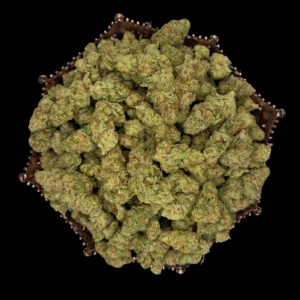
Interest in specialist hemp products and cannabinoid terminology continues to grow across Europe. Among the product-related search terms attracting attention is Hashburger Indoor THCA. People researching this keyword may want to learn about the Hashburger name, understand what indoor cultivation means, discover how THCA is measured and identify the documentation that helps verify cannabinoid-related products.
At THCa King Europe, we aim to provide a useful online destination for exploring hemp and cannabinoid-related information. This article examines Hashburger Indoor THCA from an educational perspective, covering product identification, cultivation terminology, laboratory testing and important European regulatory considerations.
A product name alone cannot establish its genetics, cannabinoid concentration, terpene profile, cultivation method or legal status. Reliable product-specific information and appropriate documentation are essential when evaluating any cannabinoid-related listing.
What Is Hashburger Indoor THCA?
The phrase Hashburger Indoor THCA combines a distinctive product name with two descriptions: indoor cultivation and THCA.
Hashburger is the product or strain name used in this search phrase. Specific claims about its genetic origins, terpene composition, aroma, cannabinoid percentages or production history should only be made when supported by reliable producer documentation.
The term indoor generally describes a cultivation environment in which growing conditions are managed within an enclosed space. THCA, meanwhile, stands for tetrahydrocannabinolic acid, a naturally occurring cannabinoid found in cannabis plants.
Understanding these three elements separately makes it easier to evaluate product descriptions:
- Hashburger: The name used to identify the product or strain.
- Indoor: A cultivation description that should be supported by producer information.
- THCA: A cannabinoid that is chemically related to delta-9 THC but is not the same compound.
Readers interested in learning more about cannabinoid-related products can visit the THCa King Europe homepage and explore the general information available in the THCa King Europe shop.
Understanding Indoor Cultivation
Indoor cultivation refers to growing plants in an enclosed environment where certain environmental conditions can be controlled.
Unlike outdoor cultivation, which depends more directly on natural weather and seasonal conditions, indoor production can provide greater control over lighting, temperature, humidity and airflow.
However, the word indoor should not automatically be treated as proof of superior quality. Cultivation conditions are only one part of the wider production process.
The finished product may also be influenced by the producer’s practices, handling, storage, quality-control procedures and laboratory testing.
Why cultivation information matters
When researching Hashburger Indoor THCA, readers may encounter descriptions such as premium indoor, controlled-environment cultivation or carefully produced flower.
These expressions should be supported by meaningful information rather than accepted as independent proof of quality.
Useful documentation may include:
- The identity of the producer or responsible supplier.
- A clear description of the cultivation method.
- Relevant batch identification.
- Appropriate laboratory reports.
- Accurate information about the finished product.
- Relevant compliance documentation.
A transparent description allows readers to distinguish between verified facts and general marketing language.
For additional information about hemp and cannabinoid terminology, explore the THCa King Europe blog.
What Is THCA?
THCA is short for tetrahydrocannabinolic acid. It is one of the naturally occurring cannabinoids found in cannabis plants.
THCA is chemically related to delta-9 tetrahydrocannabinol, commonly known as THC. However, the two compounds have different chemical structures.
THCA can undergo a process known as decarboxylation. During this process, a carboxyl group is removed from the molecule, converting THCA into delta-9 THC. Heat can initiate this chemical change.
This distinction is important when interpreting laboratory results and product descriptions.
A report showing THCA and delta-9 THC as separate measurements should be read carefully. The figures describe different compounds and should not be treated as interchangeable.
The European Union Drugs Agency explains this distinction and the analytical challenges involved in measuring THCA and THC in cannabis products.
Read its official explanation here:
EUDA – Why Is Defining Cannabis Important?
THCA and CBD are different cannabinoids
CBD stands for cannabidiol. It is another naturally occurring cannabinoid, but it is chemically different from THCA.
The distinction is relevant when evaluating product descriptions because the regulatory treatment of CBD and THCA-containing products may differ.
A product should not be assumed to qualify under CBD or industrial-hemp provisions simply because its description includes the word hemp.
For more general information, readers can visit THCa King Europe and explore the educational articles in our blog section.
Why Laboratory Testing Matters for Hashburger Indoor THCA
Laboratory testing is an important part of understanding a cannabinoid-related product.
Descriptions such as premium, indoor or high THCA are not substitutes for analytical evidence. Where measurable composition claims are made, appropriate testing documentation helps readers understand what was actually examined.
A Certificate of Analysis, commonly called a COA, is a laboratory report that records the results of tests performed on a submitted sample.
Depending on the laboratory and the testing programme, a COA may include:
- THCA measurements.
- Delta-9 THC measurements.
- Other cannabinoids included in the analysis.
- Sample or batch identification.
- The date of testing.
- The laboratory responsible for the analysis.
- Analytical methods and measurement units.
How to evaluate a Certificate of Analysis
A useful first step is to confirm that the document relates to the exact product or batch being researched.
A report from another product or an unrelated batch does not automatically establish the composition of the item under consideration.
Readers should also check whether the laboratory is identifiable, whether the report is dated and whether the tested substances are clearly listed.
It is important to understand the limitations of laboratory documentation. A COA reports tests performed on a submitted sample. It does not necessarily prove that every item in a batch is identical, that every possible contaminant has been tested or that the product is legally authorised.
Understanding THCA and THC measurements
The method used by a laboratory can affect how cannabinoid measurements are reported.
The EUDA explains that gas chromatography involves a heating stage that can convert THCA into THC during analysis. This is one reason laboratory methods and reporting conventions matter when interpreting cannabinoid figures.
For reliable product research, readers should check whether a report identifies THCA and delta-9 THC separately and explains the analytical method used.
The EUDA’s technical explanation is available here:
EUDA – Cannabis Definitions and THCA/THC Measurement
Readers can also explore the general product information available through the THCa King Europe shop.
What Should a Reliable Hashburger Product Description Include?
A useful product description should provide clear, accurate information without making unsupported promises.
When researching Hashburger Indoor THCA, consider the following areas.
1. Clear product identification
The listing should identify the product category and the business responsible for its description.
A name by itself is not sufficient to verify the origin, composition or characteristics of a product.
2. Producer transparency
Information about the producer or responsible supplier helps establish accountability.
Readers should be able to distinguish between confirmed production details and descriptive language used for promotional purposes.
3. Appropriate laboratory documentation
Where analytical results are presented, they should be traceable to the relevant sample or batch.
A generic certificate should not be treated as proof of the composition of every item carrying the same name.
4. Accurate cultivation claims
Descriptions such as indoor-grown or controlled-environment cultivation should be supported by reliable information.
The word indoor alone does not establish that a product has been cultivated according to a particular standard.
5. Correct legal information
Product descriptions should not suggest that every THCA product is automatically legal across Europe.
The applicable rules depend on national legislation and the classification and composition of the product.
You can explore the main THCa King Europe website for general information and use the shop page to review the site’s product-related content.
European Regulations and THCA Products
Anyone researching Hashburger Indoor THCA should understand that European cannabis regulations are not uniform.
There is no single blanket rule that makes every product described as THCA, hemp-derived or indoor-grown lawful for sale and possession in all European countries.
The legal treatment of a particular product may depend on:
- Its actual chemical composition.
- Whether it contains controlled substances.
- The type of product and how it is classified.
- Its intended use.
- The country where it is marketed, supplied or possessed.
- Applicable national and European regulatory requirements.
The European Union Drugs Agency’s cannabis laws FAQ, revised on 21 April 2026, explains the differences between national approaches and the rules that may apply to commercial and medical cannabis-derived products.
Official reference:
EUDA – Cannabis Laws in Europe FAQ
Industrial hemp legislation is not blanket THCA authorisation
European agricultural rules provide a framework for qualifying industrial hemp varieties and certain hemp-related activities.
However, the agricultural framework for hemp cultivation and production does not automatically authorise every cannabis flower, extract, concentrate or cannabinoid product.
The EUDA specifically explains that the agricultural hemp framework was developed for the hemp industry and should not be interpreted as a general authorisation for other cannabis-derived products.
This distinction is particularly important when evaluating products marketed as low-THC, hemp-derived or THCA.
Official reference:
EUDA – Laws Covering Medical and Commercial Cannabis-Derived Products
Why national rules must be checked
A product may be treated differently in different European countries. A description or legal interpretation that applies in one jurisdiction should not automatically be applied elsewhere.
Before relying on any claim about product availability, importation, possession or delivery, readers should consult the relevant national legislation and regulatory authorities.
An online product listing is not proof that the item is legally authorised in every destination country.
For more educational information about the European market, visit the THCa King Europe blog.
Frequently Asked Questions About Hashburger Indoor THCA
What is Hashburger Indoor THCA?
Hashburger Indoor THCA is the product-related search phrase covered by this guide. It combines a product or strain name with an indoor cultivation description and the cannabinoid THCA. Specific product characteristics require reliable documentation.
What does indoor mean in a product description?
Indoor generally means that cultivation takes place in an enclosed environment where growing conditions can be managed. It does not independently establish the quality, composition or safety of the finished product.
Is THCA the same as THC?
No. THCA and delta-9 THC are chemically distinct compounds. THCA can be converted into delta-9 THC through decarboxylation, a process that can be initiated by heat.
Is indoor THCA automatically legal in Europe?
No. Legal status depends on the product’s composition, classification, intended use and the laws of the relevant country. The word indoor does not establish legal authorisation.
Why is a Certificate of Analysis important?
A COA provides information about laboratory tests performed on a submitted sample. It can help verify specific composition claims, but it does not automatically prove that a product is legally authorised or that every item in a batch has an identical composition.
Does an industrial hemp THC threshold automatically apply to THCA flower?
No. Agricultural hemp thresholds should not be treated as universal permission for all cannabis-derived products. The EUDA explains that the agricultural framework has a specific purpose and does not automatically determine the legal status of other products.
Where can I find more information about THCA?
You can visit the THCa King Europe homepage, browse the shop section and explore additional educational information in the blog section.
Final Thoughts on Hashburger Indoor THCA
Hashburger Indoor THCA brings together three subjects that deserve careful consideration: product identification, indoor cultivation terminology and cannabinoid composition.
The most useful approach to researching a product with this name is to look beyond the marketing description. Producer information, product-specific documentation and reliable laboratory testing can help establish what is actually being described.
Understanding the difference between THCA and delta-9 THC is equally important. Laboratory measurements must be interpreted in the context of the analytical method used, and a Certificate of Analysis should not be confused with legal authorisation.
European regulations also require careful attention. Industrial hemp provisions do not automatically authorise every THCA flower or cannabis-derived product, and national laws can differ considerably.
For further general information, visit THCa King Europe, explore the THCa King Europe shop and read more articles in the THCa King Europe blog.