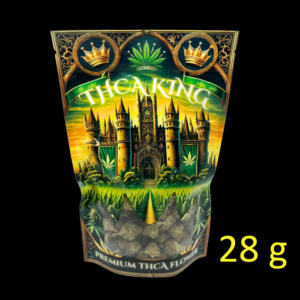
The search for Packaged THCA Flower reflects an interest in cannabis flower products presented in labelled, sealed and organised packaging. For people researching this category, packaging is an important part of the product experience because it can provide information about product identity, stated weight, batch details, storage recommendations and available laboratory documentation.
However, attractive packaging alone does not establish product quality, cannabinoid content or legal compliance. Understanding what is inside the package, how the product has been tested and whether the relevant documentation is available is just as important as the packaging itself.
At THCa King Europe, we recognise the importance of clear product information for visitors researching THCA-related products. This guide explains the meaning of packaged THCA flower, what to look for in product labelling, why laboratory testing matters, how storage information should be considered and what European regulatory issues readers should understand.
What Is Packaged THCA Flower?
Packaged THCA flower refers to cannabis flower presented in a container, pouch or other form of product packaging. The packaging may be designed to protect the contents, display product information and identify the product or batch.
Depending on the supplier and applicable regulations, packaging may include information such as:
- Product name or description.
- Stated net weight.
- Batch or lot identification.
- Cannabinoid information.
- Manufacturer or responsible business details.
- Packaging or production date.
- Storage instructions.
- Relevant warnings and legal information.
- A reference to a laboratory report or Certificate of Analysis, where available.
The exact information required depends on the product category and the country in which it is marketed. A label should never be assumed to meet every legal requirement simply because it looks professional.
Understanding THCA Flower
THCA stands for tetrahydrocannabinolic acid. It is a cannabinoid acid naturally produced by cannabis plants.
THCA is chemically related to delta-9 THC, but the two compounds are not identical. When exposed to sufficient heat, THCA can undergo decarboxylation, a chemical process that converts it into delta-9 THC.
This distinction matters when interpreting product descriptions and laboratory results. A report may list THCA and delta-9 THC separately, while another may include a calculated total THC value.
Readers should check whether a figure represents a measured concentration or a calculated value. A headline percentage without supporting information is not enough to establish the complete cannabinoid composition of a product.
For further background, the European Union Drugs Agency provides information about cannabis chemistry and the importance of distinguishing cannabinoid acids from their decarboxylated forms.
Why Does Packaging Matter?
Packaging can play several practical roles in presenting and identifying a product. It can also make important information easier to find.
1. Product identification
A clear label helps distinguish one product from another. Product names, descriptions and batch identifiers can help readers connect the package with the relevant product information.
A product name alone does not prove its genetic identity or chemical composition. Where those details matter, supporting documentation is necessary.
2. Protection during handling
Packaging can provide a physical barrier between the contents and the external environment. The level of protection depends on the material, closure, design and handling conditions.
A sealed package should not automatically be described as tamper-proof, airtight or moisture-proof unless those characteristics have been established.
3. Clear product information
A well-organised label can make it easier to locate information about weight, batch identification, storage and testing.
Clear information is particularly useful when different products have similar names or descriptions.
4. Traceability
Batch or lot numbers can help connect a packaged product to its supporting records. This is important when checking whether a laboratory report relates to the particular product being described.
5. Responsible presentation
Packaging should communicate product information accurately. Claims about potency, purity, freshness, safety or legal status should be supported rather than used simply as promotional language.
What Should You Look for on a Packaged THCA Flower Label?
When researching Packaged THCA Flower, it is useful to understand the information that may appear on a product label.
Product name: The name should be consistent across the packaging, product description and supporting records.
Net weight: The stated quantity should be clear and expressed in an appropriate unit, such as grams. Net weight refers to the product itself, not the weight of the packaging.
Batch or lot number: This identifier can help connect the package with batch-specific documentation.
Cannabinoid information: If cannabinoid percentages are displayed, readers should be able to understand which compounds are being measured and how the figures are presented.
Responsible business details: Depending on applicable rules, packaging may need to identify the manufacturer, importer, distributor or other responsible business.
Storage information: Any storage recommendations should be clear and consistent with the product’s documented requirements.
Warnings and legal information: Applicable warnings, restrictions and mandatory information depend on the product and the jurisdiction.
A label should be treated as a source of product information, not as independent proof that every statement is correct.
The Importance of Laboratory Testing and Certificates of Analysis
A Certificate of Analysis, often shortened to COA, is a laboratory report containing results from tests performed on a submitted sample.
For packaged THCA flower, a relevant COA can help readers understand the measured cannabinoid profile and any additional testing performed.
When reviewing a laboratory report, consider checking:
- The laboratory’s identity.
- The sample identification.
- The batch or lot number, where provided.
- The date the sample was received and tested.
- The analytical methods used.
- The reported cannabinoid values and units.
- Which contaminant tests were actually performed.
- Any qualifications or limitations stated in the report.
It is important to match the COA to the product and batch being described. A report for a different sample should not automatically be treated as evidence about the contents of a particular package.
A COA also has limitations. It only reports the results of the tests performed on the submitted sample. It does not establish that every possible contaminant was tested or that every package in a batch has exactly the same composition.
For this reason, batch identification and transparent documentation are important parts of responsible product information.
Packaging, Storage and Product Information
Packaging and storage are related, but they are not the same thing.
Packaging describes the material and container used to present a product. Storage refers to the conditions under which that product is kept.
Cannabis flower is plant material, and its characteristics can change depending on environmental conditions and handling. Factors such as temperature, humidity, light exposure and time may be relevant to storage.
When researching packaged products, readers should look for clear storage instructions and avoid assuming that a particular package guarantees long-term preservation.
Suppliers should not make unsupported claims such as guaranteed freshness or a fixed shelf life without suitable evidence.
It is also useful to distinguish between the following terms:
- Sealed packaging: A package that has been closed. This does not necessarily mean it is airtight.
- Tamper-evident packaging: Packaging designed to show evidence if it has been opened or interfered with.
- Moisture-resistant packaging: Packaging designed to reduce moisture transfer under specified conditions.
- Child-resistant packaging: Packaging designed to meet applicable child-resistance requirements.
These terms describe different characteristics. They should not be used interchangeably.
Different Types of THCA Flower Product Descriptions
Packaged THCA flower may be described using cultivation terms such as indoor, greenhouse, outdoor, mixed light or light assist.
Understanding these descriptions can help readers interpret product information.
Indoor THCA flower
Indoor cultivation generally relies primarily on artificial lighting within an enclosed growing environment.
Greenhouse THCA flower
Greenhouse cultivation uses a protected structure that allows natural sunlight to enter. The degree of environmental control varies between facilities.
Outdoor THCA flower
Outdoor cultivation relies primarily on natural sunlight and environmental conditions.
Mixed-light THCA flower
Mixed-light cultivation combines natural sunlight with supplemental artificial lighting.
Light-assist THCA flower
Light assist generally refers to supplemental artificial lighting used alongside natural daylight. The precise meaning can vary between suppliers.
These terms describe cultivation approaches. They do not independently verify cannabinoid content, product quality or the accuracy of a particular product label.
European Regulations for Packaged THCA Flower
European regulatory requirements deserve particular attention.
There is no single blanket rule that makes every THCA flower product legal to package, sell, distribute, possess or transport throughout Europe. Laws differ between countries, and the legal treatment of a product can depend on its composition, classification and intended market.
The European Commission provides information about hemp cultivation under the Common Agricultural Policy. These rules include requirements relating to qualifying hemp varieties and agricultural production.
However, agricultural provisions for industrial hemp should not be interpreted as automatic authorisation for every cannabis flower product.
The European Union Drugs Agency explains that national approaches to cannabis laws differ and that rules covering low-THC or cannabis-derived commercial products may involve additional legal frameworks.
Before a product is marketed or distributed in a particular country, relevant requirements may include:
- National controlled-substance legislation.
- Rules concerning cannabis flowers and plant material.
- Applicable THC and cannabinoid definitions.
- Packaging and labelling requirements.
- Import and export restrictions.
- Product classification and intended use.
- Business licensing or authorisation requirements.
- Consumer protection and advertising rules.
A product description, package label or laboratory percentage does not independently establish that a product is legal in a particular country.
Readers should consult the relevant national authority or qualified legal adviser before relying on a legal interpretation.
Useful official resources include the European Commission’s hemp guidance and the European Union Drugs Agency’s cannabis laws FAQ.
How to Evaluate Packaged THCA Flower Product Information
A useful way to assess a packaged product is to compare the information displayed in several places.
Start with the package label. Check whether the product name, stated weight and batch identification are clear.
Next, review the supplier’s product description. Look for consistency between the online description and the package information.
If a COA is available, check whether its sample or batch identification corresponds to the product. Review the testing date, analytical method and specific results rather than relying only on a headline figure.
Finally, consider the applicable national rules. Even accurate packaging and laboratory documentation do not automatically establish legal permission to market or distribute a product.
This approach encourages informed research and helps separate verifiable information from unsupported promotional claims.
Exploring THCa King Europe
Visitors researching THCA-related product information can explore the THCa King Europe website and its published content.
Useful starting points include:
- THCa King Europe homepage: https://thcakingeurope.com/
- Shop and product-category information: https://thcakingeurope.com/shop/
- Educational articles and blog: https://thcakingeurope.com/blogs/
These pages provide internal starting points for exploring the website. For product-specific details, refer to the relevant product listing and available supporting documentation.
Where information is not published, it is better to request clarification than to assume a product has a particular laboratory result, packaging feature or legal status.
Frequently Asked Questions About Packaged THCA Flower
What does Packaged THCA Flower mean?
Packaged THCA Flower refers to cannabis flower presented in a container, pouch or other form of packaging. The packaging may display information such as product identity, weight, batch details and storage instructions.
Does professional packaging guarantee product quality?
No. Packaging can help protect and identify a product, but it does not independently verify cannabinoid content, purity, freshness or product safety. Supporting documentation and appropriate testing are needed for relevant claims.
What is a batch number on THCA flower packaging?
A batch or lot number is an identifier used to distinguish a particular production or supply batch. It can help connect a product with relevant records and laboratory documentation.
Why is a Certificate of Analysis important?
A COA reports the results of laboratory tests performed on a submitted sample. It can provide information about measured cannabinoids and other substances included in the testing scope. It should be checked for sample identity, date and relevance to the product.
Does packaged THCA flower have to include a label?
Labelling requirements depend on the product category and the country where it is marketed. Businesses should check the applicable national requirements rather than assume that one label format is accepted throughout Europe.
What is the difference between sealed and tamper-evident packaging?
Sealed packaging has been closed. Tamper-evident packaging is designed to provide visible evidence if someone has opened or interfered with it. A package may be sealed without being tamper-evident.
Is Packaged THCA Flower legal throughout Europe?
There is no universal answer for every product and country. National cannabis laws and product rules differ. EU industrial-hemp agricultural rules do not automatically authorise all THCA flower products.
Does the packaging show the exact cannabinoid content?
A label may display cannabinoid information, but the accuracy and relevance of that information should be checked against suitable laboratory documentation. A batch-specific COA can help verify the results for the sample tested.
Final Thoughts on Packaged THCA Flower
Packaged THCA Flower is a useful search topic for people interested in product presentation, labelling, traceability and quality information.
Good packaging can make product information easier to access and help identify a particular batch. However, it should always be considered alongside laboratory documentation, accurate product descriptions and the laws that apply in the intended market.
For readers researching THCA-related information, the most reliable approach is to look beyond appearance and promotional language. Check product identity, understand cannabinoid measurements, review relevant testing records and confirm local regulatory requirements.
To explore more information from THCa King Europe, visit https://thcakingeurope.com/ and browse the educational resources at https://thcakingeurope.com/blogs/.