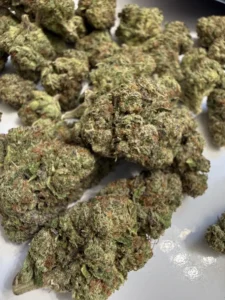
Permanent Marker THCA Flower is a keyword attracting attention among people researching distinctive cannabis cultivars, cannabinoid profiles and premium flower descriptions. The Permanent Marker strain is known in cannabis discussions for its pungent aromatic character and reported combination of herbal, citrus and peppery notes. When the name is paired with THCA flower, it also raises important questions about cannabinoid content, laboratory testing, product quality and applicable cannabis regulations.
At THCa King Europe, we believe that understanding cannabis terminology is an important part of making sense of product descriptions. This comprehensive guide explores the reported background of Permanent Marker, its commonly documented terpene profile, the difference between THCA and THC, and the information worth checking when researching cannabis flower.
For more information about our website and educational resources, visit THCa King Europe or explore the THCa King Europe blog.
What Is Permanent Marker THCA Flower?
Permanent Marker is a recognised cannabis cultivar commonly classified as a hybrid in public strain references. It is frequently discussed for its strong, distinctive aroma, which is described in some strain profiles as a combination of herbal, citrus, peppery and pungent notes.
The phrase Permanent Marker THCA Flower generally refers to cannabis flower marketed under the Permanent Marker strain name with an emphasis on its THCA content.
However, there is an important distinction between a strain description and a verified product specification. The name Permanent Marker does not independently confirm a particular cannabinoid percentage, terpene concentration, cultivation method or laboratory result. Different batches can have different chemical profiles.
Anyone researching a product carrying this name should therefore consider the batch-specific information rather than relying only on the cultivar name or promotional description.
Understanding the Permanent Marker Strain
Permanent Marker has developed a recognisable identity in cannabis strain discussions. Leafly classifies it as a hybrid and identifies myrcene as its dominant terpene in its strain-science profile. Limonene and caryophyllene are also listed among its prominent terpenes.
These details help explain why the cultivar is often associated with a complex aromatic description. Nevertheless, terpene profiles can vary between individual samples, and the characteristics reported in a general strain database should not automatically be attributed to every product sold under the same name.
You can read the Leafly Permanent Marker strain profile for additional background information.
What Makes Permanent Marker Distinctive?
Several characteristics are commonly associated with the cultivar:
- Herbal aromatic character: Myrcene is identified as a prominent terpene in Leafly’s strain-science profile.
- Citrus associations: Limonene is commonly associated with citrus-like aromatic descriptions.
- Peppery notes: Caryophyllene is often described as having a spicy or pepper-like aroma.
- Hybrid classification: Permanent Marker is commonly listed as a hybrid cultivar.
- Distinctive fragrance: Some strain descriptions report a pungent, complex aromatic profile.
These are general descriptions, not guaranteed characteristics of every batch. A laboratory-tested sample provides more specific information about its measured cannabinoid and terpene composition.
What Is THCA in Cannabis Flower?
THCA stands for tetrahydrocannabinolic acid. It is a naturally occurring cannabinoid found in cannabis plants and is chemically related to delta-9 THC.
Although the names are similar, THCA and THC are different compounds. THCA is the acidic precursor to THC. When exposed to heat, THCA can undergo a chemical reaction known as decarboxylation, which converts it into delta-9 THC.
This distinction is particularly important when reading descriptions of Permanent Marker THCA Flower. A product advertised with a high THCA percentage should not automatically be interpreted as non-intoxicating in every context.
The US Centers for Disease Control and Prevention explains that THCA itself is not psychoactive in its unheated form but can convert into impairing THC when exposed to heat. Read the CDC Cannabis Frequently Asked Questions for more information.
THCA vs THC: Key Differences
| Feature | THCA | Delta-9 THC |
|---|---|---|
| Full name | Tetrahydrocannabinolic acid | Delta-9 tetrahydrocannabinol |
| Chemical form | Acidic cannabinoid precursor | Neutral cannabinoid |
| Naturally present in cannabis | Commonly found in fresh cannabis | May be present in varying amounts |
| Effect of heating | Can convert into THC | Already in its neutral form |
| Intoxicating potential | Not considered intoxicating in its unheated form | Intoxicating and potentially impairing |
A laboratory report may list both THCA and delta-9 THC. Some testing and regulatory frameworks also consider potential THC formed from THCA when calculating total THC.
A commonly used theoretical calculation is:
Potential total THC = delta-9 THC + (THCA × 0.877)
The factor 0.877 accounts for the mass lost during decarboxylation. This is a theoretical estimate, not a guarantee of the amount of THC actually produced. Actual conversion depends on conditions, and legal testing definitions can differ between jurisdictions.
Understanding the Terpenes Associated With Permanent Marker
Terpenes are aromatic compounds found in many plants, including cannabis. They contribute to the distinctive fragrances associated with different cultivars.
Permanent Marker is often discussed in relation to three terpenes: myrcene, limonene and caryophyllene.
1. Myrcene
Myrcene is a terpene commonly associated with herbal, earthy and musky aromatic descriptions. It is identified as the dominant terpene in Leafly’s Permanent Marker strain profile.
It is also found in a variety of other plants. Its presence in a strain profile contributes to the overall description of the cultivar’s aroma.
2. Limonene
Limonene is commonly associated with citrus aromas, including lemon and orange-like notes. It is found in citrus peels and several other aromatic plants.
Its presence in cannabis laboratory reports can help explain why some samples are described as having a citrus character.
3. Caryophyllene
Caryophyllene is often associated with peppery, spicy and woody aromatic notes. It is also found in black pepper and other plants.
Together, these three terpenes provide a useful starting point for understanding the reported aromatic identity of Permanent Marker.
Important: A general strain profile is not a substitute for a batch-specific terpene test. The actual concentrations in an individual sample may be different.
Why Laboratory Testing Matters for THCA Flower
A Certificate of Analysis, commonly known as a COA, is a laboratory document that records the results of specified tests performed on a sample.
For people researching Permanent Marker THCA Flower, laboratory documentation is more useful than relying entirely on advertising claims or a strain name.
A COA may contain several categories of information.
Cannabinoid Testing
A cannabinoid panel can identify and measure compounds such as:
- THCA
- Delta-9 THC
- CBD
- CBDA
- CBG
- Other cannabinoids included in the laboratory’s testing scope
Results should be presented with clear units and should identify the sample that was tested. The reported percentage should not be assumed to apply to other batches.
Terpene Testing
A terpene panel may identify and quantify aromatic compounds such as myrcene, limonene and caryophyllene.
This can help establish whether the measured profile is consistent with the aromatic description being used for the particular batch.
Contaminant Screening
Depending on the testing programme and relevant requirements, a laboratory may screen for:
- Pesticide residues
- Heavy metals
- Microbial contamination
- Mycotoxins
- Residual solvents
Not every COA includes every category. Readers should check which tests were actually performed instead of assuming that a general laboratory-tested statement covers all possible contaminants.
Batch Identification and Report Dates
A useful COA should identify the tested sample, the laboratory, the report date and relevant sample or batch information.
It is important to check that the report corresponds to the product being described. A laboratory report for a different batch cannot independently verify the composition of the batch under consideration.
For further information, see the Illinois Department of Agriculture’s guide to understanding a Certificate of Analysis.
What Influences Cannabis Flower Quality?
Cannabis flower quality is a broad subject. It cannot be established through a single cannabinoid percentage, strain name or appearance description.
When researching Permanent Marker THCA Flower, consider the following information:
Cultivar Identity
The Permanent Marker name identifies a reported cultivar, but the name alone does not verify the genetics of a particular sample.
Product descriptions should distinguish between cultivar information based on general references and identity claims supported by relevant documentation.
Cannabinoid and Terpene Information
Cannabinoid percentages and terpene profiles provide different types of information. Cannabinoids describe measured chemical compounds, while terpenes are aromatic compounds that contribute to a plant’s fragrance.
Neither measurement alone proves that a product is superior to another product.
Storage and Product Documentation
Cannabis flower can change during storage. Product descriptions should be transparent about packaging, batch identification and any relevant storage information.
Avoid relying on unsupported statements about freshness, potency or consistency. Clear documentation is more informative than exaggerated marketing language.
Accurate Product Descriptions
A reliable description should separate verified facts from general strain characteristics. For example, a statement that a specific batch contains a measured amount of myrcene should be supported by a relevant laboratory result.
This approach helps readers understand the difference between a general cultivar profile and the actual characteristics of an individual product.
Is Permanent Marker THCA Flower Legal in Europe?
Cannabis legislation differs between European countries. The legal status of cannabis flower and cannabinoid products may depend on national controlled-substance laws, product composition, intended use, marketing and other applicable regulations.
It is not accurate to assume that a cannabis product is automatically legal throughout Europe because it is described as hemp-derived or because its label highlights a particular delta-9 THC figure.
The European Union Drugs Agency provides information about the different national approaches to cannabis legislation and the regulatory frameworks that can apply to cannabis-derived products.
Useful official references include:
- EUDA: Cannabis Laws in Europe – Frequently Asked Questions
- EUDA: Medical and Commercial Cannabis-Derived Products
- European Commission: Hemp
One important distinction is that European agricultural rules concerning qualifying industrial hemp do not automatically establish permission to market, possess or supply every cannabis flower or extract product.
Before making decisions involving a cannabis product, check the current laws of the specific country concerned. Where necessary, seek advice from a qualified legal professional familiar with that jurisdiction.
Health and Safety Considerations
THCA and THC should not be treated as interchangeable compounds. However, THCA can convert into THC when heated, and THC can cause intoxicating and impairing effects.
Cannabis can affect attention, memory, coordination and judgement. The intensity of effects can vary depending on the product, its composition and individual factors.
When researching THCA flower, keep these general considerations in mind:
- Do not assume that a product is non-intoxicating simply because its description emphasises THCA.
- Do not interpret strain descriptions as evidence of medical benefits.
- Do not drive or operate machinery while impaired.
- Keep cannabis products away from children and pets.
- Do not treat laboratory testing as proof that a product is completely risk-free.
- Consult a qualified healthcare professional if you have questions about cannabis and your health.
The CDC’s cannabis health information provides additional information about cannabis-related health effects and impairment.
Exploring Cannabis Information at THCa King Europe
Learning about cannabis cultivars and cannabinoids can make product descriptions easier to understand. THCa King Europe provides a website where visitors can explore cannabis-related information and educational content.
Visit the THCa King Europe homepage to learn more about the website. You can also browse the THCa King Europe shop for available website information and explore the blog section for additional educational articles.
When researching Permanent Marker THCA Flower, focus on transparent descriptions, reliable batch documentation and the applicable legal requirements. A recognised strain name is a useful starting point, but it should never replace accurate product information.
Frequently Asked Questions About Permanent Marker THCA Flower
1. What is Permanent Marker THCA Flower?
Permanent Marker THCA Flower is a term used for cannabis flower marketed under the Permanent Marker cultivar name with an emphasis on its THCA content. The exact cannabinoid and terpene composition can vary between batches.
2. Is Permanent Marker an indica or sativa strain?
Permanent Marker is commonly classified as a hybrid in public strain references. These broad classifications do not establish the precise chemical composition or effects of an individual batch.
3. What does Permanent Marker smell like?
General strain descriptions associate Permanent Marker with a distinctive, pungent aromatic profile. Myrcene, limonene and caryophyllene are among the terpenes identified in Leafly’s strain-science profile. The actual aroma can vary between samples.
4. Which terpenes are associated with Permanent Marker?
Leafly identifies myrcene as its dominant terpene, followed by limonene and caryophyllene. A batch-specific laboratory report is needed to confirm the measured terpene profile of an individual sample.
5. Does THCA turn into THC?
Yes. THCA can convert into delta-9 THC when exposed to heat through a process called decarboxylation. THC is intoxicating and can impair attention, coordination and judgement.
6. How can I understand a THCA flower laboratory report?
Check the cannabinoid results, terpene information where available, sample identification, laboratory details and report date. Also check which contaminant tests were performed. Not every COA includes every possible test.
7. Is Permanent Marker THCA Flower legal in every European country?
No. Cannabis laws and product regulations differ across European jurisdictions. The legal status of a product must be assessed under the current rules of the particular country.
8. Does a high THCA percentage mean better flower quality?
Not necessarily. Cannabinoid content is only one measurement. It does not independently establish cultivar identity, terpene composition, contaminant levels, cultivation quality or legal compliance.
9. Where can I find more information about THCA flower?
You can explore educational resources through the THCa King Europe blog and consult public information from organisations such as the CDC and the European Union Drugs Agency.
Final Thoughts
Permanent Marker THCA Flower is an interesting topic for anyone researching cannabis cultivars, aromatic profiles and cannabinoid chemistry. Its reported hybrid classification and association with myrcene, limonene and caryophyllene help explain why it has a distinctive identity in cannabis strain discussions.
However, the strain name alone cannot confirm the composition or quality of a particular batch. Understanding the difference between THCA and THC, reviewing laboratory documentation and checking the laws that apply in the relevant country are all important parts of informed research.
For more educational cannabis information, visit THCa King Europe and explore the THCa King Europe blog.