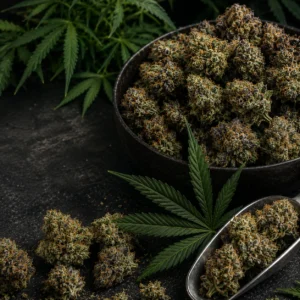
The phrase premium THCA flower is increasingly used in online discussions about cannabis-related products. People researching this category often want to understand what distinguishes a premium product from an ordinary product, how THCA content is measured, what laboratory reports reveal and which regulations apply in Europe.
However, the word “premium” does not automatically guarantee quality. Product descriptions may use terms such as indoor-grown, exotic, top-shelf or high-potency, but these expressions need to be supported by reliable information if they are to mean anything beyond marketing language.
At THCa King Europe, understanding cannabis-related terminology and accessing clear product information are important parts of navigating this market. This educational guide explains the characteristics commonly associated with premium THCA flower, the importance of independent laboratory testing and the European legal considerations readers should understand.
Whether you are researching THCA terminology or comparing product information published online, the following sections will help you evaluate claims more carefully.
What Is Premium THCA Flower?
Premium THCA flower is a marketplace description generally used for cannabis flower that is presented as belonging to a higher quality category and containing tetrahydrocannabinolic acid (THCA).
THCA is a naturally occurring cannabinoid acid produced by cannabis plants. It is chemically related to delta-9 THC, although the two compounds are different.
The term “premium” is not, by itself, a scientific classification or a universal regulatory standard. Different websites and sellers may use it to describe different characteristics, including:
- The claimed cultivation environment.
- The appearance and condition of the flower.
- The availability of batch-specific documentation.
- The reported cannabinoid profile.
- The consistency of product identification.
- The transparency of the product description.
These characteristics should be assessed individually. A premium label alone does not prove that a product has a particular cannabinoid concentration, contaminant status, terpene profile or legal classification.
For more information about the website and its educational resources, visit THCa King Europe.
Understanding THCA and THC
Before evaluating premium THCA flower, it is useful to understand the difference between THCA and THC.
THCA stands for tetrahydrocannabinolic acid. It is the acidic precursor to delta-9 THC and is naturally present in cannabis plant material.
When THCA undergoes decarboxylation, it can be converted into delta-9 THC. This chemical process involves the removal of a carboxyl group and is important in understanding cannabis chemistry.
THCA and THC should therefore be distinguished in scientific descriptions and laboratory reports.
The European Union Drugs Agency (EUDA) provides information about cannabis definitions, chemical composition and cannabinoid measurements in its Cannabis Laws in Europe FAQ.
This distinction also matters when interpreting product labels. A report listing THCA and delta-9 THC separately provides more specific information than a general claim about total cannabinoid content.
What Makes a THCA Flower Product “Premium”?
The word premium can be useful as a product-category description, but it should not replace objective information.
When researching premium THCA flowers, consider the following areas.
1. Clear product identification
A reliable description should explain exactly what type of product is being discussed.
Cannabis flower, resin, extracts, concentrates and infused products are different categories. Their composition and regulatory treatment may differ.
Product identification should be clear enough for readers to understand which material is being described and which documentation is relevant.
Visitors can explore the website information available through the THCa King Europe homepage and browse the shop section.
2. Transparent cannabinoid information
A cannabinoid profile provides analytical information about the measured compounds in a sample.
Depending on the testing programme, a report may include:
- THCA.
- Delta-9 THC.
- CBD.
- CBDA.
- CBG.
- Other measured cannabinoids.
A high reported THCA percentage does not automatically establish overall product quality. It is only one measurement and should be considered alongside the testing method, sample identification and other available information.
3. Product consistency and batch records
Consistency is an important consideration when evaluating claims about product quality.
Batch identification can connect a particular product lot with its associated production and testing documentation. Readers should check whether the report identifies the same sample or batch as the product description.
A report that cannot be reliably connected to the product being discussed provides limited evidence about that product.
4. Accurate descriptions
Some product descriptions use terms such as exotic, indoor, small-batch or top-shelf.
These expressions may describe how a product is marketed, but they do not automatically represent independently verified quality standards.
Claims about genetics, cultivation conditions, aroma, terpene composition or cannabinoid levels should be supported by product-specific information where they are presented as factual statements.
5. Transparent documentation
Good product documentation should explain what is known and what has actually been tested.
It should not make unsupported promises about safety, purity, legality or consistency. Transparency is more meaningful than simply using the word premium repeatedly.
Why Laboratory Testing Matters
Independent laboratory testing is an important part of understanding cannabis-related product information.
A Certificate of Analysis, commonly known as a COA, records the results of specified tests performed on a submitted sample.
Depending on the laboratory and testing programme, a COA may include cannabinoid measurements and selected contaminant results.
When evaluating a laboratory report, look for the following details.
Laboratory identity: The testing organisation should be clearly named.
Sample identification: The report should identify the sample that was analysed.
Batch reference: Where applicable, the report should identify the relevant product batch.
Testing date: A report should clearly state when the analysis was performed.
Analytical method: The method used should be identified where applicable.
Cannabinoid results: THCA and delta-9 THC should be distinguishable in the results.
Testing scope: Check which contaminants and other substances were included in the analysis.
Detection limits: Understand the laboratory’s reporting limits and any qualifications.
A COA has important limitations. It only reports the tests performed on the submitted sample. It does not establish that every item in a batch has identical composition, that every possible contaminant has been examined or that the product is legally authorised.
For further educational information, visit the THCa King Europe blog.
Indoor, Greenhouse and Other Cultivation Descriptions
Premium THCA flower descriptions sometimes refer to indoor or greenhouse cultivation.
These terms describe different growing environments, but neither automatically proves superior product quality.
Indoor cultivation
Indoor cultivation generally refers to growing plants in an enclosed environment where certain conditions can be managed.
A product described as indoor-grown should have supporting information if specific claims are made about its cultivation history.
Greenhouse cultivation
Greenhouse cultivation uses a protected growing structure that can provide some environmental control while allowing natural light.
The exact conditions vary between growing facilities, so the label alone cannot establish the quality of a particular sample.
Outdoor cultivation
Outdoor cultivation takes place in an open-air environment and depends on natural environmental conditions.
As with indoor and greenhouse descriptions, the cultivation category should not be treated as a substitute for laboratory results or batch documentation.
The most reliable assessment considers the available evidence rather than assuming that one cultivation label automatically means premium quality.
Is Premium THCA Flower Legal in Europe?
European cannabis legislation is complex, and there is no blanket authorisation covering every THCA flower product across all European countries.
The legal position may depend on the product’s chemical composition, physical form, intended use, applicable controlled-substance definitions and national legislation.
The EUDA’s Cannabis Laws in Europe FAQ, revised on 21 April 2026, explains the different approaches taken by European countries.
Understanding industrial hemp legislation
The European Union has an agricultural framework covering industrial hemp cultivated for specific purposes, including fibre and seeds.
The European Commission provides information about these requirements in its official hemp agricultural guidance.
However, these agricultural rules do not automatically authorise every cannabis flower, extract, concentrate or other THCA-containing product.
The EUDA explains that different legal frameworks may apply to cannabis-derived products, including medicinal products, cosmetics, foods and other commercial materials. Some rules apply at EU level, while others depend on national legislation.
Further details are available in the EUDA’s section on medical and commercial cannabis-derived products.
Why national regulations matter
A product advertised online should not automatically be assumed to be lawful in the country where a visitor lives.
Before making decisions involving a cannabis-related product, relevant questions include:
- How does the destination country define controlled cannabis materials?
- Does its legislation specifically address THCA?
- Are there separate rules for flowers and extracts?
- Are possession, supply or distribution restricted?
- Do import and export requirements apply?
- Are there additional requirements for commercial products?
A low delta-9 THC result does not automatically establish that a THCA-containing product is legal. Likewise, the word hemp on a product label does not guarantee exemption from national drug-control legislation.
For this reason, readers should consult current national legislation or a qualified legal professional before making decisions about possession, purchase, importation, transport or distribution.
How to Evaluate Premium THCA Flower Claims Online
When researching premium THCA flower, it is useful to distinguish between information that can be verified and statements that are primarily promotional.
Here are some practical points to consider.
Look for specific evidence. If a description claims a particular cannabinoid percentage, look for a relevant laboratory report.
Check batch details. Confirm whether the available documentation relates to the sample or batch being described.
Read the full report. Do not focus exclusively on one headline percentage.
Check the date. Older reports may not represent a current batch.
Question absolute legal claims. Statements such as “legal throughout Europe” require careful scrutiny.
Distinguish product categories. Flower, concentrate, extract and infused products should not be treated as identical.
For more information about the website and its available content, explore THCa King Europe, visit the shop or read related articles in the blog section.
Common Terms Used in Premium THCA Flower Descriptions
Understanding frequently used terms can help readers interpret online product information.
THCA flower: Cannabis flower described as containing tetrahydrocannabinolic acid.
Premium flower: A marketing description generally intended to communicate a higher product category, not a universal scientific grade.
THCA percentage: A laboratory-reported measurement of THCA concentration in a sample.
Delta-9 THC: A cannabinoid associated with the intoxicating effects of cannabis.
Decarboxylation: A chemical process through which THCA can be converted into THC.
COA: Certificate of Analysis documenting the results of specified laboratory tests.
Cannabinoid profile: A report listing the cannabinoids measured in a sample.
Batch number: An identifier used to connect a product lot with relevant documentation.
Terpenes: Naturally occurring compounds found in many plants, including cannabis. Any product-specific terpene claim should be supported by appropriate testing or documentation.
Frequently Asked Questions About Premium THCA Flower
What does premium THCA flower mean?
It is a marketplace description generally used for cannabis flower presented as belonging to a higher product category. However, premium is not a universal scientific grade or legal classification.
Does premium THCA flower always have a high THCA percentage?
No. The word premium does not establish a specific cannabinoid concentration. Any percentage claim should be supported by appropriate laboratory documentation.
Is indoor THCA flower automatically better than greenhouse flower?
No. Cultivation descriptions alone do not establish overall quality. Product-specific information and reliable testing are more useful when evaluating quality claims.
What is the difference between THCA and THC?
THCA is the acidic precursor to delta-9 THC. It can be converted into THC through decarboxylation, which changes its chemical structure.
Why should I check a COA?
A COA provides analytical information about a submitted sample. It can help readers understand reported cannabinoid measurements and the scope of selected laboratory tests.
Is premium THCA flower legal throughout Europe?
No universal rule authorises every THCA-containing product throughout Europe. National laws differ, and the legal classification depends on the product and applicable legislation.
Does a low THC result guarantee legality?
No. A low delta-9 THC measurement does not automatically determine the legal status of a product containing THCA or other cannabis-derived materials.
Where can I find more information about THCA products?
Visit THCa King Europe, explore the shop section and browse the educational blog.
Final Thoughts on Premium THCA Flower
Premium THCA flower is a phrase commonly used in the cannabis marketplace, but a premium label should never replace reliable evidence.
Understanding cannabinoid composition, reviewing laboratory documentation, checking batch identification and distinguishing marketing language from measurable product characteristics are all important when researching this category.
European regulations also deserve careful attention. Industrial hemp agricultural provisions do not automatically authorise every THCA-containing product, and national laws can differ considerably.
The most useful approach is to prioritise accurate descriptions, transparent documentation and current legal information.
For additional educational content, visit THCa King Europe, explore the shop section or browse the THCa King Europe blog.