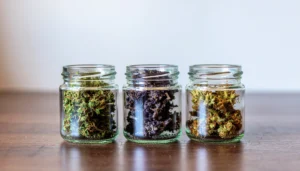
The term premium THCA flower is widely used when discussing cannabis varieties, cultivation standards, cannabinoid content and product quality. People researching premium THCA flower are often interested in understanding what distinguishes one variety from another, how cultivation methods influence plant characteristics, and what laboratory reports can reveal about cannabinoid and terpene composition.
However, the word premium should not be confused with a formal scientific classification. It is a descriptive term that businesses commonly use to communicate a particular quality positioning. A product labelled premium should ideally be supported by transparent information about its cultivation, composition, handling and laboratory testing.
At THCa King Europe, we aim to provide useful educational information about THCA flower, different varieties, cultivation environments and product transparency. This guide explores the characteristics commonly associated with premium THCA flower and explains how to evaluate quality claims more objectively.
What Is Premium THCA Flower?
Premium THCA flower generally refers to cannabis flower marketed as belonging to a higher-quality category. The description may refer to the variety’s reported genetics, physical characteristics, cultivation environment, cannabinoid profile, terpene composition or quality-control procedures.
There is no universally accepted scientific definition of premium THCA flower. Consequently, the term should be supported by measurable product information rather than treated as proof of quality.
Some characteristics commonly discussed in premium flower descriptions include:
- Documented cultivar or genetic information.
- Consistent and traceable production batches.
- Clearly reported cannabinoid concentrations.
- Laboratory-tested terpene profiles.
- Appropriate handling and storage information.
- Relevant contaminant testing.
- Transparent product descriptions.
These characteristics provide a more meaningful basis for evaluating a product than promotional language alone.
To understand the wider category, explore the THCA flower guide at THCa King Europe.
What Determines the Quality of Premium THCA Flower?
Quality is not determined by one characteristic. A more complete assessment considers several aspects of the plant and the processes involved in producing and documenting it.
1. Genetics and cultivar identity
Plant genetics influence many characteristics, including growth patterns, cannabinoid production and aromatic compounds.
Different cannabis cultivars can have different inherited characteristics. However, the same cultivar name does not necessarily guarantee identical chemical composition across different producers or batches.
Accurate strain information is therefore important when evaluating premium flower descriptions.
Popular cultivar names discussed in the wider cannabis market include:
- Lemon Cherry Gelato.
- Runtz.
- Zkittlez.
- Wedding Cake.
- Blue Dream.
- Oreoz.
- GMO.
- Ice Cream Cake.
These names are useful references, but they do not independently establish genetic authenticity or cannabinoid concentration.
Explore more cultivar terminology in our THCA flower strains guide.
2. Cannabinoid profile
Cannabinoids are naturally occurring chemical compounds found in cannabis.
Some of the cannabinoids commonly included in laboratory reports are:
- THCA.
- Delta-9 THC.
- CBD.
- CBG.
- CBN.
- CBC.
A product described as premium should not rely on an unsupported cannabinoid percentage. Where a specific concentration is advertised, a relevant laboratory report should be available to substantiate the claim.
It is also important to distinguish between THCA and delta-9 THC because they are chemically different compounds.
3. Terpene composition
Terpenes are aromatic compounds found in numerous plants, including cannabis.
They contribute to the characteristic aromas associated with different cultivars.
Some commonly discussed cannabis terpenes include:
Myrcene: A naturally occurring terpene found in several plants.
Limonene: Commonly associated with citrus-like aromas.
Beta-caryophyllene: Found in plants such as black pepper and cloves.
Pinene: Associated with pine-like aromatic characteristics.
Linalool: Commonly associated with floral aromas.
Different cannabis samples may contain different combinations and concentrations of these compounds.
A description such as citrus, floral, earthy or fruit-inspired should not automatically be interpreted as a verified terpene profile. Laboratory testing provides more reliable information about the compounds present.
For scientific background, see this research on cannabis terpenes and their chemical characteristics.
4. Physical characteristics
Appearance is frequently discussed when comparing different flower categories.
Descriptions may refer to colour, flower structure, visible surface characteristics and general presentation.
However, visual characteristics cannot independently establish cannabinoid concentration, genetic identity, contamination status or legal classification.
A product’s appearance should therefore be considered alongside documented production information and laboratory results.
5. Handling and traceability
Traceability is another important aspect of product transparency.
Useful documentation may identify the production batch, sample reference, testing laboratory and report date.
Without appropriate traceability, it can be difficult to determine whether a laboratory result corresponds to the product being described.
Premium Indoor THCA Flower: Understanding Cultivation Methods
Indoor cultivation is one of the production methods associated with premium THCA flower descriptions.
Indoor facilities generally operate within enclosed environments and may use artificial lighting, ventilation and environmental management systems.
The growing environment can influence plant development, although the actual results depend on the facility, cultivar and production conditions.
Factors that may influence cultivation consistency include:
- Light availability.
- Temperature conditions.
- Humidity management.
- Air circulation.
- Plant genetics.
- Environmental monitoring.
Indoor cultivation does not automatically guarantee a premium product. A quality assessment still requires supporting information about the actual flower.
For more information, read our dedicated indoor THCA flower guide.
Greenhouse cultivation
Greenhouse cultivation combines natural sunlight with a protective growing structure. Depending on the facility, additional lighting and environmental management equipment may also be used.
The level of environmental control can vary significantly between greenhouses.
Learn more in our greenhouse THCA flower guide.
Outdoor cultivation
Outdoor cultivation takes place in open-air agricultural environments. Plants are exposed more directly to natural weather and seasonal conditions.
Each cultivation method has different characteristics. None automatically guarantees superior cannabinoid content or overall quality.
Premium THCA Flower vs Exotic THCA Flower
Premium and exotic are two common terms used in cannabis product descriptions. Although they can overlap, they communicate different ideas.
Premium generally refers to a higher-quality market positioning, while exotic usually describes varieties marketed for their distinctive characteristics.
| Feature | Premium THCA flower | Exotic THCA flower |
|---|---|---|
| Main emphasis | Quality positioning | Distinctive variety characteristics |
| Genetics | May be documented | Often highlighted in descriptions |
| Aroma | Should be supported by relevant information | Often a central descriptive feature |
| Cannabinoid profile | Requires laboratory verification | Requires laboratory verification |
| Quality classification | Not a formal scientific grade | Not a formal scientific grade |
| Cultivation | Can vary | Can vary |
A flower variety may be described as both premium and exotic, but neither word independently verifies its composition or quality.
For more information, read our exotic THCA flower guide.
Understanding THCA, THC and CBD
Understanding cannabinoid terminology is essential when researching premium THCA flower.
What is THCA?
THCA stands for tetrahydrocannabinolic acid. It is an acidic cannabinoid naturally present in raw cannabis plant material.
THCA is chemically related to delta-9 THC but is not the same compound.
When exposed to heat, THCA can undergo decarboxylation, a chemical process that converts it into THC.
What is delta-9 THC?
Delta-9 THC, or delta-9-tetrahydrocannabinol, is the cannabinoid commonly associated with the intoxicating effects of cannabis.
It is important to distinguish its measured concentration from the concentration of THCA.
What is CBD?
CBD stands for cannabidiol. It is another naturally occurring cannabinoid found in cannabis and hemp varieties.
CBD has a different chemical structure from delta-9 THC and does not produce the same intoxicating effects.
What is total THC?
Some laboratory reports provide a theoretical total THC calculation:
Total THC = delta-9 THC + (THCA × 0.877)
The factor 0.877 accounts for the molecular-weight difference when THCA loses carbon dioxide during decarboxylation.
This calculation is useful for understanding potential THC content after conversion. However, it does not replace a regulator’s specific testing method or legal definition.
The University of Georgia Cooperative Extension guide to hemp chemistry and laboratory results explains cannabinoid measurements and this calculation in greater detail.
How to Read a Premium THCA Flower Certificate of Analysis
A Certificate of Analysis, commonly called a COA, is a laboratory document that reports the results of specified tests performed on a submitted sample.
It is an important source of information when evaluating cannabinoid and contaminant claims.
1. Check the sample identification
Look for the sample name, batch number, laboratory identification and report date.
These details help establish which sample was analysed.
2. Review cannabinoid measurements
Check whether the report includes:
- THCA concentration.
- Delta-9 THC concentration.
- CBD concentration.
- Other reported cannabinoids.
- Measurement units and testing methods.
Make sure the figures correspond to the claims being made in the product description.
3. Examine terpene information
Some laboratories provide a separate terpene analysis.
This may identify individual aromatic compounds and their measured concentrations.
A terpene report provides more useful evidence than relying exclusively on strain names or promotional descriptions.
4. Look for contaminant screening
Depending on the laboratory and testing package, a report may include tests for:
- Pesticide residues.
- Heavy metals.
- Microbial contamination.
- Mycotoxins.
- Residual solvents, where relevant.
A cannabinoid-only report does not establish that all these potential contaminants have been tested.
5. Check laboratory credibility
Look for the laboratory’s name, analytical methods and accreditation information.
Laboratory accreditation is relevant because it provides information about technical competence within a defined scope.
The National Institute of Standards and Technology’s cannabis laboratory quality assurance report discusses the importance of comparable cannabinoid measurements between laboratories.
You can also consult the Illinois Department of Agriculture’s guide to understanding a COA.
6. Understand the limits of a COA
A COA relates to the particular sample submitted for analysis.
It does not automatically prove that every item in a batch has identical composition, that every possible contaminant has been tested, or that a product is legally authorised in every country.
Batch traceability and appropriate sampling are therefore important.
Why Laboratory Testing Matters for Premium THCA Flower
Laboratory testing helps distinguish measurable product characteristics from unsupported marketing claims.
For example, a product description may state a particular THCA percentage. A relevant laboratory report can help determine whether that figure is supported by testing.
Testing can also provide information about terpene composition and, where included, contaminant screening.
The California Department of Cannabis Control provides an overview of the types of tests used in regulated cannabis testing, including cannabinoid, pesticide, heavy-metal and microbial analysis.
Read its official testing laboratory guidance.
Although regulatory requirements differ between jurisdictions, the document illustrates why a single cannabinoid percentage is not a complete quality assessment.
Is Premium THCA Flower Legal in Europe?
The legal status of THCA flower differs between European countries.
The word premium does not create a special legal classification, and a product marketed as hemp-derived is not automatically authorised for every purpose.
National laws may consider:
- The type of cannabis material.
- THCA and delta-9 THC concentrations.
- The product’s intended use.
- Processing and manufacturing.
- Controlled-substance definitions.
- Importation and distribution requirements.
- Licensing and authorisation.
European Union agricultural rules concerning industrial hemp should not be interpreted as blanket permission for every cannabis flower or cannabis-derived product.
A low delta-9 THC result does not automatically establish that a THCA-rich product is lawful.
For reliable background information, consult:
Always check the current official legislation in the relevant country before making assumptions about possession, importation, distribution or sale.
Product Transparency and the Meaning of Premium
The word premium can be useful as a descriptive term, but readers should look for supporting information rather than relying on the label alone.
A transparent product description should distinguish between:
Verified measurements: Cannabinoid or terpene concentrations supported by relevant laboratory analysis.
Cultivation descriptions: Information about whether production took place indoors, in a greenhouse or outdoors.
Cultivar information: The variety name and any available supporting genetic documentation.
Testing information: The laboratory, sample identification, report date and tests performed.
Regulatory information: Accurate statements that reflect the rules applicable to the relevant country.
At THCa King Europe, readers can explore additional educational material through our THCA flower section, premium flower resources and THCA flower strains guide.
Frequently Asked Questions About Premium THCA Flower
What is premium THCA flower?
Premium THCA flower is a descriptive term for cannabis flower marketed as belonging to a higher-quality category. The description may refer to cultivar information, cannabinoid composition, terpene characteristics, cultivation and testing standards. It is not a formal scientific grade.
What makes THCA flower premium?
A more meaningful assessment considers documented genetics, cannabinoid and terpene measurements, batch traceability, handling information and appropriate laboratory testing.
Is premium THCA flower always indoor-grown?
No. Premium is a quality-positioning term rather than a cultivation method. Products described as premium may be associated with indoor, greenhouse or outdoor cultivation.
What is the difference between premium and exotic THCA flower?
Premium generally describes a quality positioning, while exotic refers to a variety marketed as distinctive or unusual. Neither term independently proves product quality or chemical composition.
Does a higher THCA percentage mean better quality?
No. A cannabinoid percentage is only one measurement. It does not establish the product’s terpene profile, contaminant status, genetic identity or legal classification.
How can I verify THCA content?
Look for a relevant Certificate of Analysis from a laboratory that identifies the submitted sample and reports cannabinoid measurements. Check the report date, laboratory information and analytical method.
What are terpenes in THCA flower?
Terpenes are naturally occurring aromatic compounds. They contribute to the characteristic smells associated with different cannabis varieties. Their identities and concentrations can be measured through appropriate laboratory analysis.
Is premium THCA flower legal throughout Europe?
No. Cannabis laws differ between European countries. The legal status of a particular product depends on its composition, classification and applicable national regulations.
Does a COA guarantee that a product is safe?
No. A COA reports the results of the tests performed on a submitted sample. It does not necessarily cover every contaminant or establish that every item in a batch is identical.
Conclusion: Understanding Premium THCA Flower
Premium THCA flower is a broad descriptive category associated with products marketed for their cultivar characteristics, cultivation standards, cannabinoid profiles and overall presentation.
However, the term premium should not be treated as a scientific quality grade or a guarantee of specific chemical characteristics.
A more reliable evaluation considers genetics, terpene composition, cannabinoid measurements, laboratory testing, batch traceability and applicable legal requirements.
Understanding these factors helps readers interpret product descriptions more accurately and distinguish verified information from promotional claims.
For additional educational resources, visit THCa King Europe, explore our THCA flower guides and learn more about different THCA flower strains.