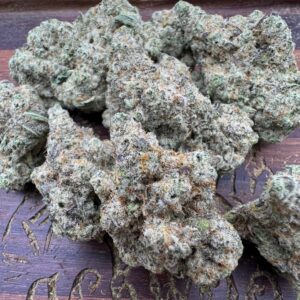
Silver Haze Indoor THCA is a search phrase that brings together two important areas of interest in the cannabis market: the well-known Silver Haze strain name and indoor-grown THCA flower. People researching this topic often want to understand what Silver Haze represents, what the term indoor cultivation means, how THCA differs from THC, and which quality indicators deserve attention when evaluating a cannabis-derived product.
Understanding these details is particularly important in Europe, where cannabis-related regulations differ between countries. A product’s name, laboratory results or description does not automatically establish that it is lawful to possess, distribute or sell in every European market.
At THCa King Europe, our educational content aims to help readers understand cannabis terminology, product information and the importance of transparent documentation. This guide examines Silver Haze Indoor THCA from an informational perspective, including its terminology, quality considerations, laboratory analysis and regulatory context.
What Is Silver Haze Indoor THCA?
The phrase Silver Haze Indoor THCA describes a cannabis-flower product identified by the Silver Haze name and presented as indoor-grown material containing tetrahydrocannabinolic acid, commonly abbreviated as THCA.
Each part of the name communicates different information.
- Silver Haze: A strain or cultivar name used to identify the plant material.
- Indoor: A description of the stated cultivation environment.
- THCA: The acidic cannabinoid naturally produced by cannabis plants before decarboxylation.
It is important to distinguish between a product name and independently verified product information. The Silver Haze name alone does not prove a particular genetic lineage, cannabinoid concentration, terpene composition or cultivation history. Those details require reliable documentation.
Readers interested in broader cannabis terminology can explore the educational resources available through the THCa King Europe website and browse the THCa King Europe blog for additional background.
Understanding the Silver Haze Name
Silver Haze is a recognised name within cannabis strain terminology. The name is commonly associated with the wider Haze family of cannabis varieties.
However, strain names are not always reliable evidence of genetic identity. Different producers may use the same cultivar name, and products sold under that name may not necessarily share identical genetics or characteristics.
When researching a product described as Silver Haze Indoor THCA, it is therefore useful to separate three questions:
- What cultivar name does the supplier use?
- Is there documentation supporting the stated identity?
- Are the product’s laboratory results and batch details available?
A responsible product description should avoid making unsupported claims about genetics, cultivation methods or chemical composition.
For additional information about cannabis products and terminology, visit the THCa King Europe homepage or explore the online shop, where applicable product information can be reviewed.
What Does Indoor THCA Flower Mean?
Indoor cultivation refers to growing plants inside a controlled environment rather than relying entirely on outdoor weather conditions.
Indoor agricultural facilities may use artificial lighting, ventilation systems, temperature controls and environmental monitoring. These systems can allow growers to manage certain conditions more consistently.
In cannabis product descriptions, the word indoor generally communicates the claimed cultivation environment. It does not independently establish the quality, purity, safety or legal status of the resulting material.
Several factors are relevant when evaluating claims about indoor-grown cannabis:
Cultivation transparency: A supplier should be able to explain what is meant by indoor cultivation and avoid presenting unverified growing claims as established facts.
Batch identification: Product documentation should identify the relevant batch or lot so that laboratory information can be connected to the material being described.
Laboratory testing: Independent analysis can provide information about the sample’s measured cannabinoid composition and the specific contaminants included in the testing programme.
Storage and handling information: Documentation about packaging, storage and handling can help explain how a product is managed after production.
Indoor cultivation is therefore one part of a product’s description, not a complete quality assessment.
Understanding THCA and THC
THCA stands for tetrahydrocannabinolic acid. It is a naturally occurring cannabinoid acid found in cannabis plants.
THCA and delta-9 THC are chemically related, but they are not identical. THCA can undergo a process called decarboxylation, in which it loses a carboxyl group and converts into THC. Heat can initiate this chemical transformation.
The European Union Drugs Agency explains that THCA is one of the principal cannabinoid acids produced by the cannabis plant and that heating can convert it into THC.
This distinction matters when reading laboratory reports and product descriptions. A label that focuses only on delta-9 THC may not communicate the complete cannabinoid composition of a sample.
For a detailed scientific and regulatory explanation, consult the European Union Drugs Agency’s guide to defining cannabis and understanding THCA and THC.
It is also important not to assume that a product is non-intoxicating or legally unrestricted simply because its description highlights THCA rather than delta-9 THC. Its chemical composition, intended use and applicable national legislation all matter.
How to Evaluate Silver Haze Indoor THCA Product Quality
Anyone researching a product described as Silver Haze Indoor THCA should look beyond its name and marketing description.
A useful evaluation begins with verifiable information.
1. Review the Certificate of Analysis
A Certificate of Analysis, often shortened to COA, is a laboratory document reporting the results of specified tests performed on a submitted sample.
A useful COA should identify the laboratory, sample or batch reference, testing date, analytical methods and measured results.
Depending on the testing programme, it may include:
- Delta-9 THC measurement.
- THCA measurement.
- Other cannabinoid measurements.
- Moisture or water-activity testing.
- Microbiological screening.
- Heavy-metal testing.
- Pesticide screening.
- Residual-solvent testing, where relevant.
Not every COA includes every category. Readers should check exactly which tests were performed rather than assuming that a laboratory report covers all possible contaminants.
A COA also does not automatically prove that every unit in a product batch is identical to the submitted sample. The connection between the tested sample and the supplied material is important.
2. Check the Laboratory’s Independence
The credibility of a laboratory report depends partly on the laboratory that produced it.
Look for identifiable laboratory details, appropriate analytical methods and clear reporting. Where available, check whether the laboratory holds relevant accreditation, such as ISO/IEC 17025 accreditation for the specific testing activities concerned.
A professional-looking certificate is not, by itself, proof of independent verification.
3. Confirm Batch Traceability
Batch traceability connects a product to its production or processing records.
For a product described as Silver Haze Indoor THCA, the batch reference on the product documentation should correspond with the batch reference on the relevant laboratory report.
If those details do not match, the report may not reliably describe the product being evaluated.
4. Avoid Unsupported Potency Claims
Cannabinoid percentages should come from relevant laboratory results rather than assumptions based on a strain name.
Silver Haze does not automatically have a particular THCA percentage. Growing conditions, genetics, processing, sampling and laboratory methods can all influence reported results.
A transparent product description should make it clear which figures are laboratory measurements and which are general descriptive information.
Why Laboratory Testing Matters
Laboratory testing is an important part of evaluating cannabis-derived materials because appearance and product names cannot establish chemical composition.
Two products carrying the same strain name may have different measured cannabinoid profiles. Similarly, a product described as indoor-grown cannot be assumed to have passed pesticide, microbiological or heavy-metal testing.
Readers researching Silver Haze Indoor THCA should therefore consider whether the available documentation provides enough information to assess the specific batch.
The European Union Drugs Agency also highlights analytical challenges in measuring THCA and THC. Different analytical approaches can affect how cannabinoid quantities are reported, making it important to understand what a laboratory result actually measures.
Read the EUDA’s explanation here:
EUDA – Why Is Defining Cannabis Important?
For more educational resources, visit the THCa King Europe blog.
Is Silver Haze Indoor THCA Legal in Europe?
The legal status of Silver Haze Indoor THCA cannot be determined from the product name alone.
European countries have different approaches to cannabis possession, cultivation, distribution and commercial supply. Rules can also distinguish between industrial hemp, medicinal cannabis, cannabis flowers, extracts, foods and other cannabis-derived products.
The fact that a cannabis variety may qualify for industrial hemp cultivation under certain agricultural rules does not mean that every product made from that plant is automatically authorised for unrestricted commercial sale.
The European Union Drugs Agency explains that there is no single harmonised EU law governing illicit cannabis use and personal possession. These matters are primarily addressed through the laws of individual Member States.
The EUDA also explains that the EU agricultural framework for industrial hemp was developed for hemp production, including fibre and seeds, and should not be interpreted as a general authorisation for other cannabis products.
Official references:
- EUDA – Cannabis Laws in Europe: Frequently Asked Questions
- EUDA – Laws Covering Medical and Commercial Cannabis-Derived Products
- European Commission – Agriculture and Rural Development
Before possessing, purchasing, distributing or importing a cannabis-derived product, readers should check the current legislation in the relevant country and obtain qualified legal advice where necessary.
A low delta-9 THC result should not be treated as automatic proof that a THCA flower product is lawful. The relevant legal definition may consider additional factors, including THCA itself, the form of the material, its intended use and the circumstances of the transaction.
What Information Should a Transparent Product Description Include?
A useful product description should help readers understand what is being represented without exaggerating or inventing details.
For a product carrying the Silver Haze Indoor THCA name, relevant information may include:
- The exact product name.
- The stated cultivar or strain identification.
- The claimed cultivation category.
- A clear description of the product’s composition.
- Batch identification.
- The date and source of laboratory testing.
- A link to the relevant Certificate of Analysis, if available.
- Applicable legal and safety information.
Product descriptions should not promise a particular effect, guarantee a specific potency or claim legal availability in every European country without reliable evidence.
Readers can visit the THCa King Europe website to explore its published information and use the shop section to review applicable product descriptions and documentation.
Silver Haze Indoor THCA: Important Questions to Ask
Before relying on a product description, consider these questions:
Is the Silver Haze identity independently documented?
A strain name is a label, not proof of genetic identity. Ask whether the supplier can provide reliable supporting information.
Is the product genuinely described as indoor-grown?
The term should accurately represent the stated cultivation environment and should not be used as an unsupported quality guarantee.
Is there a batch-specific COA?
The laboratory report should be traceable to the relevant batch and should identify the tests performed.
Does the report include both THCA and delta-9 THC?
Checking both measurements provides a clearer understanding of the reported cannabinoid profile.
Does the product comply with the law where it is located?
Legal rules differ between European countries. A product description or laboratory certificate cannot replace a country-specific legal assessment.
Are the product’s claims supported by evidence?
Be cautious about descriptions that promise particular effects, guaranteed purity or universal legal status without appropriate supporting documentation.
Final Thoughts on Silver Haze Indoor THCA
Silver Haze Indoor THCA is a product-search phrase that combines a familiar cannabis strain name, an indoor cultivation description and a specific cannabinoid designation.
Understanding those terms is only the starting point. Responsible product evaluation requires attention to batch identification, laboratory documentation, accurate cannabinoid reporting and applicable national legislation.
Indoor cultivation does not automatically guarantee superior quality, and a strain name does not establish a product’s exact chemical profile. Likewise, a low delta-9 THC measurement does not automatically make a THCA product lawful throughout Europe.
For readers researching cannabis terminology, product information and European market developments, the THCa King Europe homepage and THCa King Europe blog provide starting points for further reading. The shop page can also be consulted for relevant published product information, subject to applicable local laws.
The most reliable approach is to prioritise transparent documentation, independently verifiable laboratory results and up-to-date legal information rather than relying on product names or marketing claims alone.
Frequently Asked Questions About Silver Haze Indoor THCA
1. What is Silver Haze Indoor THCA?
Silver Haze Indoor THCA is a product description combining the Silver Haze cultivar name, a claimed indoor cultivation environment and THCA, or tetrahydrocannabinolic acid, a naturally occurring cannabinoid acid found in cannabis plants.
2. What does indoor mean in Silver Haze Indoor THCA?
Indoor refers to the stated cultivation environment. It generally means that the plants were grown inside a managed growing facility rather than outdoors. The term alone does not prove product quality or purity.
3. Is THCA the same as THC?
No. THCA and THC are chemically related but distinct compounds. THCA can convert into delta-9 THC through decarboxylation, which can occur when exposed to heat.
4. Does Silver Haze automatically have a particular THCA percentage?
No. The strain name does not establish a specific cannabinoid concentration. Reliable percentages should be supported by laboratory analysis of the relevant product batch.
5. Why is a Certificate of Analysis important?
A COA reports the results of specified laboratory tests on a submitted sample. It can help readers understand measured cannabinoid content and identify which additional quality or contaminant tests were performed.
6. Is Silver Haze Indoor THCA legal throughout Europe?
There is no universal answer. Cannabis laws differ between European countries, and the legal classification of a THCA product depends on the applicable national rules and the product’s characteristics. Always check current local legislation.
7. Where can I find more information about THCA products?
You can explore educational material and published product information through the THCa King Europe website, its blog and its shop.