Interest in THCA flower England has grown as more people search online for information about cannabis cannabinoids, product descriptions, laboratory testing and the legal position of THCA flower in the United Kingdom. However, understanding THCA products requires more than looking at a percentage on a product label or reading a supplier’s description.
THCA, or tetrahydrocannabinolic acid, is a naturally occurring cannabinoid found in cannabis. It is chemically related to delta-9 THC, but the two substances are not identical. THCA can also be converted into THC through a process known as decarboxylation.
For anyone researching THCA flower in England, three subjects are especially important: cannabinoid chemistry, reliable product documentation and UK controlled-drug legislation.
At THCa King Europe, we believe that clear information helps readers under
stand the differences between product claims and verifiable evidence. This guide explores the key considerations surrounding THCA flower, laboratory reports, product quality and the legal framework in England.
For more educational information about cannabinoids, visit THCa King Europe and explore our THCA blog.
What Is THCA Flower?
THCA flower refers to cannabis flower containing tetrahydrocannabinolic acid (THCA). THCA is one of several naturally occurring cannabinoids produced by the cannabis plant.
Other commonly discussed cannabinoids include:
- Delta-9 THC
- Cannabidiol (CBD)
- Cannabigerol (CBG)
- Cannabidiolic acid (CBDA)
- Cannabinol (CBN)
- Cannabigerolic acid (CBGA)
Each cannabinoid has its own chemical structure and properties. Their concentrations can vary between cannabis samples.
THCA is particularly important because it is the acidic precursor of delta-9 THC. When exposed to sufficient heat, THCA can lose a carboxyl group through decarboxylation and become THC.
This distinction matters when interpreting laboratory reports and product descriptions. A report showing a particular THCA percentage is not necessarily reporting the same quantity as the delta-9 THC percentage.
The European Union Drugs Agency (EUDA) provides background information on cannabis production and cannabinoid formation in its resource on cannabis production and biochemistry.
THCA and THC: Understanding the Difference
THCA and THC are closely related chemical compounds, but they should not be treated as interchangeable.
THCA is the acidic form, while delta-9 THC is the neutral form. Decarboxylation can convert THCA into THC, which is why the distinction is relevant to both laboratory testing and legal interpretation.
| Feature | THCA | Delta-9 THC |
|---|---|---|
| Full name | Tetrahydrocannabinolic acid | Delta-9-tetrahydrocannabinol |
| Chemical form | Acidic cannabinoid | Neutral cannabinoid |
| Relationship | Precursor to THC | Can form from THCA |
| Laboratory reporting | May be measured separately | May be measured separately |
| Legal interpretation | Depends on applicable legislation and product context | Controlled under UK drug legislation |
A low reported delta-9 THC concentration does not automatically establish that a cannabis flower product is lawful in England.
This is particularly important because UK legislation controls cannabis plant material and certain cannabinoids. Product composition and the legal definition of the material must both be considered.
For additional background, consult the EUDA’s explanation of defining cannabis and understanding THCA and THC.
THCA Flower England: What Does UK Law Say?
Anyone researching THCA flower England should understand the relevant provisions of the Misuse of Drugs Act 1971 and associated regulations.
Cannabis is generally classified as a Class B controlled drug in the UK. The Home Office explains that cannabis is controlled under Part II of Schedule 2 to the Misuse of Drugs Act 1971 and is also listed in Schedule 1 to the Misuse of Drugs Regulations 2001.
The general position is that possessing, supplying, producing, importing or exporting controlled cannabis is unlawful unless the relevant legal authority or exemption applies.
The Home Office’s official guidance is available here:
Low THC Cannabis (Industrial Hemp) Licensing Factsheet – GOV.UK
Are Cannabis Flowers Covered by Industrial Hemp Rules?
One common source of confusion is the industrial hemp THC threshold.
Some people assume that cannabis flower is automatically legal if its delta-9 THC concentration is below 0.2% or another specified threshold. That is not a correct general interpretation of UK law.
The Home Office’s industrial hemp policy is limited to the production of non-controlled hemp products from seeds and fibre. The guidance expressly distinguishes these parts from the leaves and flowers, which are controlled plant material.
The 0.2% figure mentioned in the guidance is used in the context of identifying varieties that may be cultivated under the industrial hemp licensing policy. It is not a general exemption allowing cannabis flowers to be sold, possessed or imported.
The official government guidance explains this distinction in detail:
This distinction is essential for anyone researching THCA flower in England.
Does THCA Have a Special Legal Exemption?
The Home Office’s drug licensing factsheet discusses THC acid precursors, including THCA-A and THCA-B. It explains that isolated THCA in its pure form is not controlled under the Misuse of Drugs Act 1971, but also notes that THCA can readily degrade into THC.
This does not mean that cannabis flower containing THCA is automatically exempt from drug controls.
The plant material itself and the other controlled substances it may contain must also be considered. A product’s legal status cannot safely be determined from a single cannabinoid percentage.
Read the official guidance here:
Home Office – Cannabis, CBD and Other Cannabinoids
Anyone involved in the possession, production, supply or importation of cannabis-related products should obtain advice from a UK solicitor experienced in controlled-drug legislation.
How to Evaluate THCA Flower Product Information
Beyond legal questions, readers researching THCA flower may encounter different product descriptions and laboratory claims.
A useful evaluation should distinguish between verified information, supplier statements and general marketing language.
1. Cannabinoid Profile
A cannabinoid profile describes the measured amounts of specific cannabinoids in a sample.
Depending on the laboratory and the test requested, a report may include:
- THCA
- Delta-9 THC
- CBD
- CBDA
- CBG
- CBN
- Other measured cannabinoids
The units and analytical methods should be clearly identified.
For example, a percentage expressed as a proportion of dry plant material is not necessarily directly comparable to a measurement reported using a different basis.
Readers should also avoid assuming that total THC and THCA are identical measurements. Where total THC is calculated, the report should explain the calculation used.
2. Certificate of Analysis (COA)
A Certificate of Analysis, commonly called a COA, is a document that records the results of laboratory testing on a submitted sample.
A useful COA may include:
- Laboratory name and contact details.
- Sample identification.
- Batch or lot number.
- Date of analysis.
- Analytical methods.
- Cannabinoid results.
- Measurement units.
- Additional tests performed.
The connection between the report and the actual product is particularly important.
A laboratory report relating to one sample should not automatically be treated as proof that every item in a batch has identical characteristics.
A COA also does not establish that a product is legally authorised in England. Laboratory testing and legal approval are separate matters.
For further information on analytical quality assurance, see the National Institute of Standards and Technology (NIST) Cannabis Laboratory Quality Assurance Program.
3. Batch Identification and Traceability
Batch identification helps connect product information with the relevant documentation.
If a product description includes a batch number, the same identifier should ideally appear on its corresponding laboratory report.
This helps readers understand which sample was tested and when.
If the documentation does not identify the relevant batch, its usefulness for evaluating a specific product is limited.
Transparency is therefore important when publishing cannabinoid information on a website.
4. Product Descriptions and Marketing Claims
Online descriptions sometimes use expressions such as:
- Premium quality
- Indoor grown
- Greenhouse grown
- Exotic flower
- High THCA content
- Laboratory tested
These terms do not all have the same meaning.
For example, indoor and greenhouse describe cultivation environments, while exotic is often a marketing or descriptive term. None of these phrases independently proves a particular cannabinoid profile or absence of contaminants.
A responsible product review should explain which statements are supported by documentation and which are simply descriptions supplied by a seller.
Readers can find more general information about THCA flower terminology in the THCa King Europe THCA information section.
Why Photographs Cannot Prove Product Quality
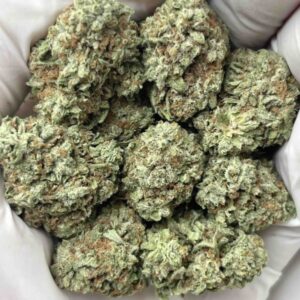
Photographs are common on websites that publish cannabis-related product information. They can illustrate the appearance of a product, but they cannot independently establish its chemical composition.
An image cannot verify:
- The actual THCA concentration.
- The delta-9 THC concentration.
- The presence or absence of pesticides.
- Heavy-metal contamination.
- Microbiological quality.
- The genetic identity of a sample.
- The legal status of the material.
A transparent review should identify whether photographs are official supplier images, independently taken sample photographs or general illustrations.
The same principle applies to strain names. A name such as Blue Dream, Gelato or Sour Diesel does not independently verify the genetics or chemical profile of a particular sample.
THCA Flower England and International Shipping
International shipping is another area where readers should exercise caution.
A product being advertised by an overseas website does not establish that it can lawfully be imported into England.
The Home Office states that importing controlled cannabis is unlawful without the appropriate licence or applicable legal authority. Its guidance also explains that alternative legal approaches in other countries do not override UK legislation.
This means that a product described as compliant with another country’s rules is not automatically lawful to import into England.
Before any cross-border transaction involving cannabis-related products, the relevant import restrictions and controlled-drug requirements must be examined.
Official guidance is available from the UK Home Office drug licensing service.
For readers researching European cannabis regulation more broadly, the EUDA Cannabis Laws in Europe FAQ provides useful background. However, EUDA information does not replace UK legal requirements.
Frequently Asked Questions About THCA Flower England
Is THCA flower legal in England?
Cannabis flower is generally controlled under the Misuse of Drugs Act 1971. The Home Office’s industrial hemp policy does not create a general exemption for flowers, even where the plant variety has a low THC content. The precise legal position depends on the product and applicable legal provisions.
Is THCA the same as THC?
No. THCA is the acidic precursor of delta-9 THC. It can be converted into THC through decarboxylation. The two substances have different chemical structures and should be distinguished in laboratory reports.
Does the 0.2% THC threshold make THCA flower legal in England?
No. The 0.2% figure in the Home Office industrial hemp guidance is used for a specific licensing purpose. It is not a general legal threshold that automatically permits cannabis flowers to be possessed, sold or imported.
Can a COA prove that THCA flower is legal?
No. A COA records laboratory results for a particular sample and the tests performed. It does not grant legal authorisation or establish that a product complies with every applicable law.
Can THCA flower be imported into England from Europe?
The fact that a product is offered in another European country does not make its import into England lawful. Controlled cannabis imports generally require the appropriate Home Office authority or an applicable exemption.
What is the difference between industrial hemp and cannabis flower?
The Home Office industrial hemp policy permits specified uses of non-controlled plant parts, particularly seeds and fibre. Cannabis leaves and flowers are treated as controlled plant material under the guidance. This is why the industrial hemp licensing rules should not be interpreted as a general flower exemption.
Where can I find reliable information about THCA?
Useful sources include the UK Home Office, official legislation on legislation.gov.uk, the European Union Drugs Agency and the National Institute of Standards and Technology. THCa King Europe also publishes educational material through its website and blog.
Final Thoughts: Understanding THCA Flower in England
Researching THCA flower England requires a careful approach to chemistry, product documentation and legislation.
THCA and delta-9 THC are different compounds, but THCA can convert into THC. A low reported THC percentage is not a general legal exemption for cannabis flowers. The UK’s industrial hemp licensing policy is specifically limited to the use of non-controlled plant parts, such as seeds and fibre, and does not authorise the general use of cannabis flowers.
Laboratory reports can help explain the composition of a tested sample, but they do not prove legal approval or guarantee that an entire batch is identical.
At THCa King Europe, our aim is to provide clear and responsible information about cannabinoids, laboratory documentation and the European cannabis landscape. Visit the THCa King Europe homepage or explore our THCA educational blog for further background.