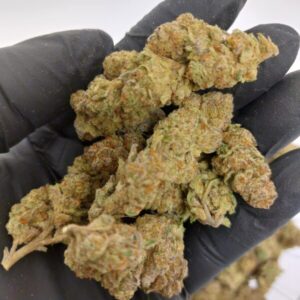
Interest in THCA flower Portugal is growing among people researching cannabinoids, hemp-derived products and the differences between cannabis laws across Europe. Portugal is particularly interesting because it introduced a decriminalisation framework for personal drug use in 2001. However, decriminalisation is not the same as legalisation, and it does not mean that every cannabis-derived product can be freely purchased, sold, imported or cultivated.
Understanding THCA flower requires looking beyond product descriptions and cannabinoid percentages. It is important to understand the difference between THCA and THC, how laboratory reports work, and how Portuguese legislation distinguishes personal possession, trafficking, industrial hemp and medicinal cannabis.
This guide from THCa King Europe explains the main characteristics of THCA, outlines the Portuguese legal framework and discusses the importance of transparent product information and laboratory testing.
For more information about cannabinoids and European hemp regulations, visit the THCa King Europe website and explore our THCA flower information guide.
What Is THCA Flower?
THCA stands for tetrahydrocannabinolic acid. It is a naturally occurring cannabinoid found in the cannabis plant, particularly in fresh and unheated cannabis flowers.
THCA is chemically related to delta-9-tetrahydrocannabinol, commonly known as THC, but the two substances are not identical. THCA is the acidic precursor of THC. When exposed to sufficient heat, it can undergo a chemical process called decarboxylation. During this process, THCA loses a carboxyl group and is converted into THC.
This distinction matters when examining the cannabinoid content of cannabis-derived products. A laboratory report may show a relatively low delta-9-THC concentration while also reporting a substantially higher THCA concentration.
Consequently, looking only at the delta-9-THC percentage may not provide a complete picture of a product’s chemical composition.
The term THCA flower generally describes cannabis flowers containing THCA. When researching these products, it is important to consider their composition, source material, laboratory documentation and legal classification separately.
You can learn more about the subject in our THCA flower guide.
THCA vs THC vs CBD: What Is the Difference?
THCA, THC and CBD are three different cannabinoids associated with the cannabis plant. Although they are often mentioned together, they have different chemical structures and properties.
THCA – Tetrahydrocannabinolic Acid
THCA is the acidic precursor of delta-9-THC. It occurs naturally in cannabis flowers and can be converted into THC through decarboxylation.
THCA should not be treated as chemically identical to THC. However, its ability to convert into THC is important when interpreting cannabinoid measurements and considering the legal status of a product.
THC – Delta-9-Tetrahydrocannabinol
Delta-9-THC is the well-known psychoactive cannabinoid associated with the intoxicating effects of cannabis. It can affect perception, memory, coordination and reaction time.
Products containing THC may be subject to national controls and restrictions, depending on their classification and intended use.
CBD – Cannabidiol
CBD stands for cannabidiol. It is another naturally occurring cannabinoid and does not produce the same intoxicating effects as delta-9-THC.
CBD products have their own regulatory requirements. Their legal status depends on factors such as their ingredients, intended use, product category and applicable national and European rules.
| Feature | THCA | Delta-9-THC | CBD |
|---|---|---|---|
| Full name | Tetrahydrocannabinolic acid | Delta-9-tetrahydrocannabinol | Cannabidiol |
| Chemical form | Acidic cannabinoid | Neutral cannabinoid | Neutral cannabinoid |
| Relationship | Precursor of THC | Can form from THCA | Different cannabinoid |
| Psychoactive properties | Not identical to THC | Psychoactive | Not intoxicating like THC |
| Heat sensitivity | Can convert into THC | Can degrade with further heating | Different chemical properties |
For further information about cannabinoid terminology and European regulations, visit our THCA flower Europe guide.
THCA Flower Portugal: What Does Portuguese Law Say?
Portuguese cannabis legislation is often misunderstood because Portugal is known for its drug decriminalisation policy.
In 2001, Portugal introduced Law No. 30/2000, which established an administrative framework for the consumption and possession of certain controlled substances for personal use. This represented an important change in how personal drug use was handled.
However, decriminalisation does not mean that all cannabis-related activities are legal.
Portugal continues to regulate narcotic substances through Decree-Law No. 15/93 and related legislation. Activities such as unauthorised supply and trafficking remain subject to criminal law.
The distinction between personal consumption, supply, cultivation and commercial distribution is particularly important when discussing THCA flower Portugal.
Official legislation can be consulted through the Portuguese Diário da República and the consolidated text of Law No. 30/2000.
Does Decriminalisation Mean Cannabis Is Legal in Portugal?
No. Portugal’s decriminalisation framework is not equivalent to full cannabis legalisation.
Under Law No. 30/2000, certain cases involving personal consumption and possession are handled through an administrative process rather than automatically being treated as criminal offences.
This approach is designed to address personal drug use through a public-health and social-support framework. It does not establish a general legal market for recreational cannabis.
The following distinctions are important:
- Personal consumption: Certain cases are handled through the administrative decriminalisation framework.
- Possession: Personal possession can fall under the administrative framework, depending on the circumstances and applicable law.
- Trafficking and supply: Unauthorised trafficking and distribution remain criminal offences.
- Cultivation: Cultivation for personal use is not generally made lawful by the decriminalisation framework.
- Medical cannabis: Medical cannabis operates under a separate regulated system.
- Industrial hemp: Qualifying industrial hemp cultivation is subject to specific agricultural and authorisation requirements.
The European Union Drugs Agency explains that personal possession and consumption offences have been decriminalised in Portugal, while cultivation for personal use remains a criminal offence.
Read its explanation in the EUDA guide to cannabis laws in Europe.
Is THCA Flower Legal in Portugal?
There is no general rule that automatically makes every product marketed as THCA flower legal in Portugal.
A product’s legal classification may depend on its chemical composition, source material, intended purpose, production process and the applicable Portuguese legislation.
It is particularly important not to confuse the following categories:
- Cannabis products containing controlled substances.
- Qualifying industrial hemp cultivated under agricultural rules.
- Medicinal cannabis products authorised under the Portuguese medical-cannabis framework.
- Other cannabis-derived products that may be subject to food, medicines, consumer-product or controlled-substance regulations.
A low delta-9-THC result does not by itself prove that a THCA-rich flower is lawful to possess, market or import.
The fact that Portugal decriminalises certain personal-use offences also does not establish that a product is approved for commercial sale.
For anyone researching THCA in Portugal, the exact product and its legal classification should be assessed rather than relying on a general statement that cannabis is decriminalised.
Industrial Hemp in Portugal: Understanding the 0.3% THC Threshold
Industrial hemp is another important part of the Portuguese regulatory framework.
Portugal has specific requirements for the cultivation of cannabis plants for industrial purposes. These rules distinguish industrial hemp production from activities involving cannabis for medicinal purposes or other controlled uses.
Portaria No. 64/2023 updated the relevant industrial hemp cultivation threshold to 0.3% THC. It also requires qualifying varieties to be listed in the Common Catalogue of Varieties of Agricultural Plant Species.
The related authorisation framework sets out requirements for cultivation, including certified seeds, documentation and information about the intended production.
The Portuguese legal framework distinguishes industrial cultivation for fibres and seeds from medicinal cannabis cultivation and other regulated activities.
You can consult the official legislation here:
- Portaria No. 64/2023 – Diário da República
- Portaria No. 83/2021 – Consolidated authorisation requirements
Does the 0.3% Rule Make THCA Flowers Legal?
No. This is one of the most important distinctions when researching THCA flower Portugal.
The 0.3% threshold appears in the context of qualifying industrial hemp cultivation and agricultural rules. It is not a blanket authorisation for every finished product containing cannabis or THCA.
The European Commission also explains that the EU agricultural framework concerns qualifying hemp varieties and their cultivation under specific conditions.
These agricultural rules do not automatically authorise all cannabis flowers, extracts, concentrates, food products or other cannabinoid products for commercial sale.
A finished product may be subject to additional national legislation even when its source material is associated with industrial hemp.
For more information, see the European Commission’s official hemp and agricultural policy guidance.
Medical Cannabis in Portugal
Portugal has a separate legal framework for cannabis used for medical purposes.
Law No. 33/2018 established the legal framework for the use of cannabis-based medicines, preparations and substances for medicinal purposes. Decree-Law No. 8/2019 subsequently regulated important aspects of this system.
The framework includes matters such as prescription, dispensing through pharmacies, cultivation, manufacture, research and regulatory supervision.
The Portuguese medicines authority, INFARMED, is responsible for important aspects of the regulation and authorisation of medicinal cannabis activities.
This system should not be confused with an unrestricted commercial market for recreational cannabis or THCA flower products.
Official legislation is available through:
- Law No. 33/2018 – Portuguese medicinal cannabis framework
- Decree-Law No. 8/2019 – Regulation of medicinal cannabis
- INFARMED – Portuguese medicines authority
How to Read a THCA Laboratory Report
A Certificate of Analysis, commonly called a COA, is a laboratory document showing the results of tests performed on a particular sample.
It can help explain the measured cannabinoid composition of a product. However, a laboratory report is not a legal authorisation, and it does not guarantee that every product in a production batch has exactly the same composition.
1. THCA Percentage
The THCA percentage indicates the measured concentration of tetrahydrocannabinolic acid in the tested sample.
A clear report should identify the measurement unit and, where possible, the analytical method used.
2. Delta-9-THC Percentage
This measurement indicates the concentration of delta-9-THC found in the tested sample.
It should not be confused with the THCA result. A low delta-9-THC value does not necessarily mean that the sample has a low theoretical total THC concentration.
3. Theoretical Total THC
Some laboratory reports provide a calculated theoretical total THC value.
A commonly used calculation is:
Theoretical total THC = delta-9-THC + (THCA × 0.877)
The factor 0.877 accounts for the mass lost when THCA is converted into THC.
This formula is a theoretical calculation. It does not replace a legally required analytical method or the specific legal definition of THC used by a regulator.
4. Other Laboratory Tests
Depending on the product and applicable regulations, other tests may be relevant:
- Pesticide residues.
- Heavy metals.
- Microbiological contamination.
- Mould and yeast.
- Residual solvents in relevant extracts.
- Moisture and other quality parameters.
A useful COA should identify the laboratory, test date, sample reference and parameters that were actually examined.
Remember that a COA describes the sample submitted for testing. It does not automatically prove that every item in a batch is identical, that every possible contaminant has been tested or that the product is legally authorised in Portugal.
What Makes THCA Flower Quality Information Reliable?
When researching THCA flowers, cannabinoid percentages should not be the only consideration.
Transparent Product Information
A clear product description should identify the product category and explain which cannabinoid values have actually been measured.
Statements such as “100% legal throughout Europe” or “guaranteed legal in every country” are not substitutes for scientific evidence or regulatory approval.
Traceable Origin
Information about the source material, plant variety and production process can help readers understand how a product was made.
For products subject to specific legal requirements, these details may also be relevant to the product’s classification.
Independent Laboratory Documentation
An independent laboratory report can provide more useful information than an unsupported manufacturer claim.
Check whether the report refers to the actual sample or batch and whether it includes a date and identifiable test results.
Appropriate Product Labelling
Product information should accurately describe the product and comply with the rules applicable to its category. This can include cannabinoid measurements, batch identification, warnings and other mandatory details.
For further background, explore the THCa King Europe website and our THCA flower information section.
THCA Flower Portugal and Other European Countries
Portuguese legislation should not be assumed to apply across the European Union.
Although EU rules provide a framework for agricultural hemp, the national treatment of cannabis flowers, extracts, medicines, food products and smoking products can differ considerably.
A product that meets certain agricultural requirements in one country is not automatically approved for possession, sale or importation in Portugal.
This is particularly important for cross-border transactions. The fact that a product is offered in another European country does not prove that importing or possessing it in Portugal is lawful.
You can explore more country-specific guides on THCa King Europe:
- THCA Flower Germany
- THCA Flower France
- THCA Flower Netherlands
- THCA Flower Poland
- THCA Flower Europe
These guides provide general information about national regulatory frameworks. Always check the current rules before making decisions about possession, purchase, importation or transport.
Frequently Asked Questions About THCA Flower Portugal
Is THCA flower legal in Portugal?
There is no blanket permission for every THCA flower product in Portugal. The legal position depends on the product’s composition, source, intended use and classification under Portuguese law.
Is cannabis legal in Portugal?
Portugal decriminalised certain personal-use offences, but this is not the same as full legalisation. Unauthorised trafficking and supply remain criminal offences, and cultivation for personal use is not generally legalised by the decriminalisation framework.
Is THCA the same as THC?
No. THCA is the acidic precursor of delta-9-THC. Heat can convert THCA into THC through decarboxylation, but the two compounds have different chemical structures.
Does the 0.3% hemp threshold mean THCA flowers are legal?
No. The 0.3% threshold is relevant to qualifying industrial hemp cultivation under specific agricultural rules. It does not automatically authorise every finished cannabis-derived or THCA product.
What is the difference between industrial hemp and medicinal cannabis?
Industrial hemp is cultivated under specific agricultural rules, including requirements concerning qualifying varieties and THC levels. Medicinal cannabis is regulated under a separate framework involving medical use, authorisation and pharmaceutical oversight.
What does COA mean?
COA stands for Certificate of Analysis. It is a laboratory report documenting the measured composition of a specific sample and, depending on the tests performed, additional quality parameters.
Can THCA products be shipped to Portugal?
This depends on the exact product and the applicable Portuguese and cross-border rules. A product being offered in another European country does not establish that its importation or possession in Portugal is permitted.
Conclusion: Understanding THCA Flower Portugal
The subject of THCA flower Portugal involves chemistry, laboratory testing and national legislation. Understanding the difference between THCA, delta-9-THC and CBD is essential, but chemical composition alone does not determine whether a product can legally be marketed, possessed or imported.
Portugal has a distinctive decriminalisation framework for certain personal-use offences. However, this does not create a general legal market for recreational cannabis or THCA flowers. Industrial hemp cultivation and medicinal cannabis also operate under separate legal requirements.
The 0.3% agricultural hemp threshold should therefore not be treated as universal permission for every THCA-containing product.
THCa King Europe aims to provide useful educational resources about cannabinoids, laboratory documentation and European regulatory differences.
For more information, visit our THCa King Europe website, read our THCA flower guide or explore our European THCA articles.