Interest in THCA flower UK has led to more online searches about cannabis flower, cannabinoid composition, laboratory testing and the legal position of THCA-containing products. People researching this subject often want to understand what THCA is, how it differs from THC and whether products described as THCA flower are treated differently under British law.
The subject requires careful attention because product descriptions do not determine legal status. A cannabis flower advertised as low-THC hemp, THCA flower or a particular strain may still fall within UK controlled-drug legislation.
The United Kingdom has specific rules covering cannabis cultivation, possession, supply, importation and exportation. Industrial hemp also has a licensing framework, but the permitted uses under the Home Office’s low-THC industrial hemp policy are restricted.
At THCa King Europe, visitors can explore THCA-related information and educational resources. This guide explains the meaning of THCA flower, the importance of laboratory documentation and the legal considerations that people should understand when researching the UK market.
What Is THCA Flower?
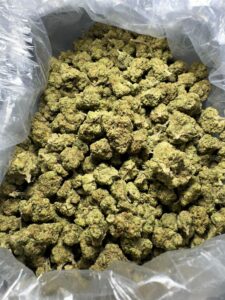
THCA flower refers to cannabis flower containing tetrahydrocannabinolic acid, commonly abbreviated as THCA.
THCA is an acidic cannabinoid naturally associated with the cannabis plant. It is chemically related to delta-9 tetrahydrocannabinol, usually called THC, but the two compounds are not identical.
THCA can undergo a chemical process called decarboxylation when exposed to sufficient heat. During this process, it loses a carboxyl group and converts into delta-9 THC.
This distinction is important when interpreting cannabinoid profiles and laboratory reports. THCA concentration and delta-9 THC concentration are separate measurements, and a product description should not treat them as interchangeable.
However, chemical differences do not automatically create a legal exemption. In the UK, the legal treatment of cannabis flower is not determined simply by whether a product is advertised as THCA-rich or low in delta-9 THC.
For more educational information about cannabis terminology, visit the THCa King Europe homepage and explore the THCa King Europe blog.
THCA Flower UK: Understanding British Cannabis Laws
Anyone researching THCA flower UK should understand the Misuse of Drugs Act 1971 and the associated Misuse of Drugs Regulations 2001.
Cannabis is generally classified as a Class B controlled drug in the UK. The legislation controls cannabis plant material, subject to defined exceptions, and restricts activities such as possession, supply, production, importation and exportation.
The Home Office explains that cannabis includes the plant and its parts, with specific exceptions for mature stalks, fibre produced from mature stalks and seeds.
This is particularly important for cannabis flower. The Home Office’s industrial hemp guidance explicitly states that the flowers and leaves are controlled parts of the plant, including where the cannabis variety is described as low THC.
As a result, a seller cannot establish that cannabis flower is lawful merely by advertising it as industrial hemp or by pointing to a low delta-9 THC percentage.
The official starting point is the Home Office industrial hemp licensing factsheet.
Is THCA Flower Legal in the UK?
The answer requires a distinction between the legal treatment of cannabis plant material and the treatment of isolated chemical substances.
Under the Home Office’s published guidance, cannabis flowers and leaves are controlled parts of the cannabis plant. The industrial hemp licensing policy does not authorise their use as ordinary commercial hemp products.
The Home Office’s December 2025 factsheet explains that the low-THC industrial hemp licensing policy is intended for the production of non-controlled products from hemp fibre and seed. It does not provide a general permission to use the flowers or leaves.
The Home Office also explains that cannabis is a Class B controlled drug and that possession, supply, production, importation and exportation are unlawful unless the relevant legal authority or exemption applies.
There are separate rules for medicinal cannabis products and certain licensed activities. These should not be confused with unrestricted recreational retail sales.
Important legal distinction: A product marketed as THCA flower is still cannabis flower. Its marketing description, cannabinoid percentage or country of origin does not automatically exempt it from UK controlled-drug legislation.
Anyone considering a transaction involving THCA-containing material should obtain independent UK legal advice about the exact product and activity. This is especially important for imports from Europe, as permission to handle a material in another country does not override UK law.
Understanding THCA and THC
The relationship between THCA and THC is one of the most frequently misunderstood aspects of online cannabis information.
What Is THCA?
THCA is an acidic cannabinoid associated with cannabis plants. It has a different chemical structure from delta-9 THC and is commonly measured separately in cannabinoid laboratory analyses.
What Is Delta-9 THC?
Delta-9 THC is a cannabinoid controlled under UK drug legislation. It is widely discussed in connection with the intoxicating effects associated with cannabis.
Why Is the Difference Important?
There are several reasons:
- Chemical composition: THCA and delta-9 THC are distinct compounds.
- Laboratory reporting: A cannabinoid report may show separate measurements for each.
- Chemical conversion: THCA can convert into THC through decarboxylation.
- Legal classification: The legal status of cannabis flower cannot be determined by looking at a single cannabinoid percentage.
The Home Office’s drug licensing factsheet discusses THC acid precursors and their control status. It also explains the broader controls applying to cannabis and products containing controlled cannabinoids.
For the latest legal position, readers should consult the official Home Office cannabis, CBD and cannabinoids factsheet.
The UK Industrial Hemp Rules
Industrial hemp is sometimes discussed online as though it were a general category covering all low-THC cannabis products. That interpretation is misleading.
The Home Office operates a licensing framework for qualifying industrial hemp cultivation. Its low-THC industrial hemp policy is focused on the production of fibre and seed.
The policy does not create a general permission to cultivate cannabis flower for ordinary commercial sale.
Important points in the Home Office guidance include:
- A Home Office licence is required for the relevant cultivation activities.
- The industrial hemp policy applies to specified approved seed varieties.
- The policy is limited to non-controlled plant materials, particularly mature stalk fibre and seeds.
- Flowers and leaves remain controlled plant parts.
- Each grower and relevant site must meet the licensing requirements.
The Home Office states that the reference to a 0.2% THC threshold in its industrial hemp licensing policy is used to identify qualifying varieties for that particular licensing framework. It is not a general exemption allowing cannabis flowers containing up to 0.2% THC to be freely sold.
This is an important point for anyone searching for THCA flower UK or researching the difference between industrial hemp and cannabis flower.
Read the official GOV.UK industrial hemp licensing guidance for the current requirements.
Laboratory Testing and Certificates of Analysis
Laboratory testing can provide useful information about the chemical composition of cannabis-related materials.
A Certificate of Analysis, commonly known as a COA, is a report showing the results of specified tests performed on a submitted sample.
Depending on the laboratory and testing scope, a COA may report:
- THCA concentration.
- Delta-9 THC concentration.
- CBD concentration.
- Other measured cannabinoids.
- Certain pesticide residues.
- Heavy metals.
- Microbiological results.
- Residual solvents, where relevant.
However, a laboratory report has important limitations.
A COA does not automatically prove that every item in a batch has the same composition as the submitted sample. It may not cover every possible contaminant, and it does not establish that a product is legally authorised for sale or importation in the UK.
When reviewing laboratory documentation, look for:
- The laboratory’s identity.
- The date of analysis.
- The sample identification.
- The batch reference, where provided.
- The cannabinoids actually measured.
- The analytical methods used.
- The testing limitations and measurement ranges.
Laboratory testing and legal compliance are separate matters. A report can describe a sample accurately without establishing that the material may lawfully be possessed or supplied.
Product Transparency and Accurate Information
People researching THCA flower online may encounter product descriptions containing strain names, cannabinoid percentages, photographs and cultivation claims.
These details should be evaluated carefully.
For example, a commercial strain name such as Blue Dream, Gelato, Sour Diesel or Wedding Cake does not independently verify the genetics or chemical composition of a particular sample.
Similarly, photographs cannot establish the results of laboratory testing or prove that a product meets the legal requirements of a particular country.
Responsible product information should distinguish between verified facts and descriptive marketing language.
Visitors looking for broader educational information can explore the THCa King Europe blog and the general resources available on the THCa King Europe website.
Importing THCA Flower Into the UK
Cross-border cannabis-related transactions require particular care.
A product that is described as lawful in an EU country is not automatically lawful to import into the United Kingdom. UK controlled-drug legislation applies independently of the rules in the country of origin.
The Home Office explains that importing controlled drugs generally requires the appropriate Home Office licence, unless a specific legal exemption applies.
The relevant assessment may involve:
- The exact identity and composition of the material.
- Whether it is cannabis plant material.
- Whether it contains controlled cannabinoids.
- Whether an applicable exemption exists.
- The purpose of the import.
- Any required controlled-drug or product-specific authorisation.
The Home Office also explains that other countries’ control regimes do not override UK legislative requirements.
Anyone researching THCA flower from European suppliers should therefore avoid assuming that an overseas certificate, hemp label or low-THC statement automatically permits importation into the UK.
Medicinal Cannabis and Recreational Cannabis Are Different
The UK has a separate legal framework for cannabis-based products for medicinal use in humans.
Certain cannabis-based medicines can be prescribed by specialist clinicians where the relevant legal and clinical requirements are met.
This does not mean that ordinary cannabis flower marketed online is automatically a medicinal product or can be sold through an unrestricted retail website.
Medicinal products are subject to specific definitions, prescribing arrangements and regulatory requirements. Businesses involved in controlled medicinal cannabis supply chains may also require appropriate authorisations.
The Home Office explains these distinctions in its drug licensing factsheet covering cannabis, CBD and other cannabinoids.
Common Misunderstandings About THCA Flower UK
1. Assuming That 0.2% THC Makes All Cannabis Flower Legal
The 0.2% reference in the industrial hemp licensing framework is not a blanket exemption for cannabis flowers. The Home Office specifically identifies flowers and leaves as controlled plant materials.
2. Assuming That THCA Is the Same as CBD
THCA and CBD are different cannabinoids with different chemical structures and legal considerations. They should not be treated as interchangeable.
3. Assuming That a COA Proves Legal Status
A COA reports laboratory findings. It does not replace legal authorisation or prove that a product can be imported, possessed or supplied lawfully.
4. Assuming That EU Legality Means UK Legality
The UK applies its own controlled-drug legislation. A product’s status in another country does not automatically determine its UK status.
5. Assuming That Online Availability Means Legal Availability
A website listing or advertising a product does not establish that the product or transaction complies with UK law.
Frequently Asked Questions About THCA Flower UK
Is THCA flower legal in the UK?
Cannabis flowers are generally controlled plant material under UK law. Describing a flower as THCA-rich or low in delta-9 THC does not automatically exempt it from the Misuse of Drugs Act 1971.
Is THCA the same as THC?
No. THCA is an acidic cannabinoid and delta-9 THC is a different compound. THCA can convert into delta-9 THC through decarboxylation.
Does the UK 0.2% hemp threshold make THCA flower legal?
No. The Home Office explains that the threshold is used within the industrial hemp licensing framework. It does not provide a general exemption for cannabis flowers or leaves.
Can UK industrial hemp growers use the flowers?
The Home Office’s low-THC industrial hemp policy is limited to the production of non-controlled hemp products from fibre and seed. The flowers and leaves remain controlled parts of the plant under that policy.
Can THCA flower be imported from Europe into the UK?
Importation of controlled cannabis material is subject to UK legislation and may require a Home Office licence. The rules of the country of origin do not override UK requirements.
Does a laboratory certificate prove that THCA flower is legal?
No. A laboratory certificate reports the results of specified tests on a sample. Legal status must be assessed separately under the applicable legislation.
Where can I find more information about THCA?
You can visit THCa King Europe and explore the THCA educational blog for additional information about cannabinoid terminology and related subjects.
Final Thoughts on THCA Flower UK
Researching THCA flower UK requires an understanding of both cannabinoid chemistry and British controlled-drug legislation.
THCA and delta-9 THC are chemically distinct, but that distinction does not automatically make cannabis flower lawful. UK legislation controls cannabis plant material, including flowers and leaves, and the Home Office’s industrial hemp licensing policy is restricted to specified uses involving fibre and seed.
Laboratory reports can provide useful information about a sample’s chemical composition, but they cannot independently establish legal permission to possess, sell, supply or import the material.
For readers exploring THCA-related subjects, THCa King Europe provides a starting point for educational information. Further resources are available through the THCa King Europe blog and shop section.
The most responsible approach is to consult official UK sources, examine product documentation carefully and obtain independent legal advice before making decisions involving cannabis-derived materials.