THCA Hash is a term used to describe cannabis resin or concentrate products marketed for their tetrahydrocannabinolic acid (THCA) content. Hash, traditionally known as hashish, is a cannabis resin product associated with the resin-producing trichomes of the cannabis plant. THCA is one of the naturally occurring cannabinoids found in those trichomes.
For anyone researching cannabis products, understanding the difference between THCA, THC, cannabis resin, and other concentrates is important. Product names and marketing descriptions do not always explain the complete composition of an item. Laboratory documentation, accurate labeling, and awareness of local regulations are therefore essential.
At THCa King Europe, informative product content can help visitors understand cannabis terminology and find relevant information across the website. This guide explains what THCA hash means, how cannabis resin is classified, what laboratory reports can tell you, and why safety and European legal considerations matter.
What Is THCA Hash?
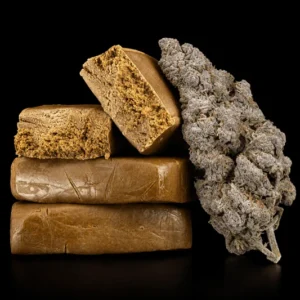
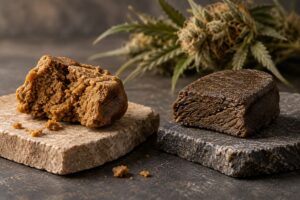
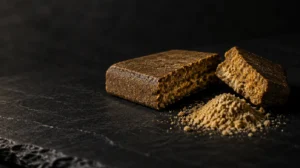
THCA hash is a cannabis resin or concentrate product described in relation to its THCA content. The word “hash” generally refers to cannabis resin, which is associated with the glandular trichomes found mainly on the flowering parts of the cannabis plant.
These trichomes contain resinous secretions and a range of cannabinoids and other plant compounds. The composition of a resin product can vary depending on the cannabis material, its characteristics, and the processes used to produce the final product.
The European Union Drugs Agency (EUDA) describes cannabis resin production as involving the separation of glandular trichomes from the plant material. The resulting resin-rich material may then be compressed into a solid or semi-solid product. Traditional cannabis resin production and more modern concentrate categories can differ considerably.
You can read the EUDA’s overview in its report on Cannabis Production and Resin.
The term THCA hash does not identify one universal formulation. Different products may have different cannabinoid profiles, physical characteristics, and manufacturing histories. A product label should therefore be checked rather than assuming that every item sold under this name has the same composition.
Understanding THCA and THC
Understanding the relationship between THCA and THC is one of the most important parts of researching THCA hash.
THCA stands for tetrahydrocannabinolic acid. It is an acidic cannabinoid precursor produced naturally by cannabis plants. Delta-9 THC is a related cannabinoid associated with intoxicating effects.
THCA and THC are chemically different. THCA can convert into delta-9 THC through a process called decarboxylation, which occurs when the material is exposed to heat. This is particularly relevant when interpreting products intended to be smoked or otherwise heated.
The EUDA explains that THCA is not psychoactive in the same way as THC in its unheated form, but it can be converted into THC when heated. The agency also notes that the total amount of THC potentially present in cannabis material needs to be considered when evaluating cannabinoid composition.
This distinction means that a product’s stated THCA percentage should not be confused with its delta-9 THC percentage. These are separate measurements, and a label that reports only one may not describe the complete cannabinoid profile.
The European Medicines Agency also provides terminology for cannabis-derived compounds in its Compilation of Terms and Definitions for Cannabis-Derived Medicinal Products.
How Cannabis Hash and Resin Are Defined
Cannabis hash, also known as hashish, is a form of cannabis resin. It is different from loose herbal cannabis because it consists primarily of resin-rich material separated from the plant.
The EUDA describes traditional resin production as involving rubbing or sieving methods. Modern commercial production can use different equipment and separation technologies. The resulting materials may differ in appearance, texture, cannabinoid content, and composition.
The United Nations Office on Drugs and Crime (UNODC) also provides technical information about cannabis resin and cannabis products in its publication, Recommended Methods for the Identification and Analysis of Cannabis and Cannabis Products.
For readers researching THCA hash, it is useful to understand that the word “hash” describes a broad product category rather than a guarantee of a particular quality level or cannabinoid concentration.
A product’s appearance or consistency cannot independently establish its THCA content, purity, or safety. Those characteristics require appropriate product information and, where available, laboratory testing.
THCA Hash and Other Cannabis Concentrates
Cannabis concentrates and resin products are available under several different names. These terms can refer to different production methods and physical characteristics, so they should not be treated as interchangeable.
Cannabis resin
Cannabis resin is the broad category associated with material collected from the resin-producing trichomes of the plant. Traditional hashish is one example of a resin product.
Kief and resin-rich material
Kief is commonly used to describe loose, separated resin glands or trichome material. Its composition depends on the source material and the separation process. It is not necessarily equivalent to a finished hash product.
Rosin
Rosin is a concentrate produced through the application of heat and pressure to resin-rich material. It is different from resin products made through other extraction methods.
Wax and shatter
Wax and shatter are terms used for certain cannabis concentrates with different physical textures. Their production methods and compositions can vary, and the names alone do not identify every ingredient or processing detail.
The EUDA discusses several types of cannabis extracts and concentrates in its Cannabis Production overview.
When comparing THCA hash with another concentrate, check the exact product description and supporting documentation. Avoid assuming that two products with similar names have the same cannabinoid profile or manufacturing process.
How to Evaluate THCA Hash Product Information
Clear product information is important when researching any cannabinoid-containing product. A useful product listing should provide more than a name and a general description.
The following checks can help readers understand what information is available.
1. Confirm the product identity
Check the exact product name, product category, and manufacturer or responsible supplier. A listing should make it clear whether the item is described as cannabis resin, hash, or another type of concentrate.
2. Review the cannabinoid profile
Look for separately reported THCA and delta-9 THC values where those details are available. Check the measurement units and whether the results refer to the product’s weight, concentration, or another basis.
Do not assume that a product’s total cannabinoid figure represents its THCA content alone.
3. Check the ingredient information
A complete description should identify declared ingredients and any additional substances included in the finished formulation. Where information is missing or unclear, seek clarification from the responsible supplier.
4. Look for batch identification
A batch or lot number helps connect a particular product to its supporting documentation. If a laboratory report is provided, compare its sample or batch reference with the product being described.
5. Avoid relying on appearance alone
Colour, texture, smell, and packaging cannot establish cannabinoid concentration or prove that a product has been independently tested. Product-specific documentation is more informative than visual impressions.
These checks are useful for consumers and retailers who want to distinguish verified information from general marketing language.
Certificates of Analysis and THCA Hash Testing
A certificate of analysis, often called a COA, is a laboratory document that reports the results of testing a particular sample. Depending on the laboratory and the scope of the analysis, a COA may contain cannabinoid measurements and results for selected contaminants.
A COA can be useful when evaluating THCA hash, but it should always be read carefully.
Product identity: Confirm that the report identifies the correct sample or product.
Batch reference: Check whether the batch number matches the product being evaluated.
Laboratory details: Identify the laboratory and review its stated testing methods and qualifications.
Cannabinoid results: Check whether THCA and delta-9 THC are listed separately and whether the units are clear.
Testing scope: Review which substances were tested. A cannabinoid panel alone does not establish that every possible contaminant has been assessed.
Report date: Check when the sample was tested and whether the document is relevant to the current batch.
The UNODC publication on cannabis identification and analysis explains why reliable analytical methods are important when examining cannabis materials. Different analytical methods can affect how cannabinoids are identified and measured.
A certificate of analysis should not be described as proof of universal safety or legal compliance. It documents the results for a particular sample and the tests actually performed.
Safety and Health Considerations
Cannabis products containing THCA may produce THC when exposed to heat. THC can impair attention, memory, coordination, reaction time, and judgment. The potential effects of a cannabis product depend on its composition and other individual and situational factors.
Cannabis resin and concentrates can also contain substantially different cannabinoid concentrations from one product to another. A product’s name or appearance is not a reliable way to predict its effects.
Important general safety considerations include:
- Cannabis products can cause impairment and should not be combined with driving or operating machinery.
- Do not assume that a product is harmless because its label emphasizes THCA rather than THC.
- Keep cannabis products away from children and pets.
- Avoid combining intoxicating substances.
- People who are pregnant or breastfeeding should avoid cannabis use.
- Anyone with questions about potential interactions with medication or an existing health condition should consult a qualified healthcare professional.
- Seek appropriate medical assistance if someone experiences severe or concerning symptoms after exposure.
The EUDA provides information about cannabis products, their composition, and the challenges associated with monitoring and regulation. Its publications are useful background resources for understanding why product descriptions and cannabinoid measurements need to be interpreted carefully.
THCA Hash and European Legal Regulations
The legal status of THCA hash is an important consideration for anyone researching cannabis resin products in Europe. It is not accurate to assume that every THCA-containing product is legal throughout the European Union or that the same rules apply in every country.
The EUDA’s Cannabis Laws in Europe FAQ, revised on 21 April 2026, explains that national approaches to cannabis regulation differ. The legal treatment of cannabis-derived products can depend on their composition, classification, intended use, and the relevant national legislation.
Important considerations include:
- The legal definition of cannabis and cannabis resin in the destination country.
- How THCA and delta-9 THC are measured and treated under local rules.
- Whether the product falls under controlled-substance legislation.
- Requirements for manufacturing, labeling, testing, and distribution.
- Restrictions on possession, sale, importation, and cross-border shipping.
It is also important not to confuse agricultural hemp rules with the legal status of finished cannabis resin products. Rules that apply to hemp cultivation or seed products do not automatically authorize every extract or resin derived from cannabis.
Before purchasing, selling, importing, or shipping THCA hash, check the current laws in the relevant country. Retailers should avoid broad claims about legality unless those claims have been reviewed against current, country-specific requirements.
Exploring Cannabis Product Information at THCa King Europe
THCa King Europe provides an online destination for visitors researching cannabis-related product information. Clear descriptions and educational articles can help readers understand product terminology, cannabinoid measurements, and the importance of checking applicable regulations.
You can begin at the THCa King Europe homepage, explore the THCa King Europe shop, or read additional educational content in the THCa King Europe blog.
When reviewing a specific THCA hash listing, verify its exact product name, stated composition, package information, ingredients, and available supporting documentation. If a certificate of analysis is provided, ensure that it relates to the actual product or batch being described.
Product availability should also be confirmed on the live website. An educational article should not imply that a product is currently in stock or can be delivered to every European country unless those details have been verified.
For a trustworthy website, product descriptions should be accurate, relevant, and consistent with the information provided by the manufacturer or responsible supplier.
Frequently Asked Questions About THCA Hash
What is THCA hash?
THCA hash is a term used for cannabis resin or concentrate products marketed in relation to their THCA content. The exact composition and production method can vary, so the product label and supporting documentation should be checked.
Is THCA the same as THC?
No. THCA is an acidic cannabinoid precursor, while delta-9 THC is a related cannabinoid associated with intoxicating effects. THCA can convert into THC when heated through decarboxylation.
Is hash the same as cannabis flower?
No. Cannabis flower refers to the flowering plant material, while hash generally refers to resin-rich material separated from the plant’s trichomes. They are different product categories.
How can I verify the THCA content of hash?
Review the product label and, where available, a certificate of analysis that matches the specific product or batch. Check whether THCA and delta-9 THC are reported separately and whether the units are clearly stated.
Does a laboratory certificate prove that THCA hash is safe?
No. A certificate of analysis reports results for a particular sample and the tests performed. It does not guarantee that every possible contaminant has been assessed or that the product is safe for every person or use.
Is THCA hash legal throughout Europe?
There is no single answer that applies to every European country and every product. National laws and product classifications differ. Check current rules in the relevant destination before buying, possessing, selling, or shipping a cannabis resin product.
Conclusion: Understanding THCA Hash Through Reliable Information
THCA hash is a cannabis resin-related product category that requires careful attention to cannabinoid terminology, product composition, testing, and legal classification. Understanding the difference between THCA and THC is particularly important because heating can convert THCA into THC.
For THCa King Europe, publishing accurate educational content can help visitors understand these distinctions and navigate the website more effectively. Keep product descriptions consistent with current documentation, link to reliable external sources, and review legal information regularly.