Prague is one of Central Europe’s most internationally recognised destinations, attracting visitors, residents and businesses interested in its culture, history and changing consumer markets. Alongside this interest, searches for THCA Prague and THCA flower in Prague have become part of a wider online conversation about cannabinoids, hemp products and cannabis legislation in Europe.
But what does THCA actually mean? How is it different from THC and CBD? What should people understand about laboratory testing, and what does Czech law say about cannabis products in 2026?
This guide from THCa King Europe explores these questions. It provides an educational overview of THCA, explains why product descriptions and laboratory reports matter, and examines the legal considerations that apply in Prague and throughout the Czech Republic.
Importantly, Prague does not have a separate general cannabis legalisation framework. National Czech legislation applies in the city, and rules governing personal possession should not be confused with permission to sell, distribute, import or transport cannabis products.
What Is THCA?
THCA stands for tetrahydrocannabinolic acid. It is a naturally occurring cannabinoid found in the cannabis plant and is chemically related to delta-9 THC.
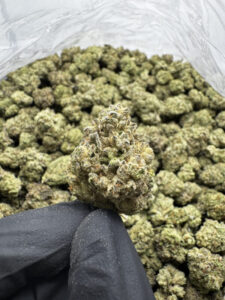
THCA is often discussed in connection with cannabis flower because raw plant material can contain measurable quantities of this cannabinoid. Its concentration varies according to the plant, growing conditions, harvesting, storage and testing procedures.
One important characteristic of THCA is that it can undergo a chemical process called decarboxylation. When exposed to heat, THCA can lose a carboxyl group and convert into delta-9 THC.
This explains why THCA and THC should not be treated as interchangeable terms. They are different chemical forms, although they are closely related.
People researching THCA Prague should therefore look beyond a product’s name or headline percentage. Understanding the cannabinoid profile is essential when interpreting product descriptions and laboratory documentation.
For more background, visit the THCA Flowers guide and the THCA Flower Europe resource.
THCA vs THC vs CBD
THCA, THC and CBD are three different cannabinoids. Understanding their differences helps readers interpret product information more accurately.
THCA
Tetrahydrocannabinolic acid is the acidic precursor associated with delta-9 THC. It is naturally present in cannabis plant material and may appear as a separate measurement in laboratory reports.
Delta-9 THC
Delta-9 tetrahydrocannabinol is the cannabinoid commonly associated with the intoxicating effects of cannabis. It can affect perception, attention, coordination, memory and reaction time.
CBD
Cannabidiol, or CBD, is a different cannabinoid. It is not intoxicating in the same way as delta-9 THC. However, CBD products are not automatically exempt from regulation: their legal treatment may depend on whether they are marketed as foods, supplements, cosmetics, medicines or other product categories.
The key distinction is that a product containing THCA cannot automatically be classified as a CBD product or assumed to have the same legal status.
THCA Prague: Is THCA Flower Legal in Prague?
One of the most important questions behind the keyword THCA Prague is whether THCA flower is legal in the Czech capital.
The answer requires more than looking at a product label.
Prague follows Czech national legislation. The country introduced significant cannabis-law changes from 1 January 2026 through Act No. 270/2025 Coll. These changes allow adults over 21 to cultivate and possess limited quantities of cannabis for their own personal use under specified conditions.
The statutory allowances include:
- Cultivation of up to three cannabis plants for personal use by qualifying adults.
- Possession of up to 100 grams at home.
- Possession of up to 25 grams outside the home.
These limits are part of a defined personal-use framework. They should not be interpreted as a general commercial authorisation for cannabis flower or THCA products.
The Czech Police explain that unauthorised distribution of cannabis above the applicable 1% THC threshold remains unlawful. The legislation also distinguishes personal-use conduct from activities such as offering, selling, supplying or otherwise providing controlled cannabis products to another person.
The exact legal treatment of a THCA-containing flower may depend on the product’s composition, the statutory definition that applies, the analytical method and the activity involved. A label stating that a product is “THCA” or “hemp” does not settle those questions.
For the official legal text, consult Czech e-Sbírka – Act No. 270/2025 Coll.. The Czech Police cannabis guidance also provides an overview of the changes and the distinction between personal use, technical hemp and unauthorised distribution.
Important: This article does not establish that a particular THCA flower product is legal to possess, sell, purchase or transport in Prague. Anyone making a decision involving a specific product should seek advice from a qualified Czech legal professional.
Does Prague Have Different Cannabis Rules from the Rest of the Czech Republic?
Prague is the Czech Republic’s capital, but the principal controlled-substance rules discussed in this guide are national rules.
That means visitors should not assume that a different cannabis framework applies simply because they are in Prague rather than Brno, Ostrava, Plzeň or another Czech city.
Local rules and public-space requirements may also be relevant to particular situations, but they do not replace national legislation governing controlled substances.
Visitors should be especially careful about assuming that personal-use allowances permit commercial transactions or cross-border movement. The fact that a person may possess a limited amount under a personal-use provision does not automatically mean that another person can lawfully sell or supply that product.
The official Czech Ministry of Agriculture legal portal provides access to relevant provisions of the Czech Criminal Code, including Section 285.
Understanding THCA Laboratory Reports
Laboratory documentation is an important part of evaluating cannabinoid information. A Certificate of Analysis, commonly called a COA, records results from tests performed on a submitted sample.
A COA can help readers understand what was measured, but it should not be treated as a universal guarantee of quality, safety or legal status.
When reviewing a laboratory report, consider the following:
1. Sample identification
The report should identify the sample that was tested. Check whether its batch or sample reference can be connected to the product being described.
2. THCA concentration
Look for the measured THCA value and note whether it is expressed as a percentage, milligrams per gram or another unit.
3. Delta-9 THC concentration
Delta-9 THC should be distinguished from THCA. A report showing a low delta-9 THC result does not necessarily mean that the sample contains little or no THCA.
4. Testing method
The analytical method matters. Different methods may be used for different regulatory and scientific purposes, and results should be interpreted in the context of the method used.
5. Contaminant testing
A cannabinoid profile does not necessarily mean that the sample was also tested for pesticides, heavy metals, microbial contamination, residual solvents or other contaminants.
6. Laboratory credentials
Check the laboratory’s identity and any accreditation claims. Accreditation should be relevant to the tests performed rather than assumed from a logo or general statement.
A COA only describes the submitted sample and the tests included in that report. It does not prove that every item in a batch is identical or that a product is legally authorised in Prague.
What Is Total THC?
Laboratory reports may show THCA and delta-9 THC separately. Some also provide a theoretical total THC calculation.
A commonly used formula is:
Total THC = delta-9 THC + (THCA × 0.877)
The factor 0.877 accounts for the molecular-weight difference associated with the conversion of THCA into THC.
This calculation helps explain why a sample can have a low measured delta-9 THC concentration while still having a substantial theoretical THC potential.
However, this formula should not be treated as a universal legal test. The applicable legal definition and prescribed analytical method may differ depending on the jurisdiction and purpose of the analysis.
This is particularly relevant when reading claims that a THCA product is automatically legal because its delta-9 THC percentage is below a particular figure.
How to Evaluate THCA Flower Quality
People researching THCA flower in Prague may encounter descriptions such as premium, indoor, exotic, high-grade or laboratory tested. These terms are not necessarily proof of product quality.
A more reliable approach is to look for specific, verifiable information.
Consider the following factors:
- Traceability: Is there a clear sample or batch identification?
- Cannabinoid transparency: Are THCA and delta-9 THC clearly distinguished?
- Laboratory documentation: Is the report authentic and relevant to the product?
- Testing scope: Does the documentation explain which contaminants were included?
- Accurate descriptions: Are product claims supported by evidence?
- Legal transparency: Does the supplier explain the limits of its legal claims?
- Clear product information: Are the composition and product category described consistently?
These considerations are useful throughout Europe, not only in Prague.
You can explore related educational resources on the THCA Flower Europe page and the THCA Flower Supplier Europe guide.
THCA Prague and the Wider European Market
Prague is an important European city, but its national cannabis rules should not be confused with the rules of other European countries.
Cannabis and cannabinoid regulation differs across Europe. Countries may apply different legal definitions and restrictions to cannabis flowers, extracts, finished products, foods and other cannabinoid preparations.
European agricultural rules for industrial hemp do not automatically authorise every finished product made from hemp. Product composition, intended use, processing, marketing and national controlled-substance rules may all be relevant.
This distinction matters for businesses researching the European cannabinoid market. A product’s treatment in one country does not automatically establish that it can be imported, sold, distributed or transported in another.
For additional information about European market terminology, explore these THCa King Europe resources:
These pages provide broader educational context. They should not be understood as confirmation that a particular transaction or shipment is permitted under Czech law.
Important Considerations for Visitors to Prague
Prague welcomes international visitors, and people arriving from other countries may be familiar with different cannabis laws.
However, visitors should not assume that the rules in their home country apply in the Czech Republic. Nor should they assume that a product legally available elsewhere in Europe is automatically permitted in Prague.
Before relying on a product description or legal claim, consider these questions:
- What are the product’s actual cannabinoid concentrations?
- Does the laboratory report distinguish THCA from delta-9 THC?
- What legal classification applies to the exact product?
- Does the relevant rule concern personal possession, commercial supply or another activity?
- Are there separate restrictions on importation, exportation or transportation?
- Is the information based on current Czech legislation?
For medical cannabis, the legal framework is separate from ordinary commercial cannabinoid marketing. The Czech Police explain that medical cannabis is subject to a regulated healthcare system and prescription requirements. Information about medical products should be obtained from qualified healthcare professionals and official health authorities.
Frequently Asked Questions About THCA Prague
1. What does THCA Prague mean?
THCA Prague is a search phrase used by people looking for information about tetrahydrocannabinolic acid and cannabis flower in Prague. It can refer to the cannabinoid itself, laboratory testing, product information or Czech legal considerations.
2. Is THCA the same as THC?
No. THCA is the acidic precursor to delta-9 THC. It can convert into THC through decarboxylation, including when exposed to heat.
3. Is THCA flower legal in Prague in 2026?
There is no reliable blanket answer for every THCA product. Czech law introduced limited personal-use allowances for qualifying adults from 1 January 2026, but these do not automatically authorise commercial THCA flower sales or cross-border supply. The exact product and activity require legal assessment.
4. Does the Czech Republic allow cannabis possession?
From 2026, qualifying adults over 21 may cultivate and possess limited amounts of cannabis for personal use under specified statutory conditions. The allowances are not a general permission to sell or distribute cannabis.
5. Does a low THC percentage mean THCA flower is legal?
Not necessarily. The THCA concentration, product classification, applicable statutory definition and analytical method may all be relevant. A label or single laboratory measurement is not a legal authorisation.
6. What is a THCA Certificate of Analysis?
A Certificate of Analysis is a laboratory report showing results from tests performed on a submitted sample. It may include cannabinoid measurements and, depending on the testing scope, selected contaminant results.
7. Are Prague cannabis rules different from Czech national rules?
The main controlled-substance framework is national legislation and applies in Prague as well as other Czech cities. Local requirements do not replace national law.
8. Where can I find more information about THCA in Europe?
Visit THCa King Europe and browse the THCA educational blog for further information about cannabinoids, laboratory reports and European regulatory considerations.
Final Thoughts on THCA Prague
Research into THCA Prague should begin with reliable information about cannabinoid chemistry, laboratory testing and current Czech legislation.
THCA and delta-9 THC are chemically different, but that distinction alone does not establish the legal status of a particular cannabis flower or finished product. The Czech Republic’s 2026 reforms introduced limited personal-use allowances for qualifying adults, while commercial supply and unauthorised distribution remain subject to legal restrictions.
For anyone researching THCA in Prague, the most responsible approach is to check official legal sources, understand the exact cannabinoid profile and avoid relying on unsupported claims about legality.
THCa King Europe provides educational resources to help readers understand THCA terminology, product documentation and the wider European cannabinoid market.