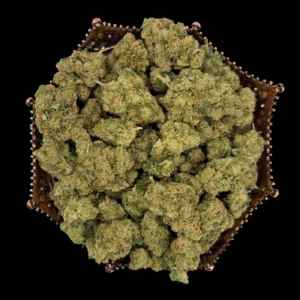
The White Durban Indoor THCA product name is a popular search phrase for people researching indoor-grown cannabis flower and learning more about THCA products. When exploring a named flower variety, it is important to understand the product description, advertised specifications, cannabinoid information and available laboratory documentation.
At THCa King Europe, we aim to provide useful information that helps visitors understand cannabis-related products and terminology. This guide explores White Durban Indoor THCA, explains what indoor cultivation means, introduces important cannabinoid concepts and discusses how to assess product information responsibly.
Whether you are researching White Durban for the first time or comparing different indoor THCA flower listings, understanding the details behind a product name can help you make more informed decisions.
What Is White Durban Indoor THCA?
White Durban Indoor THCA is a product name combining a named cannabis flower variety with a description of its cultivation environment and cannabinoid category.
The term “White Durban” identifies the advertised variety or product, while “Indoor” indicates that the flower is described as having been cultivated indoors. THCA refers to tetrahydrocannabinolic acid, a cannabinoid acid naturally produced by cannabis plants.
A product name alone does not establish its exact genetics, growing history, cannabinoid percentage, aroma, appearance or overall quality. These characteristics should be supported by reliable supplier information and, where applicable, batch-specific laboratory reports.
When researching White Durban Indoor THCA, useful product information may include:
- The product’s complete name and advertised quantity.
- The stated cultivation method.
- The batch or lot identification.
- The reported cannabinoid profile.
- Available laboratory testing documentation.
- Relevant product warnings and legal information.
Clear product descriptions help distinguish verified specifications from general promotional language.
What Does Indoor THCA Flower Mean?
Indoor THCA flower generally refers to cannabis flower described as having been cultivated in an indoor growing environment.
Indoor cultivation allows growers to manage certain environmental conditions, including lighting, temperature, humidity and airflow. These conditions may be adjusted throughout different stages of plant development.
However, indoor cultivation does not automatically guarantee a particular cannabinoid percentage, appearance, purity or quality level. The finished product depends on multiple factors, including cultivation practices, plant genetics, harvesting, drying, storage and handling.
For a product such as White Durban Indoor THCA, the indoor designation should therefore be understood as a description of the stated cultivation method, not an independent quality certification.
A transparent product listing should explain the cultivation claim without making unsupported promises.
Understanding THCA in White Durban Indoor Flower
THCA stands for tetrahydrocannabinolic acid. It is one of the naturally occurring cannabinoid acids found in cannabis plants.
THCA is chemically related to delta-9 THC, but the two compounds are not identical. THCA can undergo a process known as decarboxylation when exposed to heat. During this chemical process, it loses a carboxyl group and can convert into delta-9 THC.
This distinction is important when reading cannabis product descriptions and laboratory reports.
A laboratory report may list:
- THCA concentration.
- Delta-9 THC concentration.
- CBD concentration.
- Other cannabinoids included in the analysis.
These measurements should not be confused with one another. A product listing that advertises a THCA percentage is not necessarily reporting the same measurement as a listing that reports delta-9 THC or a calculated total THC figure.
The European Union Drugs Agency explains the relationship between THCA and THC in its educational material about cannabis chemistry and decarboxylation.
Read more: EUDA – Why defining cannabis is important.
Understanding this chemistry is useful when interpreting product descriptions, but a cannabinoid figure alone does not establish product safety, suitability or legal status.
What Should You Look for When Researching White Durban Indoor THCA?
A useful product listing should provide enough information for visitors to understand what is being advertised. Here are several details worth reviewing.
1. Product identity and description
The product name should be clearly displayed, and the description should explain the advertised product without relying entirely on promotional wording.
If White Durban is presented as a particular variety, the seller should avoid making unsupported claims about its genetics or characteristics.
Different suppliers may use similar names for products that are not identical. Therefore, it is important to evaluate the actual product listing rather than assuming every White Durban product has the same composition.
2. Advertised quantity
The product weight should be clearly stated. If a listing is described as an ounce, for example, it should explain whether the advertised quantity is 28g or another amount.
The advertised weight and cannabinoid percentage describe different product characteristics. Neither should be used as a substitute for the other.
3. Cannabinoid profile
Cannabinoid information can help readers understand the reported chemical composition of a sample.
If a product description provides specific THCA or THC figures, those claims should be supported by relevant analytical documentation.
A cannabinoid percentage should not be invented or copied from another product simply because the product name is similar.
4. Cultivation information
If a product is described as indoor-grown, the description should reflect the actual supplier information for that product.
Indoor cultivation is a growing-method description. It does not independently prove that a flower product has passed laboratory testing or meets a particular safety standard.
5. Batch information
Batch identification is important because cannabis products can vary between production batches.
A batch or lot number helps connect a product with its supporting documentation. This is particularly useful when a seller provides a certificate of analysis.
Why Laboratory Testing Matters
Laboratory testing provides information about the chemical composition of a tested sample. It can help establish whether particular cannabinoid measurements and other analytical results are supported by testing.
A Certificate of Analysis, commonly called a COA, is a document that reports the results of specified laboratory tests.
Depending on the laboratory and the testing scope, a cannabis flower COA may include cannabinoid measurements and tests for certain contaminants.
When reviewing documentation for White Durban Indoor THCA, consider the following:
Laboratory identity: The testing organisation should be clearly identified.
Sample identification: The report should identify the sample or batch that was tested.
Testing date: Check when the analysis was performed.
Cannabinoid results: Look for clearly identified measurements, including THCA and delta-9 THC where tested.
Contaminant testing: Check whether the report includes pesticide, heavy-metal, microbial or other contaminant analysis.
Report consistency: Confirm that the report relates to the product being advertised.
A COA does not automatically guarantee that a product is completely safe. It only documents the results of the tests included in that report. A cannabinoid-only analysis, for example, should not be presented as proof that a product has passed pesticide or microbial testing.
For additional technical information, the United Nations Office on Drugs and Crime publishes guidance on the identification and analysis of cannabis products:
UNODC – Recommended methods for the identification and analysis of cannabis and cannabis products.
White Durban Indoor THCA and Product Quality
Product quality is a broad concept. It should not be reduced to a single number, a variety name or an attractive product photograph.
When evaluating a White Durban Indoor THCA listing, consider whether the available information is consistent and verifiable.
Important areas include:
- Product transparency: Is the product described clearly?
- Cultivation information: Is the indoor-growing claim supported by supplier information?
- Cannabinoid analysis: Are the reported figures supported by testing?
- Batch traceability: Can the product be connected to a specific batch?
- Storage information: Does the supplier provide appropriate handling and storage information?
- Regulatory information: Has the relevant national legal position been considered?
These factors provide a more meaningful basis for understanding a product than unsupported descriptions such as “premium”, “top shelf” or “highest quality”.
It is also important not to assume that two products with the same name have identical characteristics. Their composition and documented specifications may differ.
How Does White Durban Compare With Other Indoor Flower Products?
People researching indoor THCA flower may encounter many different product names and descriptions. Comparing them requires consistent criteria.
Start by checking the advertised weight and product identity. Then compare the available cannabinoid information and determine whether the laboratory documentation relates to the relevant batch.
Next, examine the cultivation descriptions. If one listing identifies indoor cultivation and another does not, the available information is not necessarily equivalent.
Product names may also suggest particular characteristics or variety backgrounds. These descriptions should be treated as supplier-provided information rather than independently verified facts unless supporting documentation is available.
Finally, consider how much supporting documentation each seller provides. A product listing with clear specifications and relevant testing information gives readers more information than a listing relying entirely on promotional claims.
The White Durban name should not be treated as proof of a particular cannabinoid profile or quality level. The actual product information is what matters.
European Regulations and THCA Flower
Anyone researching White Durban Indoor THCA in Europe should pay close attention to the legal framework that applies in the relevant country.
Cannabis regulations differ across European countries. The European Union also has specific rules concerning agricultural hemp cultivation and certain hemp-derived products. However, agricultural hemp rules should not be interpreted as blanket permission for every cannabis flower product containing THCA.
The European Union Drugs Agency explains that the legal treatment of cannabis-derived products depends on several factors, including their composition, intended use and the national laws that apply.
This is especially important when researching THCA products because THCA is chemically related to THC and can convert into THC when heated.
Before considering any cannabis-related product, check the current legislation in the destination country. Relevant rules may cover possession, sale, importation, distribution and product classification.
Useful official resources include:
- EUDA – Cannabis laws in Europe FAQ
- EUDA – Medical and commercial cannabis-derived products
- EUDA – How European countries respond to illegal cannabis use and supply
The EUDA’s cannabis laws FAQ was revised on 21 April 2026 and explains why national approaches can differ. These resources provide general information and should not be treated as individual legal advice. A product’s availability online does not establish that its sale, possession or importation is lawful in every country.
Frequently Asked Questions About White Durban Indoor THCA
What is White Durban Indoor THCA?
White Durban Indoor THCA is a product name combining the White Durban designation with a description of indoor cultivation and THCA flower. The exact product characteristics should be confirmed through the seller’s specifications and relevant batch documentation.
What does indoor mean in White Durban Indoor THCA?
Indoor generally indicates that the cannabis plant was cultivated in an indoor growing environment. This may allow growers to manage environmental conditions, but the term does not automatically establish product quality or cannabinoid concentration.
Does White Durban have a particular aroma or flavour?
A product name alone does not verify a specific aroma or flavour. Any sensory description should be based on reliable information about the actual product and should not be presented as a guaranteed characteristic without supporting evidence.
What does THCA mean?
THCA stands for tetrahydrocannabinolic acid. It is a naturally occurring cannabinoid acid found in cannabis plants and can convert into delta-9 THC through decarboxylation when heated.
Does indoor cultivation guarantee higher THCA content?
No. Indoor cultivation does not guarantee a specific cannabinoid percentage. The actual cannabinoid profile depends on the product and should be verified through appropriate laboratory analysis.
How can I verify the cannabinoid content of White Durban Indoor THCA?
Look for a relevant Certificate of Analysis. Check the laboratory identity, testing date, sample or batch identification and reported cannabinoid measurements. Confirm that the report corresponds to the product being described.
Is White Durban Indoor THCA legal throughout Europe?
There is no blanket answer that applies to every European country and every THCA product. National legislation and product classification matter. Always check the current rules in the relevant jurisdiction.
Does the White Durban name guarantee particular genetics?
No. A product or variety name alone does not establish its genetic background. Specific genetic claims should be supported by reliable supplier or breeder documentation.
Final Thoughts on White Durban Indoor THCA
The White Durban Indoor THCA product name can help visitors find a particular flower listing, but understanding the product requires more than reading its name.
Product identity, advertised weight, cultivation information, cannabinoid analysis and batch-specific laboratory documentation all contribute to a clearer understanding of what is being described.
It is equally important to understand the difference between THCA and THC and to check the regulations that apply in the relevant European country.
At THCa King Europe, visitors can explore more product information and educational resources through the website.
Visit the THCa King Europe homepage, explore the THCa King Europe shop for product listings, or read more educational content through the THCa King Europe blog.
When researching any cannabis-related product, prioritise accurate information, relevant testing documentation and compliance with applicable laws.