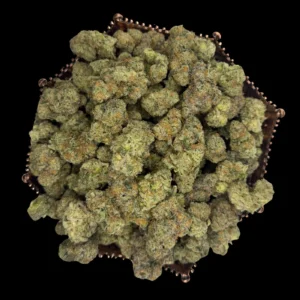
If you are researching White Durban Indoor THCA, understanding the product description, growing terminology, cannabinoid information and available laboratory documentation can help you make a more informed decision. Product names can communicate a variety of things, but they do not independently verify a flower’s composition, cultivation history, potency or quality.
At THCa King Europe, customers can explore product information and educational resources to learn more about THCA flower. This guide explains what the term “indoor” generally means in flower cultivation, what to check when evaluating White Durban Indoor THCA, how to read a Certificate of Analysis (COA), and why product transparency and local regulations matter.
Product-specific note: The current specifications for White Durban Indoor THCA should be confirmed against the live product listing and a matching laboratory report. This guide does not assume a particular cannabinoid percentage, aroma, appearance, strain lineage or effect without verified documentation.
What Is White Durban Indoor THCA?
White Durban Indoor THCA is the product name covered in this guide. The name suggests a White Durban-labelled product described as indoor-grown THCA flower, but the exact identity, genetics and composition should be confirmed by the seller’s current product information.
Understanding each part of the name helps customers know which questions to ask.
- White Durban: A cultivar or strain-style name used to identify the product. The name alone does not prove its genetic lineage or specific characteristics.
- Indoor: A cultivation description generally referring to plants grown in an indoor environment where conditions such as light, temperature and humidity can be managed.
- THCA: Tetrahydrocannabinolic acid, a cannabinoid found in cannabis plants. Its relationship to THC is important when evaluating product information and potential intoxicating effects.
The US Centers for Disease Control and Prevention (CDC) explains that THCA can convert into THC when exposed to heat, such as during smoking, vaping or dabbing. THC can cause intoxicating effects and impairment. Read the CDC’s official cannabis FAQ for more information.
The product name is a starting point for research, not a substitute for verifiable product specifications. Before relying on claims about White Durban Indoor THCA, check the label, batch information and any available laboratory documentation.
What Does Indoor THCA Flower Mean?
Indoor cultivation refers broadly to growing plants in an enclosed environment rather than relying entirely on outdoor conditions. Indoor facilities can allow cultivators to manage factors such as lighting schedules, temperature, humidity, airflow and irrigation.
These controls may help growers maintain more consistent growing conditions. However, the word “indoor” does not automatically guarantee superior flower, a particular cannabinoid concentration or freedom from contaminants. Final quality also depends on cultivation practices, harvest timing, drying, curing, storage, handling and testing.
When assessing a product marketed as White Durban Indoor THCA, look for clear information about the product’s origin and the seller’s quality-control procedures. Do not assume that indoor cultivation alone confirms how the flower was grown or handled.
Indoor cultivation and product consistency
Consistency matters because customers want the item they receive to correspond to the product description. Good recordkeeping can help a business trace flower to its batch and connect the product with relevant quality checks.
Useful information may include batch identification, packaging details, storage guidance, testing documentation and a clear statement of the product’s net weight. Where a seller provides cultivation or sourcing information, look for details that can be verified rather than relying only on general marketing phrases.
Why the strain name is not enough
Names such as White Durban can help distinguish products in a catalogue, but a name is not independent evidence of genetic lineage, terpene content or effects. If a product page describes particular flavour notes, parent strains or other distinguishing features, those statements should be supported by reliable product records or credible supplier documentation.
For accurate SEO and better customer trust, product descriptions should separate confirmed facts from general descriptions. This is especially important when similar names are used by different sellers.
How to Evaluate White Durban Indoor THCA Quality
A careful product review considers more than photographs or a headline percentage. Use the following checks when examining White Durban Indoor THCA or any other THCA flower listing.
1. Read the complete product description
Look for the net weight, product format, batch or lot identification where available, relevant warnings, storage guidance and the seller’s contact information. Check that the product description explains what is known without making unsupported promises.
If the listing states a specific THCA percentage, ask whether it is based on laboratory testing and whether the result corresponds to the batch being sold. Do not treat an advertised figure as independently verified until the documentation supports it.
2. Review the Certificate of Analysis
A Certificate of Analysis is a report that presents results for specified laboratory tests on a sample. A useful report should be traceable to the product and batch being evaluated.
When reviewing a COA for White Durban Indoor THCA, check:
- Product and sample identification: Does the report identify the relevant material?
- Batch or lot number: Does it match the product’s label or supporting records?
- Laboratory identity: Is the testing laboratory named, and can its credentials be checked?
- Testing date: Is the report relevant to the batch currently being sold?
- Cannabinoid profile: Are the measured cannabinoids and their results clearly listed?
- Contaminant testing: Does the report cover relevant risks, such as pesticides, heavy metals, microbial contamination or residual solvents, as appropriate to the material and testing method?
- Authenticity: Can the report be confirmed with the laboratory or accessed through a reliable report link?
A COA is only as informative as the tests it contains. It does not establish that every possible contaminant has been tested, that every batch has the same composition or that the product is lawful in a particular country.
3. Understand THCA and THC results
THCA and delta-9 THC are related but distinct cannabinoids. THCA can convert into THC when heated, which means a product’s THCA result should not be interpreted in isolation from the way the product may be used and the applicable rules for measuring total THC.
The CDC notes that heated THCA may produce THC and associated impairing effects. The European Union Drugs Agency (EUDA) also discusses the relationship between THCA and THC in its information on cannabis production and composition. See the EUDA cannabis production overview.
Do not assume that a THCA product is non-intoxicating in every form or circumstance. Do not rely on a low delta-9 THC figure alone to determine safety or legality. Relevant definitions and testing requirements can differ across jurisdictions.
4. Consider handling and storage information
Storage can affect the condition of plant material over time. Review the seller’s storage recommendations and any packaging information, and keep products in their original labelled packaging where appropriate.
Avoid products with damaged packaging, missing identification or unclear handling information. If the appearance or condition of a received product does not match the description, contact the seller rather than guessing about its quality.
5. Treat marketing language carefully
Words such as “premium,” “exotic,” “top shelf” and “high potency” are not substitutes for analytical results. Photographs may illustrate a product category, but they cannot establish cannabinoid concentration, purity or the absence of contaminants.
For White Durban Indoor THCA, rely on specific product documentation wherever possible. A transparent seller should be able to distinguish confirmed details from descriptive language and explain what testing has and has not been carried out.
THCA Flower Safety and Responsible Awareness
THCA flower requires careful consideration because heat can convert THCA into THC. THC can impair attention, memory, judgement and coordination. The degree of impairment varies, and a product’s name or label should not be used to predict an individual’s response.
Do not drive or operate machinery while impaired. Keep cannabinoid products away from children and pets, and follow applicable age restrictions, product warnings and local requirements. Avoid treating marketing claims as medical advice or assuming that a product is suitable for a particular health condition.
Laboratory testing can provide useful information about a sample, but it cannot guarantee that a product is risk-free or predict its effects on an individual. If you have questions about potential health risks, consult a qualified healthcare professional and refer to reliable public-health guidance.
For general information, consult the CDC’s cannabis FAQ.
Is White Durban Indoor THCA Legal in Europe?
The legal status of cannabis and cannabinoid products is not uniform across Europe. Rules can depend on the country, the product’s composition, its intended use, how it is marketed, and whether possession, sale, importation or transport is involved.
The EUDA’s Cannabis Laws in Europe FAQ explains that national approaches and relevant legal frameworks vary. It also discusses legal considerations affecting medical and commercial cannabis-derived products. The fact that a product is sold online, labelled as THCA or described as indoor flower does not automatically establish that it is lawful everywhere.
Before ordering White Durban Indoor THCA, verify the current rules that apply in the destination country and any relevant transit countries. Businesses should also check the requirements that apply to product classification, labelling, advertising, shipping and sale.
A COA is not a legal authorisation. Even a report showing a particular cannabinoid profile cannot, by itself, establish that a product may legally be possessed, sold or shipped to every destination.
Explore THCA Flower Information at THCa King Europe
Customers researching White Durban Indoor THCA can start with the THCa King Europe homepage and browse the online shop to review current product listings and available specifications.
For additional reading, visit the THCa King Europe blog. These internal resources can help visitors navigate the website and find further product-related information.
Before making decisions based on a particular product claim, check that the information is current and applies to the exact item being considered. If you need confirmation of a cannabinoid percentage, batch number, product origin or laboratory report, use the current product listing and request clarification from the seller where necessary.
If a dedicated White Durban Indoor THCA product page is available, link this article directly to that page. A relevant internal link makes it easier for readers to move from the educational guide to the specific listing without relying on a generic search.
Frequently Asked Questions About White Durban Indoor THCA
What is White Durban Indoor THCA?
White Durban Indoor THCA is the product name discussed in this guide. The precise flower characteristics, composition and cannabinoid percentages should be confirmed through the current product listing and matching laboratory documentation.
What does “indoor” mean in THCA flower?
“Indoor” generally describes cultivation in an enclosed environment where factors such as light, temperature and humidity can be managed. It does not, on its own, guarantee potency, purity or superior quality.
How can I verify the THCA percentage?
Look for a current Certificate of Analysis that identifies the product or sample and can be connected to the relevant batch. Confirm that the report identifies the tested cannabinoids and clearly reports the results.
Does THCA become THC?
Yes. THCA can convert into THC when exposed to heat. THC can cause intoxicating effects and impairment, so product labels and marketing descriptions should be interpreted carefully.
Is White Durban Indoor THCA legal in every European country?
No blanket conclusion should be made for all European countries. Rules can differ by jurisdiction and product composition. Check current official guidance and applicable national law before ordering, possessing, selling or shipping the product.
Where can I find more information about THCa King Europe products?
Visit the THCa King Europe homepage, browse the shop or explore the blog for available product listings and educational content.
Final Thoughts on White Durban Indoor THCA
Researching White Durban Indoor THCA begins with clear product information, not assumptions based on the strain name or the word “indoor.” Check the product format and label, review any available batch-matched Certificate of Analysis, understand the relationship between THCA and THC, and verify the applicable laws in your location.
For THCa King Europe, a useful product guide should help readers distinguish verifiable facts from marketing language. By keeping product details accurate, linking to relevant resources and explaining quality checks clearly, this article can provide a stronger user experience while supporting the site’s broader THCA flower content.