
THCA Flower Potency: A Complete Guide to Strength, THCA Content and Testing
THCA Flower Potency: What Does It Really Mean?
As interest in cannabinoid-rich hemp and cannabis products continues to grow, more consumers and businesses are searching for information about THCA flower potency.
But what does potency actually mean when talking about THCA flower?
The answer is more complicated than simply looking at a percentage printed on a product label.
THCA, or tetrahydrocannabinolic acid, is a naturally occurring cannabinoid acid found in cannabis plants. It is closely related to delta-9 THC, but the two compounds are not chemically identical. THCA itself is not considered psychoactive in the same way as delta-9 THC. However, when exposed to heat, THCA can undergo decarboxylation and convert into THC.
This is one of the most important concepts for understanding THCA flower potency.
A product with a high THCA percentage does not simply mean that it contains the same amount of active delta-9 THC in its natural, unheated state.
In this guide, we explain how THCA potency is measured, what influences the strength of THCA flower, how laboratory testing works, why cannabinoid percentages can vary, and what buyers should consider when evaluating THCA flower.
What Is THCA Flower?
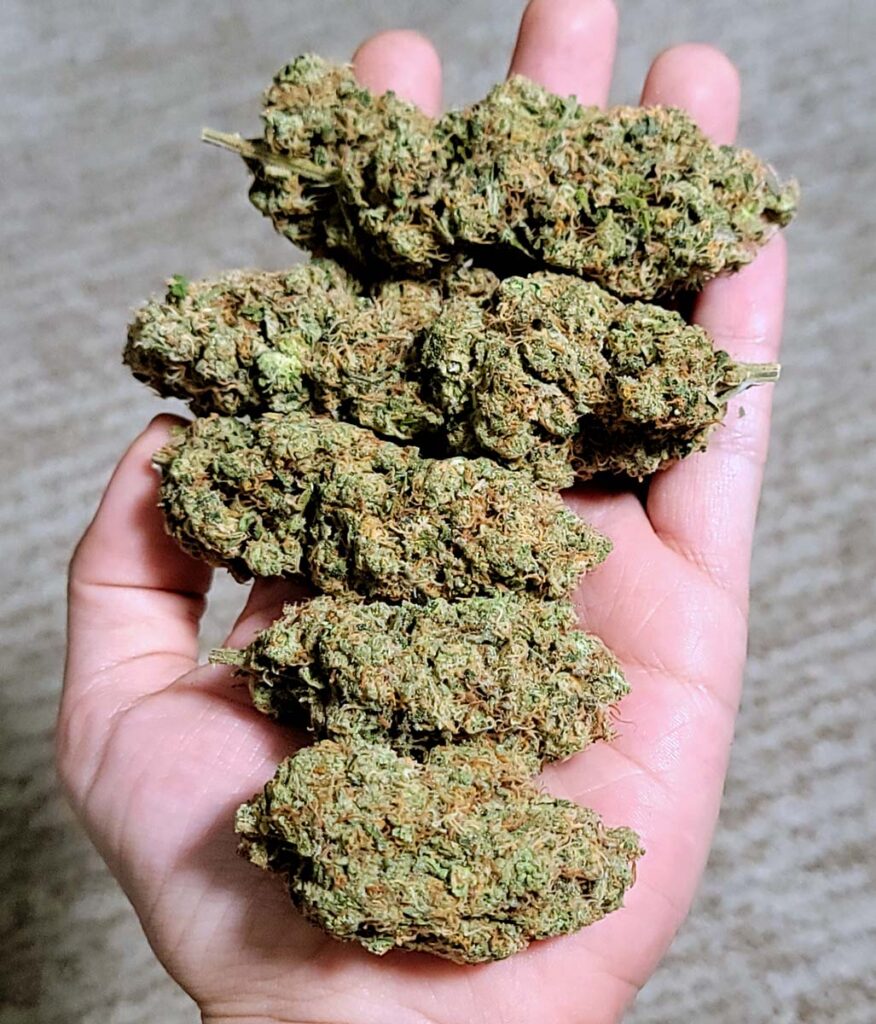
THCA flower is flower from cannabis or hemp plants containing a significant amount of tetrahydrocannabinolic acid (THCA).
Cannabinoids are produced naturally by the cannabis plant, particularly in resin-producing structures called trichomes.
THCA is one of the plant’s cannabinoid acids.
The simplified chemical relationship is:
When sufficient heat is applied, THCA can lose a carboxyl group and become delta-9 THC. The European Union Drugs Agency (EUDA) explains that when cannabis is heated, THCA is converted into THC and therefore contributes to the total THC exposure from heated cannabis products.
This means that the THCA content and the THC content of a flower product should be considered separately.
What Does THCA Flower Potency Mean?
The word potency can be confusing.
In everyday product discussions, people often use potency to describe how much THCA or THC a product contains.
The EUDA notes that, technically, pharmacological “potency” refers to the amount of a drug required to produce an effect, while the concentration of THC in a cannabis product is more accurately described as its strength. However, the agency continues to use “potency” in its cannabis reporting for consistency.
For SEO and consumer terminology, THCA flower potency generally refers to the concentration of THCA present in the flower.
For example, a laboratory report might show a product containing a certain percentage of THCA by weight.
However, this number should not be interpreted as an identical percentage of delta-9 THC already present in the unheated flower.
THCA Percentage vs. THC Percentage
One of the most important distinctions when evaluating THCA flower potency is the difference between THCA and delta-9 THC.
THCA
THCA is the acidic precursor to delta-9 THC.
Delta-9 THC
Delta-9 THC is the primary psychoactive cannabinoid associated with cannabis intoxication.
Heat
Heat can convert THCA into delta-9 THC through decarboxylation.
Therefore:
THCA percentage ≠ delta-9 THC percentage
The two numbers provide different information about the cannabinoid profile of the flower.
A professional Certificate of Analysis should therefore distinguish between THCA and delta-9 THC rather than presenting consumers with only one cannabinoid value.
How Is THCA Flower Potency Measured?
THCA flower potency is generally determined through laboratory analysis.
Modern analytical methods can measure multiple cannabinoids in a single sample.
One established approach is liquid chromatography, which can quantify cannabinoids in plant material without relying on visual characteristics or marketing descriptions. Research has demonstrated validated liquid chromatography methods capable of measuring numerous cannabinoids in hemp and cannabis samples.
A laboratory report may show values for:
- THCA
- Delta-9 THC
- CBD
- CBDA
- CBG
- CBGA
- CBC
- CBN
- Other cannabinoids
The exact panel depends on the laboratory and the applicable testing requirements.
Why Laboratory Testing Matters
Laboratory testing is one of the most important factors when comparing THCA flower potency.
Two products can look very similar while having different cannabinoid profiles.
Laboratory analysis provides measurable data that can be used to evaluate the actual batch.
A good Certificate of Analysis, or COA, may provide:
- Cannabinoid concentrations
- THCA percentage
- Delta-9 THC percentage
- CBD percentage
- Batch or sample identification
- Testing date
- Laboratory information
- Detection limits
- Contaminant results, where applicable
This is particularly important for businesses buying THCA flower wholesale.
Instead of relying solely on a product description, buyers can evaluate the laboratory data associated with the specific batch.
Does a Higher THCA Percentage Mean Stronger Flower?
Not necessarily in the simple way many consumers assume.
A higher THCA concentration means there is more THCA present by weight.
However, the overall characteristics of a cannabis flower cannot be reduced to a single cannabinoid percentage.
Other factors can include:
- Delta-9 THC content
- CBD content
- Other cannabinoids
- Terpene composition
- Product quality
- Individual sensitivity
- Route of administration
- Processing and storage
Furthermore, once THCA is heated, it can convert into THC.
The EUDA specifically notes that THCA contributes to THC exposure when cannabis is heated because of this conversion.
Therefore, THCA flower potency should be understood as one part of the overall cannabinoid profile.
What Affects THCA Flower Potency?
Several factors can influence the amount of THCA found in finished flower.
1. Genetics
Genetics are among the most important factors.
Different cannabis cultivars naturally produce different cannabinoid profiles.
Some are selected for CBD, some for CBG, and others for high THCA production.
The genetic potential of the plant establishes an important foundation for the final cannabinoid profile.
2. Growing Conditions
Cultivation conditions can also influence plant development.
Important environmental factors include:
- Light
- Temperature
- Humidity
- Water availability
- Nutrient management
- Growing medium
- Plant health
A genetically promising plant still requires appropriate cultivation conditions to reach its potential.
3. Flower Maturity
The cannabinoid profile can change as the plant develops.
Harvest timing can therefore influence the final cannabinoid composition.
Professional growers may monitor flower development and, where appropriate, use laboratory analysis to determine when plants are approaching their desired profile.
4. Trichome Development
Cannabinoids are concentrated in the resin-producing trichomes of cannabis flowers.
The EUDA notes that capitate-stalked trichomes are particularly abundant around female cannabis flowers and produce high quantities of cannabinoids.
Healthy development of these structures is therefore closely associated with cannabinoid production.
5. Harvesting
Harvesting at different stages can result in different cannabinoid and terpene profiles.
For producers targeting a particular THCA flower potency, harvest timing can therefore be an important quality-control consideration.
6. Drying and Curing
Post-harvest handling can also influence cannabinoid stability.
Excessive heat can promote decarboxylation, potentially changing the balance between THCA and THC.
Careful drying and curing are therefore important for preserving the intended cannabinoid profile.
7. Storage
Storage conditions can affect the quality and chemical stability of cannabis flower.
Factors such as:
- Heat
- Light
- Humidity
- Oxygen
- Time
can influence the product over its shelf life.
Proper packaging and storage are therefore important for maintaining consistent product quality.
Understanding Total THC
One of the most important concepts for anyone researching THCA flower potency is total THC.
Because THCA can be converted into THC through decarboxylation, laboratory calculations may sometimes account for both the THC already present and the THC that could theoretically result from THCA conversion.
A commonly used simplified relationship is:
Total THC ≈ Δ9-THC + (THCA × 0.877)
The 0.877 factor reflects the molecular-weight difference associated with the conversion of THCA into THC.
However, this calculation represents a theoretical conversion and should not automatically be interpreted as the exact amount of THC a person will absorb after consuming a product.
Actual exposure depends on many variables, including processing, heating, route of administration, and biological factors.
For legal compliance, businesses should always use the calculation and testing methodology required by the applicable jurisdiction rather than relying on a generic formula.
Why THCA Percentage Alone Can Be Misleading
Imagine two hypothetical products:
Product A:
High THCA, very low measured delta-9 THC
Product B:
Moderate THCA, higher measured delta-9 THC
Looking only at the THCA percentage could make Product A appear “stronger.”
But the overall cannabinoid profile is more complicated.
The relevant information may include:
THCA + delta-9 THC + other cannabinoids + terpene profile + laboratory methodology
This is why experienced buyers look at the complete Certificate of Analysis rather than relying on one number.
Does THCA Flower Potency Change After Heating?
Yes.
Heating can cause THCA to convert into delta-9 THC through decarboxylation.
This is a fundamental chemical characteristic of THCA.
The EUDA explains that smoking cannabis converts THCA into THC and that total THC exposure from heated cannabis reflects both pre-existing THC and THC produced from THCA.
This is also why the cannabinoid profile shown on a laboratory report should be interpreted carefully.
A COA describing the flower in its tested state does not necessarily describe the exact chemical composition after heating.
THCA Flower Potency and Terpenes
Cannabinoids are not the only compounds that contribute to the characteristics of cannabis flower.
Cannabis also contains terpenes, which are aromatic compounds associated with different smells and flavor profiles.
Common terpene-associated descriptions include:
- Citrus
- Fruity
- Floral
- Earthy
- Herbal
- Spicy
- Woody
- Sweet
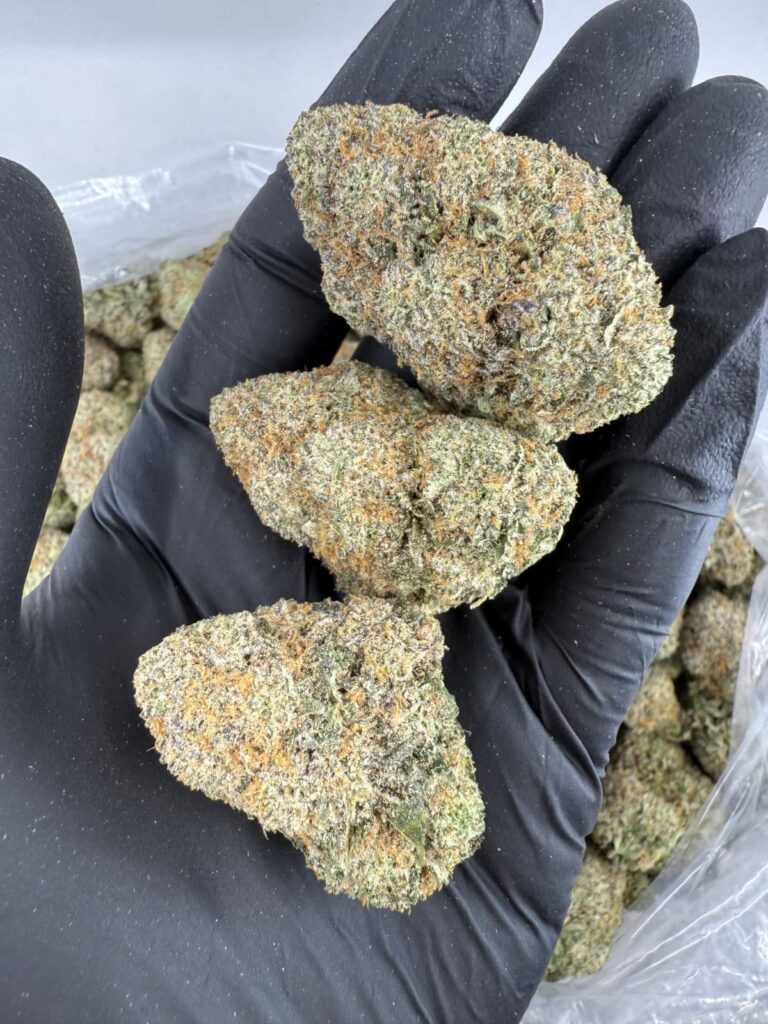
Two products can have similar THCA percentages but very different terpene profiles.
This means that THCA flower potency is only one aspect of product differentiation.
For premium flower, consumers may also consider:
- Aroma
- Appearance
- Trichome coverage
- Flower structure
- Terpene profile
- Cannabinoid diversity
- Laboratory results
THCA Flower Potency vs. CBD Flower
THCA flower and CBD flower are not the same type of cannabinoid product.
CBD flower is generally cultivated to produce relatively high CBD and/or CBDA levels.
THCA flower is cultivated or selected for a higher THCA concentration.
| Feature | THCA Flower | CBD Flower |
|---|---|---|
| Main cannabinoid of interest | THCA | CBD/CBDA |
| Acidic cannabinoid | THCA | CBDA |
| Delta-9 THC | Varies by product | Usually low in compliant hemp products |
| Effect of heat | THCA can convert to THC | CBD does not convert to THC in the same way |
| Testing importance | Very high | Very high |
The actual cannabinoid profile should always be confirmed through laboratory testing.
Can THCA Flower Be Too Potent?
“Too potent” depends on what the term is being used to describe.
From a product-quality perspective, an unusually high advertised cannabinoid value deserves careful verification.
From a consumer perspective, higher cannabinoid concentrations can change the potential exposure when THCA is converted into THC.
The EUDA has highlighted the increasing availability of high-potency cannabis products in Europe and the associated need for greater attention to potential health risks.
Consumers should therefore avoid assuming that a higher percentage automatically means a better product.
For businesses, consistency, accurate testing, traceability, and compliance are often more valuable than simply maximizing a cannabinoid number.
Why “Highest THCA” Is Not Always the Best Choice
Marketing often focuses heavily on the highest possible cannabinoid percentage.
However, a premium THCA flower product should be evaluated more broadly.
Important quality indicators include:
Accurate Testing
Does the laboratory result correspond to the actual batch?
Consistency
Do different batches maintain a reasonably consistent profile?
Clean Testing
Has the product been tested for relevant contaminants?
Terpene Profile
Does the product have a well-characterized aromatic profile?
Proper Storage
Has the flower been protected from excessive heat, light, moisture, and oxygen?
Regulatory Compliance
Does the product meet the rules applicable to its intended market?
A balanced approach is more informative than simply choosing the product with the largest number on the label.
Can You Trust the THCA Percentage on the Label?
Consumers should always prefer products supported by independent laboratory testing.
Research published in 2025 found discrepancies between labeled and measured THC concentrations in a sample of cannabis products, with flower products showing greater labeling variability than concentrates in that particular study.
This does not mean every THCA flower label is inaccurate.
It does demonstrate why independent, transparent testing is important.
When evaluating a product, look for:
- A batch-specific COA
- Laboratory identification
- Testing date
- Sample identification
- Complete cannabinoid results
- Appropriate analytical methodology
A trustworthy supplier should be able to provide meaningful product documentation.
How to Read a THCA Flower COA
If you are comparing THCA flower potency, learning how to read a COA is extremely useful.
THCA
This shows the measured concentration of tetrahydrocannabinolic acid.
Delta-9 THC
This shows the amount of delta-9 THC detected in the tested sample.
CBD
This shows the cannabidiol concentration.
Other Cannabinoids
A complete report may include CBG, CBC, CBN, CBDA and other compounds.
Batch Number
The batch identifier helps connect the laboratory report to the product.
Testing Date
The date indicates when the sample was analyzed.
Contaminant Testing
Depending on the market and laboratory, additional tests may include:
- Pesticides
- Heavy metals
- Microbial contamination
- Mycotoxins
- Residual solvents
The exact requirements vary by product type and jurisdiction.
THCA Flower Potency for Wholesale Buyers
For businesses purchasing THCA flower in bulk, potency is only one part of supplier evaluation.
A professional wholesale buyer may want to examine:
1. Cannabinoid consistency
Are different batches reasonably consistent?
2. Laboratory documentation
Are current COAs available?
3. Product traceability
Can the batch be traced back through the supply chain?
4. Quality testing
Are relevant contaminants tested?
5. Packaging
Is the flower packaged appropriately for storage and transport?
6. Regulatory documentation
Does the supplier provide documentation relevant to the destination market?
7. Supply consistency
Can the supplier maintain quality over repeated orders?
This approach is especially important for European wholesale businesses because national rules can differ.
THCA Flower Potency and European Regulations
Cannabinoid products should never be evaluated solely by their advertised potency.
European regulations vary between countries, and product classification can depend on factors such as:
- Delta-9 THC concentration
- THCA concentration
- Intended use
- Product category
- National legislation
- Import rules
- Labeling requirements
The EUDA has documented significant differences and ongoing changes in how cannabis-related products are regulated and sold across Europe.
Therefore, a product that is marketed in one European country should not automatically be assumed to have the same legal status in another.
Businesses should verify current national requirements before importing, distributing, or selling cannabinoid products.
THCA Flower Potency and Product Quality
A high THCA number can be interesting, but it should not be the only quality criterion.
Premium flower can be evaluated through several characteristics:
Cannabinoid profile
What cannabinoids are present?
Terpene profile
What aromatic compounds are present?
Appearance
Does the flower look properly cultivated and handled?
Trichome development
Is there good resin coverage?
Aroma
Does the flower have a clear and characteristic terpene profile?
Laboratory testing
Are the advertised cannabinoid concentrations supported by testing?
Storage
Has the product been stored under appropriate conditions?
The best purchasing decisions consider the entire product rather than one percentage.
Popular THCA Flower Profiles
Different cultivars can produce different THCA and terpene profiles.
Popular THCA flower names include:
- Gelato
- Runtz
- Zkittlez
- Wedding Cake
- White Runtz
- Purple Punch
- Blue Dream
- Apple Fritter
- Ice Cream Cake
- Oreoz
- GMO
- Lemon Cherry Gelato
- Permanent Marker
- RS11
However, the cultivar name alone does not guarantee a specific THCA flower potency.
The cannabinoid content can vary between growers, cultivation conditions, harvests, and batches.
For accurate information, always check the laboratory report for the specific product.
Does THCA Flower Potency Affect Effects?
THCA itself is not considered psychoactive in the same way as delta-9 THC.
However, heating can convert THCA into THC.
Therefore, a product with a high THCA concentration can have a different potential cannabinoid exposure after heating than its unheated laboratory profile might suggest.
The actual experience depends on numerous factors, including:
- Cannabinoid concentration
- Amount consumed
- Route of administration
- Individual sensitivity
- Previous exposure
- Product composition
It is therefore not appropriate to assume that the THCA percentage alone predicts an individual’s experience.
Is High THCA Flower Legal in Europe?
The answer depends on the specific country and product.
There is no universal European rule stating that every product with a particular THCA percentage is legal everywhere.
Businesses should consider both:
THCA concentration
and
delta-9 THC concentration
along with the relevant product classification and national legislation.
The legal status of cannabinoid products can change, so current regulatory verification is essential.
How to Choose THCA Flower Based on Potency
If you are comparing products, use the following checklist.
Step 1: Check the THCA Percentage
Look at the laboratory-tested THCA concentration.
Step 2: Check Delta-9 THC
Do not ignore the measured delta-9 THC level.
Step 3: Review the Complete COA
Look beyond the headline cannabinoid.
Step 4: Check the Batch Number
Make sure the COA corresponds to the product you are buying.
Step 5: Look at Testing Date
Recent, relevant testing is preferable.
Step 6: Review Contaminant Testing
Quality testing should address the relevant risks for the product.
Step 7: Consider Terpenes
A good terpene profile can provide useful information about the flower’s overall characteristics.
Step 8: Verify Local Compliance
Make sure the product meets the rules applicable to your country.
Frequently Asked Questions About THCA Flower Potency
What is THCA flower potency?
THCA flower potency generally refers to the concentration or strength of THCA present in cannabis or hemp flower. The term is commonly used by consumers and businesses, although the EUDA notes that “strength” is technically more precise when referring to cannabinoid concentration.
What is considered high THCA flower?
There is no universal definition of “high THCA flower.” Product classifications and market terminology vary, and laboratory results should be used to determine the actual cannabinoid concentration.
Does more THCA mean more THC?
Not directly. THCA and delta-9 THC are different cannabinoids. However, THCA can be converted into THC through heating.
Does THCA flower get you high?
THCA itself is not considered psychoactive like delta-9 THC. When THCA is heated and converted into THC, intoxicating effects can occur.
How is THCA percentage calculated?
THCA concentration is generally determined through laboratory analysis, commonly using analytical techniques such as liquid chromatography.
Is 30% THCA flower stronger than 20% THCA flower?
In terms of measured THCA concentration, 30% contains more THCA by weight than 20%. However, overall product characteristics and potential exposure cannot be determined from THCA percentage alone.
Does THCA potency decrease over time?
Cannabinoid profiles can change during storage and aging. Conditions such as heat, light, oxygen, moisture, and time can influence product stability.
Why are laboratory tests important?
Laboratory tests provide objective measurements of cannabinoid concentrations and can provide additional information about contaminants and other quality parameters.
Can two batches of the same THCA strain have different potency?
Yes. Cultivation conditions, harvest timing, post-harvest handling, genetics, and testing variation can contribute to differences between batches.
Is high THCA flower better?
Not necessarily. A higher cannabinoid concentration does not automatically mean better overall quality. Testing, consistency, terpene profile, cleanliness, storage, and regulatory compliance should also be considered.
THCA Flower From THC King Europe
For consumers and businesses researching THCA flower potency, reliable product information is essential.
At THC King Europe, the focus is on THCA flower and wholesale solutions for the European market.
When comparing products, buyers should look beyond a single percentage and consider the complete product profile:
This approach helps businesses and consumers make better-informed purchasing decisions.
For wholesale buyers in particular, batch-specific documentation and transparent testing can be valuable tools for evaluating suppliers and maintaining consistent product standards.
Final Thoughts on THCA Flower Potency
Understanding THCA flower potency requires more than looking at the biggest percentage on a product label.
THCA is a naturally occurring cannabinoid acid that differs from delta-9 THC. When heated, THCA can undergo decarboxylation and convert into THC.
For this reason, consumers and businesses should distinguish between:
THCA content
Delta-9 THC content
Potential total THC
and
overall product quality.
Laboratory testing is one of the best ways to verify cannabinoid concentrations. Research has also shown that labeled cannabinoid potency can sometimes differ from measured concentrations, reinforcing the importance of independent and transparent testing.
For European buyers, legal compliance is equally important because cannabinoid regulations can differ between countries and continue to evolve.
Ultimately, the best THCA flower is not necessarily the product with the highest advertised number. A high-quality product should combine accurate laboratory testing, a clear cannabinoid profile, appropriate cultivation and storage, consistent batches, transparent documentation, and compliance with applicable regulations.