High Potency THCA Flower: Understanding THCA Content, Quality, Strains & Lab Testing
High Potency THCA Flower: The Complete Guide
Interest in high potency THCA flower continues to grow as consumers become more interested in cannabinoid content, premium cannabis genetics and carefully cultivated flower.
However, the term “high potency” can be confusing.
A product advertised as high potency may be referring to its THCA concentration, total cannabinoid content or another measurement. For that reason, consumers should look beyond marketing terminology and examine the actual laboratory data.
The European Union Drugs Agency (EUDA) notes that cannabis potency is conventionally expressed in relation to THC concentration, while THCA is the acidic precursor that can convert to THC through heating.
So what should you look for when researching high potency THCA flower?
The most important factors include:
- THCA concentration
- Delta-9 THC content
- Total cannabinoid profile
- Genetics
- Terpene profile
- Cultivation method
- Flower quality
- Harvesting and curing
- Freshness
- Laboratory testing
- Batch consistency
- Applicable local regulations
This guide explains what high-THCA flower means, how to evaluate it and what separates a genuinely high-quality product from one that simply makes a strong marketing claim.
What Is High Potency THCA Flower?
High potency THCA flower generally refers to flower marketed for its relatively high concentration of tetrahydrocannabinolic acid, commonly abbreviated as THCA.
THCA is a naturally occurring cannabinoid acid produced by cannabis plants.
Importantly, THCA and Delta-9 THC are not the same compound.
THCA can undergo decarboxylation when heated, converting it into Delta-9 THC. The EUDA explains that this conversion can occur through processes such as smoking, vaporising or baking.
This means the cannabinoid profile of unheated flower is different from the profile after heating.
For consumers researching high-THCA products, understanding this distinction is essential.
What Does “High Potency” Actually Mean?
The word potency is often used loosely in cannabis marketing.
According to the EUDA, potency is technically associated with the amount of a substance required to produce an effect. For cannabis market reporting, however, potency is commonly used to describe THC concentration.
This distinction matters because a product labeled high potency THCA flower is not necessarily describing the same thing as a cannabis product with a high measured THC concentration.
A responsible product description should clearly identify:
- THCA
- Delta-9 THC
- Other cannabinoids
- Testing methodology where relevant
Rather than relying on words such as “ultra strong” or “maximum potency,” consumers should examine the actual analytical results.
Why Is THCA Content Important?
THCA is one of the major cannabinoid acids naturally produced by cannabis plants.
The EUDA explains that cannabis plants produce THCA and CBDA and that the quantities of cannabinoids can vary according to genetics and growing conditions.
For this reason, two flowers from different cultivars can have substantially different cannabinoid profiles.
THCA concentration can therefore be useful when comparing products.
However:
A higher THCA percentage does not automatically mean better overall flower.
Quality is multidimensional.
High THCA Flower vs High-Quality THCA Flower
These terms should not be treated as identical.
A flower can have a high reported THCA percentage but still have shortcomings in areas such as:
- Freshness
- Aroma
- Terpene preservation
- Curing
- Appearance
- Consistency
- Laboratory transparency
Conversely, a premium flower may have a slightly different cannabinoid concentration while offering excellent genetics, strong terpene expression, careful cultivation and thorough laboratory documentation.
The best approach is to evaluate the complete product profile.
How Is THCA Potency Measured?
Laboratories can analyze cannabis flower to determine its cannabinoid composition.
A cannabinoid test may report:
- THCA
- Delta-9 THC
- CBD
- CBDA
- CBG
- CBN
- CBC
- Other cannabinoids
The exact reporting format depends on the laboratory and jurisdiction.
When comparing high potency THCA flower, look for a current Certificate of Analysis, commonly called a COA, whenever one is available.
A COA can provide a more objective picture of what is actually present in the tested sample.
Why a COA Matters When Buying High Potency THCA Flower
A product page may describe flower as “high THCA,” but laboratory testing provides much stronger evidence.
A good COA may identify:
Cannabinoid Content
The amount of THCA and other cannabinoids detected.
Delta-9 THC
Important for understanding the product’s cannabinoid profile and regulatory considerations.
Testing Date
Useful for establishing when the sample was analyzed.
Batch Information
Helps connect laboratory results to a particular product batch.
Contaminant Testing
Depending on the laboratory and product category, testing may include:
- Pesticides
- Heavy metals
- Microbial contamination
- Mycotoxins
- Residual solvents
Not every COA covers every category, so it is important to understand what the specific report actually tests.
Does Higher THCA Mean Stronger Flower?
Not necessarily.
THCA concentration is an important measurement, but it should not be treated as the only indicator of a product’s characteristics.
Consider two hypothetical products:
Product A
- Very high THCA percentage
- Limited terpene information
- Older batch
- Minimal laboratory documentation
Product B
- High THCA percentage
- Detailed cannabinoid analysis
- Rich terpene profile
- Recent batch
- Comprehensive laboratory testing
- Careful packaging
For many consumers, Product B may represent a more complete premium product.
This is why high potency THCA flower should be evaluated through multiple quality indicators rather than one number.
Genetics and High THCA Flower
Genetics play a major role in cannabinoid production.
The EUDA explains that the production of THCA and CBDA is genetically determined, with different plants producing different cannabinoid profiles.
This means that cultivar selection is extremely important.
Different THCA flower strains may differ in:
- THCA concentration
- Minor cannabinoids
- Terpenes
- Aroma
- Bud structure
- Plant characteristics
A high-quality cultivation program starts with suitable genetics.
Popular High THCA Flower Strains
The market includes many cultivar names associated with premium or high-THCA flower.
Depending on availability, consumers may encounter:
- Lemon Cherry Gelato
- Gelato
- Runtz
- Zkittlez
- Oreoz
- GMO
- Blue Dream
- White Runtz
- Wedding Cake
- Purple Punch
- Permanent Marker
- RS11
- Ice Cream Cake
- Apple Fritter
These names can help identify particular genetics, but they should not be treated as guarantees of cannabinoid concentration.
A product sold under a familiar strain name should still be evaluated using its own laboratory results.
High Potency THCA Flower and Terpenes
Cannabinoids are only one part of the flower’s chemical profile.
Terpenes are aromatic compounds that contribute to the distinctive smell and character of different cannabis cultivars.
Common cannabis terpenes include:
- Myrcene
- Limonene
- Caryophyllene
- Linalool
- Pinene
- Humulene
For example, limonene is commonly associated with citrus-like aromas, while caryophyllene can contribute spicy or peppery notes.
When comparing high-THCA flower, a terpene profile can help consumers distinguish products with similar cannabinoid concentrations.
Why Terpenes Matter When Comparing High Potency Flower
Imagine two products that both contain similar amounts of THCA.
One has a detailed terpene profile with strong aromatic characteristics.
The other provides almost no information beyond the THCA percentage.
The first product gives consumers considerably more information about what they are purchasing.
For this reason, premium high potency THCA flower should ideally be evaluated based on both:
Cannabinoid profile + terpene profile
rather than cannabinoid concentration alone.
Indoor High Potency THCA Flower
Indoor cultivation is often associated with premium THCA flower because growers can control many environmental factors more closely.
Indoor systems can manage variables such as:
- Lighting
- Temperature
- Humidity
- Airflow
- Water
- Nutrients
- Growing medium
The EUDA notes that growing conditions can influence cannabinoid production and describes indoor cultivation as a controlled environment in which factors such as light and temperature can be managed.
This can help producers work toward greater consistency.
However, indoor does not automatically mean high potency or high quality.
Genetics and cultivation expertise remain essential.
Indoor vs Outdoor High THCA Flower
Both indoor and outdoor cultivation can produce different types of flower.
Indoor Cultivation
Potential advantages include:
- Greater environmental control
- Controlled lighting
- Consistent temperature management
- Controlled humidity
- Protection from changing weather
Outdoor Cultivation
Outdoor plants grow under natural environmental conditions and sunlight.
The final product can be influenced by:
- Climate
- Weather
- Soil
- Seasonal conditions
- Natural light
The EUDA notes that cultivation conditions and genetics can affect cannabis production and cannabinoid quantities.
Therefore, the cultivation method is only one factor when evaluating high potency flower.
High Potency THCA Flower and Freshness
Even a carefully cultivated flower can lose some of its desirable characteristics if it is stored improperly.
Exposure to:
- Heat
- Light
- Excess humidity
- Excess air
can affect flower quality over time.
When buying high potency THCA flower online, look for products that are:
- Properly packaged
- Protected from light
- Stored appropriately
- Traceable by batch
- Sold with clear product information
Freshness can make a significant difference to aroma, texture and overall product quality.
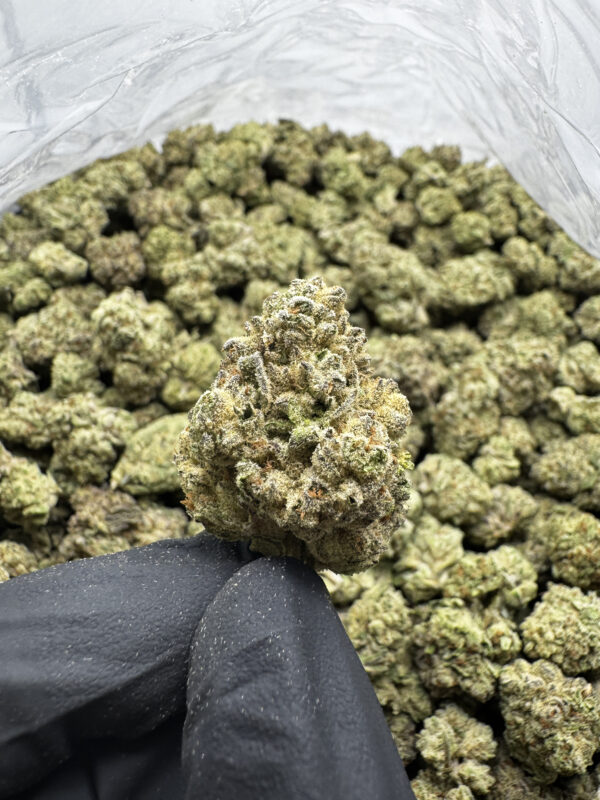
How to Recognize Quality High Potency THCA Flower
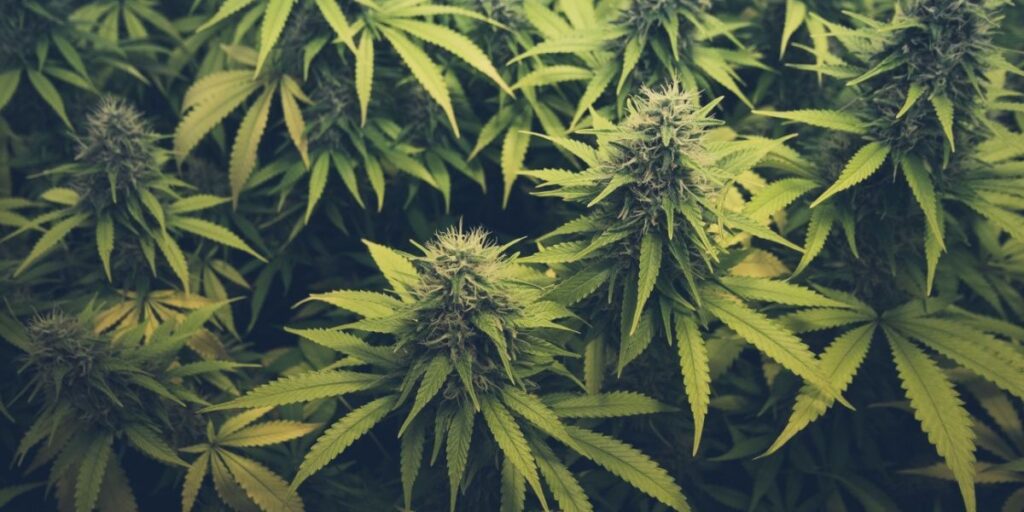
While laboratory analysis is essential, visual inspection can still provide useful information.
Premium flower may feature:
Dense Bud Structure
Depending on the cultivar, high-quality buds can have compact and well-developed structures.
Visible Trichomes
Trichomes are resin-producing structures found on cannabis flowers.
Healthy Color
Color can vary considerably between cultivars.
Intact Flower
Careful handling can help preserve the natural structure of the buds.
Distinctive Aroma
A noticeable aroma can indicate the presence of volatile aromatic compounds.
But remember:
Appearance is not proof of potency.
Only appropriate laboratory analysis can provide analytical cannabinoid measurements.
High Potency THCA Flower and Trichomes
Trichomes are among the most important structures found on cannabis flowers.
They produce and store many of the plant’s cannabinoids and terpenes.
A heavily trichome-covered flower may therefore have a particularly frosty appearance.
However, trichome appearance alone cannot determine:
- Exact THCA concentration
- Delta-9 THC concentration
- Contaminant levels
- Overall safety
This is another reason laboratory testing remains important.
THCA and Delta-9 THC: Understanding the Difference
THCA and Delta-9 THC are closely related but chemically different.
THCA is the acidic form naturally produced by the cannabis plant.
When heated, THCA can undergo decarboxylation and form Delta-9 THC.
In simplified terms:
This conversion is particularly important when discussing high potency THCA flower because the flower’s composition can change when it is heated.
Consumers should therefore examine both THCA and Delta-9 THC rather than relying exclusively on the THCA number.
Does High Potency THCA Flower Get You High?
Unheated THCA itself is not considered intoxicating in the same way as Delta-9 THC.
However, heating can convert THCA into Delta-9 THC, which is psychoactive.
The EUDA explains that decarboxylation converts THCA into THC and that THC can produce effects including intoxication and altered perception.
This means consumers should not assume that a high-THCA product will remain non-intoxicating after heating.
The potential effects and legal implications depend on the product, method of use, cannabinoid composition and applicable laws.
High Potency THCA Flower and Legal Considerations in Europe
Legal status is one of the most important issues to consider when purchasing THCA flower in Europe.
There is no single rule that automatically applies to every THCA flower product across every European country.
National rules can differ according to:
- Delta-9 THC content
- THCA content
- Product classification
- Intended use
- Importation
- Sale
- National cannabis legislation
The EUDA notes that European countries can apply different approaches to cannabis and cannabis-derived products.
For that reason, consumers should verify the rules applicable in their own country before purchasing or importing THCA products.
A product being available online does not by itself establish that it is legal to possess, import or sell everywhere.
Why Total THC Can Be Important
One important consideration when evaluating cannabis products is the relationship between THCA and THC.
The EUDA explains that THCA can convert into THC through decarboxylation and that this needs to be considered when measuring cannabinoid content.
Some regulatory frameworks use calculations involving both Delta-9 THC and THCA.
Therefore, consumers should not assume that a product’s legal classification can be determined simply by looking at its Delta-9 THC number.
Always check the specific regulations applicable to the product and country.
How to Choose High Potency THCA Flower Online
If you are researching where to buy high potency THCA flower online, consider the following checklist.
1. Check the Cannabinoid Profile
Look for clearly reported THCA and Delta-9 THC levels.
2. Review the COA
Make sure laboratory results correspond to the product or batch whenever possible.
3. Look at Terpenes
A terpene profile can provide useful information about the flower’s aromatic characteristics.
4. Check Freshness
Look for information about harvesting, packaging and storage.
5. Research the Genetics
Understand which cultivar you are buying.
6. Evaluate the Retailer
Look for transparent product information and clear policies.
7. Check Local Laws
Verify the regulations applicable to your country.
8. Compare Overall Quality
Do not choose a product solely because it advertises the highest THCA percentage.
High Potency THCA Flower: What to Look for in a COA
A useful laboratory report should ideally make it easy to identify:
Product or batch:
Which sample was tested?
Testing date:
When was the analysis performed?
THCA:
What concentration was measured?
Delta-9 THC:
What concentration was detected?
Other cannabinoids:
Are CBD, CBG, CBN or other cannabinoids reported?
Terpenes:
Is a terpene analysis available?
Contaminants:
Were relevant contaminants tested?
Laboratory:
Who performed the analysis?
This level of transparency is much more useful than a generic “lab-tested” label.
High Potency THCA Flower vs CBD Flower
THCA flower and CBD flower are different cannabinoid products.
THCA Flower
Typically marketed around its THCA content.
CBD Flower
Typically marketed around its CBD content.
The two can look similar, but their chemical profiles can be substantially different.
The best way to compare them is through laboratory analysis rather than appearance or marketing descriptions.
High Potency THCA Flower vs THC Flower
Traditional THC-rich cannabis flower contains significant Delta-9 THC.
High-THCA flower is generally marketed around its THCA concentration.
Because THCA can convert to Delta-9 THC when heated, the distinction becomes particularly important when discussing how products behave after heating.
Consumers should therefore examine the complete cannabinoid profile.
High Potency THCA Flower vs THCA Diamonds
THCA flower and THCA diamonds are different product formats.
THCA flower is plant material containing naturally occurring cannabinoids and terpenes.
THCA diamonds are concentrated crystalline forms of THCA.
Because concentrates can contain substantially higher cannabinoid concentrations than flower, the two products should not be compared simply by their percentage numbers.
For consumers interested in flower, factors such as genetics, terpene profile, cultivation and freshness remain especially important.
Does High THCA Mean Better Quality?
No.
A high THCA percentage can be desirable to consumers specifically looking for high-THCA products, but it is not a complete quality measurement.
Quality can also depend on:
- Genetics
- Terpenes
- Cultivation
- Harvest timing
- Curing
- Storage
- Testing
- Consistency
The EUDA notes that cannabinoid quantities vary according to plant variety and growing conditions.
Therefore, a premium product should be evaluated as a whole.
Common Mistakes When Buying High Potency THCA Flower
Mistake #1: Looking Only at the Biggest Percentage
The highest number does not automatically indicate the best flower.
Mistake #2: Ignoring Delta-9 THC
THCA and Delta-9 THC should be evaluated separately.
Mistake #3: Buying Without Laboratory Information
A marketing claim is not equivalent to independent analytical testing.
Mistake #4: Ignoring Terpenes
Two flowers with similar THCA concentrations can have very different aromatic profiles.
Mistake #5: Forgetting Freshness
Poor storage can negatively affect flower characteristics.
Mistake #6: Assuming “Indoor” Means Premium
Indoor cultivation provides greater environmental control, but it does not guarantee quality.
Mistake #7: Assuming THCA Is Legal Everywhere
European cannabis regulations vary between countries.
Why Choose THC King Europe for High Potency THCA Flower?
When searching for high potency THCA flower online, choosing a transparent specialist retailer can make the purchasing process easier.
THC King Europe focuses on the European THCA market and offers information about THCA flower, strains and related cannabinoid products.
When evaluating any product, customers should review the individual product description, cannabinoid information, available laboratory documentation and applicable regulations before purchasing.
The goal should be to make an informed decision based on product information rather than relying exclusively on marketing terminology.
High Potency THCA Flower: Frequently Asked Questions
What is high potency THCA flower?
High potency THCA flower generally refers to flower marketed for its relatively high THCA concentration. The exact meaning of “high potency” can vary, so consumers should check laboratory results rather than relying solely on the label.
Is high THCA the same as high THC?
No. THCA is an acidic cannabinoid precursor, while Delta-9 THC is the primary psychoactive cannabinoid in cannabis. Heating can convert THCA into Delta-9 THC.
Does high potency THCA flower contain Delta-9 THC?
It can. The amount varies by product, which is why a laboratory report should be checked for the actual Delta-9 THC concentration.
Does THCA turn into THC?
Yes. THCA can undergo decarboxylation when heated and convert into Delta-9 THC.
What makes high potency THCA flower premium?
Premium quality can involve strong genetics, high-quality cultivation, a desirable terpene profile, proper curing, freshness, reliable laboratory testing and consistent cannabinoid content.
Is indoor THCA flower more potent?
Not necessarily. Indoor cultivation provides greater environmental control, but genetics and growing conditions both influence cannabinoid production.
Should I check a COA before buying?
Yes. A current, product- or batch-specific COA can provide useful information about cannabinoid concentrations and, depending on the testing scope, contaminants and terpenes.
Is high potency THCA flower legal in Europe?
The answer depends on the country, product composition, classification and intended use. European cannabis regulations differ, so local requirements should always be verified before purchasing or importing.
Can two THCA strains have different potency?
Yes. Genetics and growing conditions can affect cannabinoid concentrations, so products sold under different cultivars can have different THCA levels.
What is the best way to compare high-THCA flower?
Compare the complete product profile: THCA, Delta-9 THC, other cannabinoids, terpenes, genetics, freshness, laboratory testing and retailer transparency.
Final Thoughts on High Potency THCA Flower
The market for high potency THCA flower is becoming increasingly diverse, but consumers should not assume that the largest THCA number automatically represents the highest-quality product.
THCA concentration is important, but it is only one part of the equation.
A better approach is to consider:
- THCA concentration
- Delta-9 THC
- Other cannabinoids
- Terpene profile
- Genetics
- Cultivation method
- Trichome development
- Harvesting
- Curing
- Freshness
- Laboratory testing
- Batch consistency
The relationship between THCA and THC is also essential to understand. THCA can convert to Delta-9 THC when heated, which means consumers should consider both the unheated cannabinoid profile and the applicable regulations.
If you are researching high THCA flower, premium THCA flower, indoor THCA flower, lab-tested THCA flower or specific THCA strains, take the time to examine the complete product profile.
For European customers, legal compliance should always be part of the purchasing process. Regulations can differ significantly between countries, and consumers should verify the rules that apply to their particular destination and product.
At THC King Europe, informed purchasing starts with understanding the product. Rather than choosing a flower solely because it claims to be “the strongest,” look for transparent cannabinoid information, reliable testing, quality genetics, good cultivation practices and appropriate storage.
High potency is one characteristic. High quality is the complete package.