Interest in THCA flower Europe has grown as more people research cannabis varieties, cannabinoid profiles and the differences between THCA and THC. Whether you are learning about cannabis terminology, comparing product descriptions or researching the European market, understanding the subject requires more than looking at advertised percentages or strain names.
THCA flower is a topic that involves chemistry, product documentation, laboratory testing and national regulations. European countries do not necessarily apply identical rules to cannabis-derived products, making it particularly important to understand the legal position before considering any product.
At THCa King Europe, we aim to provide useful information about THCA terminology, product descriptions and the European market. This guide explains the key points to understand when researching THCA flower in Europe, including cannabinoid composition, quality indicators, certificates of analysis and legal considerations.
What Is THCA Flower?
THCA flower refers to cannabis flower containing tetrahydrocannabinolic acid, commonly abbreviated as THCA. THCA is a naturally occurring cannabinoid found in the cannabis plant. It is chemically related to delta-9-tetrahydrocannabinol, or THC, but the two compounds have different chemical structures.
THCA contains an additional carboxyl group. When exposed to sufficient heat, it can undergo a chemical reaction called decarboxylation, converting into delta-9-THC.
This distinction is important when reading laboratory reports and product descriptions. A stated THCA percentage is not necessarily the same as the measured delta-9-THC percentage.
People researching THCA flower in Europe should therefore understand how cannabinoid measurements are presented and how different national regulations may interpret them.
Understanding THCA and THC
THCA and THC are closely related, but they should not be treated as interchangeable terms.
The main difference is their chemical structure. THCA is the acidic precursor to THC, while THC is the compound that can form when THCA undergoes decarboxylation.
Several details are important when comparing the two:
- THCA: A naturally occurring acidic cannabinoid in cannabis plant material.
- Delta-9-THC: A cannabinoid with a different chemical structure that can form from THCA through decarboxylation.
- Laboratory measurements: Reports may list THCA and delta-9-THC separately.
- Total potential THC: A calculated value that estimates the THC potentially available after conversion.
- Legal classification: National authorities may apply different rules to cannabis products depending on their composition and classification.
A commonly used calculation for total potential THC is:
Total potential THC = delta-9-THC + (THCA × 0.877)
The factor 0.877 accounts for the molecular mass lost during decarboxylation. This is a chemical calculation, not a guarantee of the amount of THC produced or absorbed under real-world conditions.
Understanding these terms makes it easier to interpret product information and avoid confusion when researching premium THCA flower.
THCA Flower Europe: What Influences Product Quality?
When researching THCA flower in Europe, it is important to look beyond promotional descriptions. Product quality cannot be established by a strain name, photograph or advertised cannabinoid percentage alone.
Several factors can help explain the characteristics of a particular product.
1. Appearance and physical condition
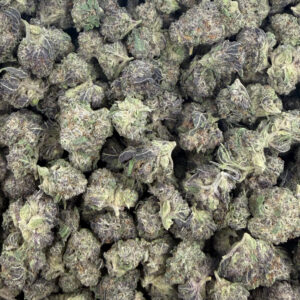
Cannabis flowers can vary in appearance depending on their genetics, cultivation conditions and handling. Different varieties may have different shapes, colours and visible surface characteristics.
When evaluating product information, consider whether the material is described accurately and whether photographs appear representative of the product being offered.
Look for clear information about:
- The general physical condition of the flower.
- Whether the material appears intact or heavily damaged.
- Whether there are signs of unusual discolouration.
- Whether product photographs are representative rather than generic promotional images.
- Whether the supplier provides batch-specific documentation.
Appearance is only one part of product assessment. It cannot establish cannabinoid content or confirm the absence of contaminants.
2. Aroma and terpene profiles
Terpenes are naturally occurring aromatic compounds found in many plants, including cannabis. They contribute to the distinctive aromas associated with different varieties.
Some commonly discussed cannabis terpenes include:
- Myrcene: Often associated with earthy and herbal aromas.
- Limonene: Commonly associated with citrus-like aromas.
- Caryophyllene: Often described as spicy or peppery.
- Pinene: Associated with pine-like aromas.
- Linalool: Commonly associated with floral aromas.
Terpene concentrations can vary between different plants and batches. A strain name does not guarantee a particular terpene profile. Where terpene information is advertised, check whether it is supported by laboratory results for the relevant batch.
3. Cannabinoid composition
The cannabinoid profile is an important part of understanding a THCA flower product. Different samples may contain different concentrations of THCA, delta-9-THC and other cannabinoids.
A laboratory report can help establish what was measured in a particular sample. It is more reliable than assuming that every product with the same strain name has an identical chemical composition.
For more information about cannabinoid percentages, see our resource on high-potency THCA flower.
4. Handling and storage history
Drying, handling and storage can influence the physical condition of botanical material. Exposure to excessive heat, moisture, sunlight and air may contribute to deterioration.
A transparent product description should provide accurate information about the product and any relevant handling or storage guidance. Avoid relying on unsupported claims such as guaranteed freshness or identical quality across every batch.
Why Laboratory Testing Matters in the European THCA Market
Laboratory testing is an important part of understanding cannabis product composition. A certificate of analysis, usually called a COA, records the results of analytical testing performed on a sample.
When researching THCA flower Europe, look for suppliers that provide clear information about laboratory documentation where testing is claimed.
What can a certificate of analysis show?
Depending on the laboratory and the testing panel, a COA may include:
Cannabinoid testing: Measurements of THCA, delta-9-THC, CBD, CBDA, CBG, CBGA and other cannabinoids.
Pesticide screening: Testing for selected pesticide residues.
Heavy-metal screening: Measurements of selected metals that may be relevant to product quality.
Microbiological testing: Screening for certain microorganisms, yeast or mould.
Residual-solvent testing: Relevant to products that may involve solvent-based extraction processes.
Not every report includes all these tests. A COA should be read carefully rather than treated as a universal guarantee of product safety.
How to check a THCA flower laboratory report
Before relying on a certificate of analysis, consider these questions:
- Does the report clearly identify the sample or product?
- Is there a batch or lot number?
- Is the laboratory identified?
- Is the testing date provided?
- Are THCA and delta-9-THC reported separately?
- Are the units of measurement clear?
- Does the report include the relevant contaminant tests?
- Can the report be connected to the actual product being described?
A report for a different product or batch may not accurately represent the material being advertised.
For further reading, consult the Illinois Department of Agriculture’s explanation of certificates of analysis.
Popular THCA Flower Varieties in Europe
Cannabis catalogues often use strain names to distinguish different varieties. These names may refer to reported genetics, aroma descriptions or other characteristics, but they do not guarantee identical chemical profiles.
Some names frequently encountered in cannabis-related discussions include:
- Blue Dream
- Gelato
- Wedding Cake
- Lemon Cherry Gelato
- Runtz
- Zkittlez
- Purple Punch
- Oreoz
- White Runtz
- Permanent Marker
The actual cannabinoid and terpene profiles can differ between growers and batches. Cultivation conditions, harvesting, drying, curing and storage may all influence the final material.
When comparing varieties, consider whether the supplier provides accurate descriptions and relevant laboratory information. Do not assume that a familiar strain name proves a particular potency, terpene concentration or genetic background.
You can explore more educational content through the THCa King Europe blog.
THCA Flower Europe: Understanding the Legal Situation
One of the most important issues for anyone researching THCA flower Europe is the difference between national cannabis laws.
There is no simple rule that makes every THCA flower product legal throughout Europe. European countries have different laws governing cannabis, THC, hemp-derived products, possession, commercial distribution and imports.
The European Union Drugs Agency (EUDA) explains that cannabis-derived products can fall under different regulatory frameworks. Even products described as low-THC may be subject to additional national or commercial requirements.
The distinction between industrial hemp rules and finished cannabis flower products is particularly important. European agricultural provisions concerning eligible hemp varieties and cultivation do not automatically establish that every finished flower product can be sold, possessed or transported throughout the EU.
Before considering any cannabis-derived product, check:
- The national laws where the product is offered.
- The laws in the country where it would be received.
- Whether THCA and delta-9-THC are treated differently.
- Whether the product’s intended use affects its classification.
- Whether import, export or transport restrictions apply.
- Whether additional licensing or commercial requirements are relevant.
The official EUDA Cannabis Laws in Europe FAQ was revised on 21 April 2026 and provides useful background on the different legal approaches across Europe.
You can also consult the EUDA’s information on medical and commercial cannabis-derived products.
For agricultural hemp information, the European Commission’s hemp guidance explains relevant EU agricultural provisions and THC thresholds. These provisions should not be interpreted as automatic authorisation for all finished cannabis flower products.
How to Research a THCA Flower Supplier in Europe
Finding reliable information about a supplier is an important part of researching the European market. Rather than relying only on advertising, examine the available documentation and policies.
Look for transparent product descriptions
A clear product listing should explain what is being offered and avoid unsupported claims. Look for relevant product information, stated cannabinoid measurements and available laboratory documentation.
Check laboratory documentation
If a supplier advertises laboratory testing, look for a report that identifies the relevant product and batch. Check the testing date, laboratory details and the specific tests performed.
Review shipping information
Shipping arrangements can vary depending on the destination and applicable regulations. A responsible supplier should explain its shipping conditions, restrictions and delivery policies clearly.
You can start with the THCa King Europe website to review the information made available to visitors.
Read the website’s policies
Before engaging with any online supplier, review its terms and conditions, privacy policy, refund information and contact details.
Clear policies make it easier to understand the business’s stated procedures and the information available to customers.
For more information about shipping-related topics, see our THCA flower shipping resource.
THCA Flower Europe and the Importance of Accurate Product Information
Product information should distinguish between verified measurements and general descriptions.
For example, a statement about a specific THCA percentage should ideally be supported by a relevant batch laboratory report. A description of a variety’s aroma should not be presented as a verified terpene analysis unless testing supports it.
Likewise, a product’s legal status should not be inferred from its marketing description or from a general statement about hemp.
Accurate product information helps readers understand what is being described and what remains uncertain. It also helps build trust in an online resource.
At THCa King Europe, visitors can explore the website’s available educational and product information to learn more about the subject.
Frequently Asked Questions About THCA Flower Europe
1. What is THCA flower in Europe?
THCA flower is cannabis flower containing tetrahydrocannabinolic acid, a naturally occurring cannabinoid. The legal classification and availability of such products depend on the country and the product’s composition.
2. Is THCA flower legal in Europe?
There is no single answer for all European countries. National laws can differ, and the legal status may depend on the product, its cannabinoid composition, intended use and applicable national regulations. Check the current rules in the relevant country.
3. What is the difference between THCA and THC?
THCA is the acidic precursor to THC. When exposed to sufficient heat, THCA can undergo decarboxylation and convert into delta-9-THC. They are chemically related but are not identical compounds.
4. How can I check the THCA percentage of a product?
Look for a certificate of analysis that identifies the relevant sample or batch and reports its cannabinoid measurements. Do not rely exclusively on promotional descriptions or general strain information.
5. What does a THCA flower COA mean?
A COA is a certificate of analysis issued by a laboratory. It records the results of tests performed on a sample and may include cannabinoid measurements and selected contaminant screening.
6. Are all THCA flower strains the same?
No. Different varieties and batches may have different cannabinoid profiles, terpene concentrations and physical characteristics. A strain name alone does not establish the exact composition.
7. Does the EU hemp THC threshold automatically apply to THCA flower?
No. EU agricultural hemp provisions relate to specific agricultural requirements. They should not be treated as automatic permission to market, possess or transport every finished cannabis flower product.
8. Where can I learn more about THCA flower in Europe?
You can explore the educational resources available at THCa King Europe, including our THCA flower Europe resource and top-shelf THCA flower guide.
Conclusion: Understanding the THCA Flower Europe Market
The European THCA flower market involves several important considerations, from cannabinoid chemistry and product descriptions to laboratory testing and national regulations.
Understanding the difference between THCA and THC is a useful starting point. From there, readers can learn how to interpret certificates of analysis, distinguish measured cannabinoid information from marketing language and recognise why product quality cannot be established by appearance alone.
Legal requirements are equally important. European countries do not necessarily apply identical rules to cannabis-derived products, and agricultural hemp provisions should not be confused with universal permission to sell or transport finished cannabis flower.
At THCa King Europe, we encourage visitors to research the subject carefully, consult reliable documentation and check the laws that apply in their own country. Explore our THCA flower Europe information and THCa King Europe blog for additional educational resources.
Stay informed, verify product information and always check the relevant national regulations.