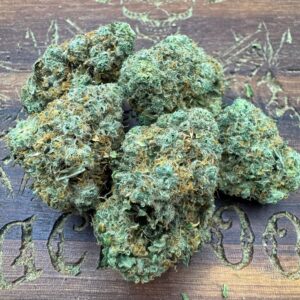
Interest in THCA flower Switzerland reflects growing curiosity about cannabinoids, hemp products and the differences between cannabis regulations across Europe. People researching this topic often want to know what THCA flower is, how it compares with THC and CBD, what the Swiss THC threshold means, and how to understand laboratory reports.
Switzerland has a distinctive regulatory framework. Cannabis products containing less than 1% THC are generally outside the scope of the Swiss Narcotics Act, while cannabis products with a THC content of 1% or more are generally controlled under narcotics legislation. However, this threshold does not mean every product below 1% can automatically be manufactured, imported, advertised or sold without restrictions. The product’s intended use and category also matter.
This guide from THCa King Europe explains the science behind THCA flower, outlines the Swiss legal framework and discusses what laboratory reports can and cannot establish.
This article is for general educational purposes only. It is not legal advice, does not certify any product as lawful and should not be used as a substitute for checking current Swiss regulations.
What Is THCA Flower?
THCA stands for tetrahydrocannabinolic acid. It is a cannabinoid naturally present in cannabis plants, particularly in fresh and unheated plant material. THCA is chemically related to delta-9 tetrahydrocannabinol, commonly called THC, but the two substances are not identical.
THCA is often described as the acidic precursor to THC. When exposed to sufficient heat, it can undergo a chemical reaction known as decarboxylation. During this process, THCA loses a carboxyl group and can be converted into delta-9 THC.
The term THCA flower generally refers to cannabis flower marketed according to its THCA content. However, product names and marketing descriptions do not determine legal classification. A flower described as hemp, THCA flower, low-THC flower or premium cannabis may still be subject to applicable national rules.
To understand the wider terminology, explore the THCA Flowers guide and our overview of THCA Flower Europe.
THCA vs THC vs CBD: Understanding the Differences
THCA, THC and CBD are three different cannabinoids. Their chemical properties and regulatory treatment should not be confused.
THCA
Tetrahydrocannabinolic acid is the acidic precursor to THC. It is naturally found in cannabis plant material and can convert into THC through decarboxylation. A laboratory report may show THCA and delta-9 THC as separate measurements.
THC
Delta-9 THC is the cannabinoid primarily associated with the intoxicating effects of cannabis. In Switzerland, cannabis products with an average THC content of at least 1% are generally classified as narcotics under the relevant legislation.
CBD
Cannabidiol, or CBD, is a separate cannabinoid. It is not controlled under the Swiss Narcotics Act in the same way as THC. Nevertheless, CBD products are not automatically exempt from all regulation. Depending on their intended use and presentation, food, medicinal-product, tobacco-product, cosmetics or product-safety rules may apply.
The Swiss Federal Office of Public Health (FOPH) explains these distinctions in its official Cannabis: Addiction and Health information.
You can also read the THCA Flower Strains guide for more information about common strain terminology used in the market.
Is THCA Flower Legal in Switzerland?
The legal position is a central consideration for anyone searching for THCA flower Switzerland.
Switzerland regulates cannabis through the Narcotics Act and related ordinances. The FOPH explains that cannabis products with an average THC content of at least 1% are generally subject to narcotics controls. Activities such as cultivation, importation, manufacture, supply and recreational use are generally prohibited unless an applicable legal exception or authorisation exists.
The Swiss framework also recognises low-THC hemp. Cannabis products containing less than 1% THC are generally not subject to the Narcotics Act. This is why certain low-THC hemp flowers and CBD products are available in Switzerland.
However, being outside the Narcotics Act does not automatically make a product lawful for every commercial purpose. The applicable requirements depend on what the product is and how it is marketed.
Official Swiss information is available here:
- Federal Office of Public Health: Cannabis – Addiction and Health
- Federal Office of Public Health: Legislation on hemp and cannabis products
- Federal Office for Agriculture: Hemp
- Swiss Federal Act on Narcotics and Psychotropic Substances
The key distinction is that Switzerland’s low-THC framework is not a general exemption for all cannabis products. A THCA-rich flower must be assessed according to the applicable definition and analytical rules, not merely the wording on its packaging.
Understanding Switzerland’s 1% THC Threshold
One of the most frequently discussed aspects of Swiss cannabis regulation is the 1% THC threshold.
The FOPH states that cannabis products with an average THC content of at least 1% are generally controlled under the Narcotics Act. Products below this threshold are generally outside that Act, although other legislation may still apply.
This is different from the 0.2% or 0.3% figures often discussed in connection with industrial hemp in other European countries. Those figures relate to different regulatory frameworks and should not be automatically applied to Swiss products.
For THCA flower, an additional point matters: THCA and delta-9 THC are chemically related, and legal or laboratory calculations may account for the potential conversion of THCA into THC. A delta-9 THC figure shown by itself may therefore not provide enough information to determine the applicable total-THC classification.
The Swiss Federal Supreme Court has addressed the treatment of THC and THC-carboxylic acid in the context of the total THC calculation. Anyone assessing a specific product should consult the current Narcotics Lists Ordinance and the relevant official analytical guidance rather than relying on a retailer’s simplified percentage claim.
The FOPH’s official cannabis guidance and Swiss hemp legislation overview are useful starting points.
Does the Swiss 1% Rule Mean Every THCA Product Is Legal?
No. The threshold is important, but it is not the only legal consideration.
Swiss authorities explain that low-THC cannabis products may fall under different laws according to their product category and intended use. For example:
- Herbal smoking products: May be subject to tobacco-product legislation and applicable notification, packaging, advertising and safety requirements.
- Food and supplements: Must comply with Swiss food legislation. Certain cannabis-derived ingredients may require specific authorisation.
- Cosmetics: Must meet cosmetic-product safety and ingredient requirements.
- Medicinal products: Are subject to therapeutic-products legislation and relevant authorisation requirements.
- E-liquids and other consumer products: May be regulated according to their composition, presentation and intended purpose.
The Swiss authorities provide information on these different categories through the FOPH cannabis legislation overview.
This means that a product may be below the narcotics threshold and still fail to meet the rules for its particular product category. It is therefore important to distinguish between being outside narcotics control and being authorised for sale.
How to Read a THCA Flower Certificate of Analysis
A Certificate of Analysis, commonly known as a COA, is a laboratory report showing the results of tests performed on a submitted sample. It can help readers understand the cannabinoid composition of that sample.
However, a COA is not a legal approval, import permit or guarantee that every item in a batch has exactly the same composition.
When examining a cannabinoid report, consider the following details.
1. Delta-9 THC
This is the measured concentration of delta-9 THC in the tested sample. It should not be confused with THCA or with a calculated total-THC result.
2. THCA
This figure indicates the concentration of tetrahydrocannabinolic acid measured by the laboratory. For products marketed as THCA flower, it is often one of the most prominent cannabinoid measurements.
3. Total THC
A commonly used theoretical calculation is:
Total THC = delta-9 THC + (THCA × 0.877)
The factor 0.877 accounts for the molecular-mass change associated with decarboxylation. This formula is useful for understanding the potential THC contribution from THCA, but it should not be assumed to replace the specific analytical method or legal definition used by Swiss authorities.
For a product being assessed against a Swiss legal threshold, the applicable Swiss regulatory method and definition must take priority.
4. Laboratory identity and sample details
A useful report should identify the testing laboratory, sample reference, date of analysis and analytical methods. Without this information, it may be difficult to establish which material was actually tested.
5. Contaminant testing
A cannabinoid profile does not necessarily include every safety test. Depending on the product and applicable requirements, separate analysis may be needed for pesticides, heavy metals, microbial contamination, residual solvents or other contaminants.
A COA therefore provides evidence about the submitted sample and the tests performed. It does not prove that an entire batch is identical, that every possible contaminant has been tested or that the product is authorised for sale in Switzerland.
For more educational material about cannabinoid terminology, visit the THCa King Europe blog.
THCA Flower Switzerland: Understanding Product Descriptions
People researching the Swiss market may encounter terms such as indoor THCA flower, greenhouse flower, exotic flower, premium flower and low-THC hemp.
These descriptions usually refer to cultivation claims, product presentation or marketing terminology. They do not establish a product’s legal status.
For example:
- Indoor flower refers to a claimed indoor cultivation environment.
- Greenhouse flower refers to a claimed greenhouse growing environment.
- Premium flower is a marketing description rather than a legal category.
- Exotic flower is another commonly used marketing expression.
- Low-THC flower describes a claimed cannabinoid characteristic, but the product must still meet applicable Swiss requirements.
A strain name, appearance, packaging label or advertised THCA percentage cannot independently establish legal compliance.
For general explanations of market terminology, see our guides to indoor THCA flower, premium THCA flower and exotic THCA flower.
These resources are educational and should not be interpreted as confirmation that a particular product may be imported, possessed or sold in Switzerland.
Medical Cannabis in Switzerland
Switzerland has a separate regulatory framework for medical cannabis. Since 1 August 2022, doctors have been able to prescribe cannabis medicines without first obtaining an exceptional authorisation from the FOPH. The prescribing physician remains responsible for assessing the patient’s medical needs and treatment.
Medical cannabis containing THC is not the same as an ordinary retail hemp product. Medicinal products remain subject to the applicable therapeutic-products and narcotics requirements.
Swissmedic provides official information about medical cannabis. The FOPH also provides a general overview of cannabis and health.
Anyone considering cannabis-based treatment should discuss the matter with a qualified healthcare professional. Online product descriptions are not a substitute for medical assessment.
How Switzerland Differs from Other European Countries
Switzerland is not a member of the European Union, and its cannabis framework should not be confused with EU agricultural hemp rules or the laws of neighbouring countries.
The EU’s agricultural framework includes specific rules for hemp varieties and cultivation. However, the European Union Drugs Agency explains that these agricultural provisions were designed for the hemp industry and do not automatically determine the legality or safety of all finished cannabis products.
For readers comparing national rules, our country-specific educational resources include:
- THCA Flower Germany
- THCA Flower France
- THCA Flower Netherlands
- THCA Flower Austria
- THCA Flower Italy
- THCA Flower Poland
- THCA Flower Portugal
- THCA Flower Ireland
Each destination has its own legal framework. A product’s status in one country should never be assumed to apply in another.
For a broader explanation of European hemp rules, consult the European Union Drugs Agency’s cannabis law FAQ.
Frequently Asked Questions About THCA Flower Switzerland
What does THCA mean?
THCA stands for tetrahydrocannabinolic acid. It is a naturally occurring cannabinoid found in cannabis plants and is the acidic precursor to delta-9 THC.
Is THCA the same as THC?
No. THCA and delta-9 THC are different chemical compounds. THCA can convert into THC through decarboxylation, which is why both measurements can be relevant when examining cannabis flower.
Is THCA flower legal in Switzerland?
The answer depends on the product’s applicable THC classification and other relevant regulations. Cannabis products with an average THC content of at least 1% are generally controlled under the Swiss Narcotics Act. Products below 1% are generally outside that Act, but other product-specific requirements may still apply.
What is the Swiss 1% THC threshold?
It is the threshold used in Swiss narcotics regulation to distinguish cannabis products generally controlled as narcotics from low-THC hemp products. The exact classification of a product should be assessed under the applicable Swiss legal definitions and analytical rules.
Does a low delta-9 THC result prove that a THCA product is legal?
No. A delta-9 THC result alone may not tell the complete story because THCA is also relevant to the assessment of total THC. Product category and intended use can also affect the applicable rules.
Can low-THC hemp products be sold in Switzerland?
Certain low-THC hemp products are available in Switzerland, but their sale is subject to the rules applicable to their product category. Requirements may differ for smoking products, foods, cosmetics, medicinal products and other consumer goods.
Does a Certificate of Analysis prove legal compliance?
No. A COA reports laboratory results for a submitted sample. It does not provide legal authorisation or guarantee that the product meets every Swiss regulatory requirement.
Where can I find official Swiss cannabis information?
The Federal Office of Public Health, Federal Office for Agriculture, Swissmedic and the Swiss Federal legislation portal are useful official sources. Links to these authorities are provided throughout this article.
Final Thoughts on THCA Flower Switzerland
Interest in THCA flower Switzerland makes it important to understand the difference between cannabinoid science, product marketing and legal classification. THCA is not identical to delta-9 THC, and CBD is a separate cannabinoid. Nevertheless, the presence of THCA and its relationship to THC can matter when assessing a cannabis product.
Switzerland’s 1% THC threshold is an important feature of its regulatory framework, but it should not be interpreted as blanket permission for every product below that figure. Product category, composition, intended use, labelling and other applicable laws can all affect whether a product may be placed on the market.
For further educational resources, visit THCa King Europe, explore our THCA Flowers guide or browse the THCa King Europe blog.
Always check current Swiss official guidance before making decisions involving cannabis or hemp products.