THCA Flower vs CBD Flower: What Is the Difference?
THCA Flower vs CBD Flower: The Complete Comparison
The cannabinoid market has expanded rapidly, and two products that frequently attract attention are THCA flower and CBD flower.
At first glance, they can appear almost identical. Both can look like traditional hemp or cannabis flower, both can contain visible trichomes, and both can be available in a wide range of aromatic profiles and cultivars.
However, there is a fundamental difference between them:
THCA flower is primarily associated with tetrahydrocannabinolic acid (THCA), while CBD flower is primarily associated with cannabidiol (CBD).
Understanding that distinction is essential before comparing products.
The question “THCA flower vs CBD flower — which is better?” does not have one universal answer. They have different cannabinoid profiles, different characteristics, and potentially different regulatory considerations.
This guide explains the major differences between THCA flower and CBD flower, including cannabinoids, potency, effects, terpenes, quality, laboratory testing, cultivation and European legal considerations.
What Is THCA Flower?
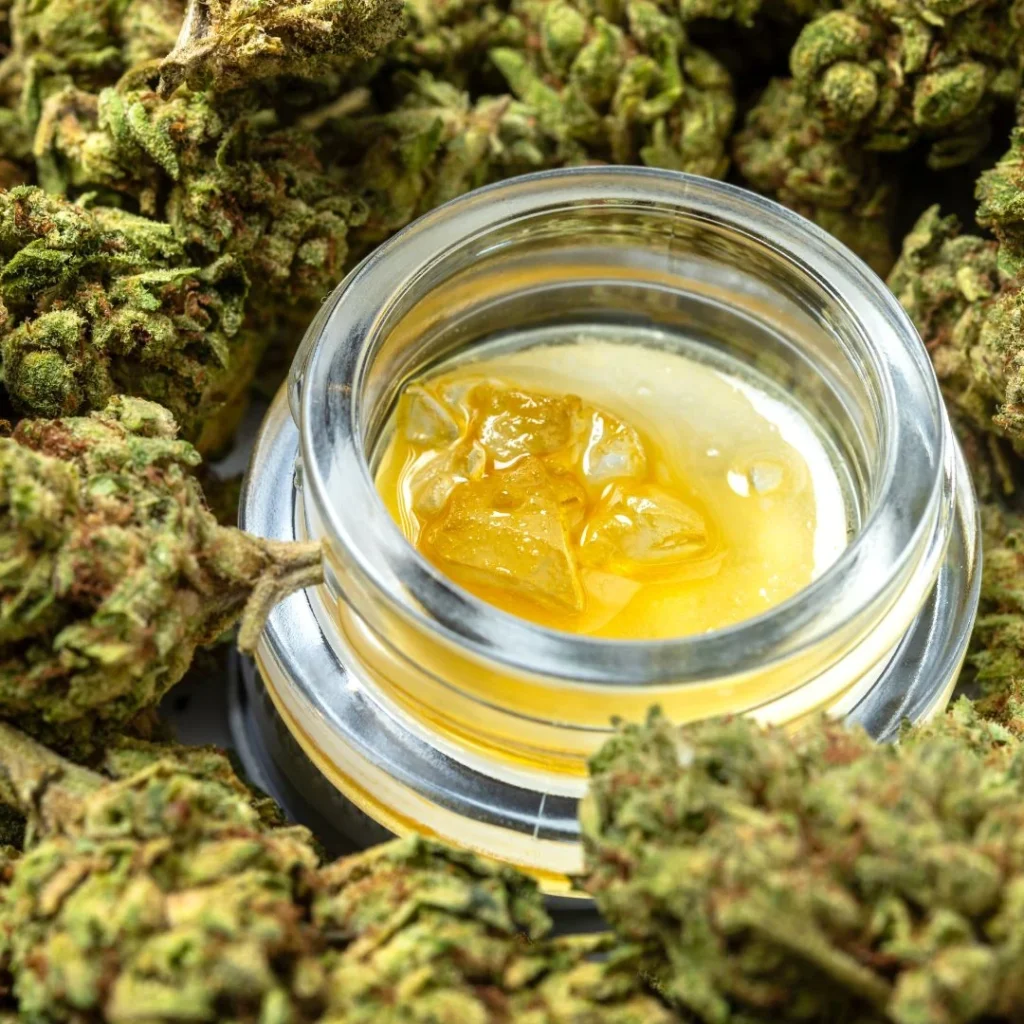
THCA flower refers to flower containing significant levels of tetrahydrocannabinolic acid, commonly abbreviated as THCA.
THCA is a naturally occurring acidic cannabinoid found in cannabis plants.
One of the most important things to understand about THCA is that it can undergo a chemical process called decarboxylation.
When exposed to sufficient heat, THCA can convert into delta-9 THC.
In simplified terms:
THCA → heat → THC
This is why THCA flower should not simply be treated as identical to ordinary low-THC hemp flower.
The cannabinoid form present before heating and the cannabinoid profile after heating can be different.
What Is CBD Flower?
CBD flower is flower produced from hemp or cannabis varieties selected for a comparatively high concentration of CBD (cannabidiol).
CBD is one of the best-known cannabinoids in the cannabis plant.
Unlike delta-9 THC, CBD is generally not considered intoxicating.
CBD flower can contain other naturally occurring cannabinoids and terpenes as well.
Depending on the genetics and cultivation process, CBD flower can have aromas ranging from:
- Citrus
- Fruit
- Earth
- Pine
- Herbs
- Flowers
- Spices
- Sweet or dessert-like notes
As with THCA flower, the actual cannabinoid and terpene profile should be verified through appropriate laboratory testing.
THCA Flower vs CBD Flower: Quick Comparison
The simplest way to understand the difference is to compare their primary cannabinoids.
| Feature | THCA Flower | CBD Flower |
|---|---|---|
| Primary cannabinoid | THCA | CBD |
| Cannabinoid type | Acidic cannabinoid | Neutral cannabinoid |
| THCA content | Typically emphasized | Usually lower |
| CBD content | May be present | Typically emphasized |
| Delta-9 THC | Depends on product | Usually kept low in compliant hemp products |
| Effect of heat | THCA can decarboxylate to THC | CBD does not convert into THC in the same way |
| Intoxicating potential | Relevant after decarboxylation | CBD itself is not generally intoxicating |
| Terpenes | Varies by cultivar | Varies by cultivar |
| Appearance | Cannabis/hemp flower | Cannabis/hemp flower |
| COA | Important | Important |
| Legal status | Depends on jurisdiction and product | Depends on jurisdiction and product |
The biggest distinction is therefore the dominant cannabinoid and what happens to it when heated.
THCA vs CBD: Understanding the Cannabinoids
To properly understand THCA flower vs CBD flower, it helps to understand the two cannabinoids themselves.
THCA
THCA is the acidic precursor to delta-9 THC.
Raw cannabis plants naturally produce cannabinoids in acidic forms, including THCA.
When heat is applied, THCA can undergo decarboxylation and form delta-9 THC.
This is a key reason why THCA-rich flower can have intoxicating potential when heated.
CBD
CBD is a different cannabinoid.
It does not simply transform into delta-9 THC when heated under ordinary conditions.
CBD itself is generally considered non-intoxicating.
The European Union Drugs Agency notes that CBD is not considered a narcotic drug under European law, although the legal treatment of specific CBD products remains dependent on the applicable regulatory framework.
THCA Flower vs CBD Flower: What About Effects?
The question of effects is one of the main reasons people search for THCA flower vs CBD flower.
However, it is important to distinguish between the effects of the cannabinoids themselves and the effects of a finished product.
THCA Flower
Unheated THCA is not generally considered intoxicating in the same way as delta-9 THC.
However, when THCA is exposed to heat, it can convert into delta-9 THC.
Consequently, heated THCA-rich flower can have intoxicating effects.
CBD Flower
CBD itself is generally considered non-intoxicating.
That means CBD flower should not be equated with THC-rich cannabis simply because it looks similar.
However, CBD flower may contain small amounts of THC and other cannabinoids, depending on its composition.
For this reason, laboratory results are important.
Does THCA Flower Get You High?
This is one of the most common questions related to THCA.
The short answer is:
THCA itself is not considered intoxicating in the same way as delta-9 THC, but heating THCA can convert it into THC.
That distinction matters.
A product labeled “THCA flower” should therefore not automatically be assumed to be non-intoxicating.
The method of use can change the cannabinoid composition.
Anyone handling or purchasing THCA-rich flower should understand this before using the product and should follow all applicable laws.
Does CBD Flower Get You High?
CBD itself is generally not considered intoxicating.
Therefore, CBD flower is not normally associated with the same intoxicating effect as THC-rich cannabis.
However, individual CBD flower products can contain varying amounts of THC.
For this reason, it is important to examine the product’s laboratory analysis rather than assuming that every CBD flower product has an identical cannabinoid profile.
THCA Flower vs CBD Flower: Which Is More Potent?
“Potency” can be a misleading term when comparing two different cannabinoids.
A THCA flower product may advertise a high percentage of THCA.
A CBD flower product may advertise a high percentage of CBD.
Those numbers measure different cannabinoids.
Therefore, comparing them as though THCA and CBD were the same substance does not provide a meaningful result.
Instead, compare:
- THCA concentration
- Delta-9 THC concentration
- CBD concentration
- Other cannabinoids
- Terpene profile
- Laboratory results
The highest number is not automatically an indication of the highest-quality product.
Why the Highest Cannabinoid Percentage Isn’t Always Best
A common mistake is choosing a product based entirely on its cannabinoid percentage.
For example, a buyer might assume that:
or:
Higher CBD = better flower
Neither assumption is necessarily correct.
Overall quality can also depend on:
- Genetics
- Cultivation
- Harvest timing
- Drying
- Curing
- Terpenes
- Freshness
- Storage
- Laboratory testing
- Batch consistency
A well-balanced product with excellent aroma and reliable testing may be preferable to a product that simply has a larger number on the label.
THCA Flower vs CBD Flower: The Importance of Terpenes
Cannabinoids are only part of the flower’s chemical profile.
Another important component is the terpene profile.
Terpenes are naturally occurring aromatic compounds that contribute to the characteristic smell and flavor of cannabis and hemp.
Commonly discussed cannabis terpenes include:
- Myrcene
- Limonene
- Caryophyllene
- Linalool
- Pinene
- Humulene
Different combinations can produce completely different aromas.
For example, one flower may smell strongly of citrus, while another has a sweet berry, earthy, spicy or creamy aroma.
This is true for both THCA flower and CBD flower.
THCA Flower vs CBD Flower: Are the Strains Different?
Many cultivars can be found in both cannabinoid markets, although the actual genetics and cannabinoid profiles can differ.
Popular names encountered in the THCA flower market include:
- Gelato
- Runtz
- Zkittlez
- Lemon Cherry Gelato
- White Runtz
- Wedding Cake
- Ice Cream Cake
- Purple Punch
- Blue Dream
- Apple Fritter
- Oreoz
- GMO
- Permanent Marker
- RS11
The important point is that a cultivar name does not guarantee an identical chemical profile.
The same cultivar name can produce different cannabinoid and terpene results depending on:
- Genetics
- Phenotype
- Cultivation conditions
- Harvest
- Processing
- Storage
Therefore, a batch-specific laboratory report is more informative than the strain name alone.
THCA Flower vs CBD Flower: Appearance
Can you tell the difference just by looking at the flower?
Usually, no.
Both THCA flower and CBD flower can feature:
- Dense buds
- Green coloration
- Orange or brown pistils
- Visible trichomes
- Resin
- Strong aromas
- Carefully trimmed flowers
This is why photographs are useful for evaluating appearance but cannot replace laboratory analysis.
The cannabinoid content cannot reliably be determined simply by looking at the flower.
What Are Trichomes?
Trichomes are tiny structures that cover cannabis flowers.
They are associated with the production and storage of cannabinoids and aromatic compounds.
A flower with abundant visible trichomes may have an attractive, resinous appearance.
However:
Trichome coverage does not by itself prove a particular THCA, THC or CBD concentration.
For cannabinoid content, laboratory testing remains the more reliable source of information.
THCA Flower vs CBD Flower: Why COAs Matter
A Certificate of Analysis (COA) is a laboratory document showing the results of testing on a particular sample or batch.
For both THCA flower and CBD flower, a COA can be extremely useful.
Depending on the testing program, it may provide information about:
Cannabinoids
- THCA
- Delta-9 THC
- CBD
- CBDA
- CBG
- CBC
- CBN
Terpenes
A terpene panel may identify and quantify various aromatic compounds.
Contaminants
Depending on the jurisdiction and laboratory, testing may include:
- Pesticides
- Heavy metals
- Microbial contamination
- Mycotoxins
- Residual solvents
A transparent supplier should be able to provide appropriate product documentation where required.
How to Check a THCA or CBD COA
Before trusting a laboratory report, check several details.
Product Name
Does the COA correspond to the product you are considering?
Batch Number
Can the report be linked to the actual batch?
Test Date
Is the report reasonably current?
Cannabinoid Results
Are THCA, THC, CBD and other relevant cannabinoids clearly listed?
Terpene Results
Is a terpene profile available?
Safety Testing
Were relevant contaminants tested?
Laboratory Information
Is the testing laboratory identifiable?
A COA should provide meaningful information rather than simply displaying a large cannabinoid percentage.
THCA Flower vs CBD Flower: Indoor and Outdoor Cultivation
Both THCA flower and CBD flower can be produced using different cultivation methods.
Indoor Cultivation
Indoor growing can provide greater control over:
- Light
- Temperature
- Humidity
- Airflow
- Growing cycles
This can help growers achieve consistent conditions.
Outdoor Cultivation
Outdoor growing uses natural sunlight and environmental conditions.
When managed properly, outdoor cultivation can also produce high-quality flower.
Therefore, the words “indoor” or “outdoor” should not be treated as an automatic quality rating.
Genetics, cultivation skill, harvest timing and post-harvest handling all matter.
THCA Flower vs CBD Flower: Drying and Curing
After harvest, flower must be handled carefully.
Drying and curing can influence:
- Aroma
- Texture
- Freshness
- Terpene expression
- Appearance
- Overall quality
Improperly dried flower can become excessively dry or lose desirable aromatic characteristics.
Likewise, poor storage after curing can affect product quality.
For premium flower, the entire process matters—not simply the cannabinoid percentage.
THCA Flower vs CBD Flower: How to Choose
The right choice depends on what you are looking for.
Choose THCA Flower If You Are Interested In:
- THCA-rich cannabinoid profiles
- Different THCA cultivars
- Detailed cannabinoid testing
- Terpene-rich flower
- Products where THCA content is the primary focus
Remember that heating THCA can result in conversion to delta-9 THC.
Choose CBD Flower If You Are Interested In:
- CBD-dominant cannabinoid profiles
- Non-intoxicating CBD as the primary cannabinoid
- Hemp-derived flower
- Different CBD-rich cultivars
- Terpene-focused CBD products
Always check the actual laboratory profile of the product.
THCA Flower vs CBD Flower: Which Is Better?
There is no universally better option.
The two products are designed around different cannabinoid profiles.
A person interested in THCA will likely prioritize different characteristics than someone specifically looking for CBD.
Instead of asking:
“Which one is better?”
Ask:
“Which cannabinoid profile matches what I am looking for?”
That is a much more useful way to compare the two.
THCA Flower vs CBD Flower for Beginners
If you are new to cannabinoids, the simplest distinction is:
THCA Flower = THCA-focused flower
CBD Flower = CBD-focused flower
THCA can convert into THC when heated.
CBD itself is not considered intoxicating.
Both can contain other cannabinoids and terpenes.
Both should be evaluated using appropriate laboratory information.
And the legal status of both can depend on the jurisdiction and product category.
THCA Flower vs CBD Flower in Europe
European buyers need to be particularly careful with broad claims about legality.
There is not one single European rule that automatically determines the legality of every THCA flower or CBD flower product.
The European Union has rules governing industrial hemp, including requirements concerning approved varieties and THC levels for certain agricultural purposes. The European Commission states that hemp grown under the relevant Common Agricultural Policy framework must use eligible varieties and meet specified THC requirements.
However, those agricultural rules should not simply be interpreted as a blanket authorization for every finished cannabis-derived product.
The EUDA specifically notes that intra-EU trade in hemp products may remain subject to national legislation and that the relevant EU hemp framework was developed for the hemp industry rather than as a universal safety or marketing framework for all human-consumption products.
Therefore, anyone purchasing, importing, distributing or selling THCA flower or CBD flower should check the current rules in the specific destination country.
THCA Flower Europe: Why Local Laws Matter
For businesses targeting the European market, regulatory due diligence is essential.
Before selling a cannabinoid product, consider:
- Country-specific THC limits
- Product classification
- Import requirements
- Labeling rules
- Testing requirements
- Intended use
- Consumer-product regulations
- Food or novel-food rules where applicable
- National controlled-substance laws
The regulatory environment is also evolving.
The EUDA’s 2026 European Drug Report highlights the increasing diversity of cannabis and cannabinoid products available in Europe and notes that regulatory approaches vary between Member States.
For this reason, a supplier should never rely solely on the statement that a product is “legal in Europe.”
CBD Flower Europe: What Should Buyers Know?
CBD flower is also subject to legal considerations.
CBD itself is not considered a narcotic drug under European law, but that does not mean every CBD flower product can automatically be marketed in every European country without restrictions.
The legal status may depend on:
- THC content
- Product form
- Intended use
- National law
- Import rules
- Product classification
Food products and supplements can have additional requirements. For example, EFSA’s 2026 statement concerning CBD as a novel food demonstrates that CBD products intended for food use can be subject to specific EU regulatory considerations.
Therefore, product category matters.
THCA Flower vs CBD Flower: Quality Checklist
Whether you are buying THCA flower or CBD flower, use the following checklist.
1. Check the Cannabinoid Profile
Look beyond the headline number.
2. Check the COA
Make sure laboratory results are available where appropriate.
3. Check the Batch
A batch-specific report is more useful than generic testing.
4. Look at Terpenes
Terpenes provide valuable information about aroma and cultivar characteristics.
5. Examine Freshness
Proper storage helps preserve flower quality.
6. Consider Genetics
The cultivar can influence the overall chemical and aromatic profile.
7. Review Packaging
Good packaging should protect the product during storage and transportation.
8. Check Legal Requirements
Always verify the laws applicable to your country.
Common Mistakes When Comparing THCA and CBD Flower
Mistake #1: Comparing Only Percentages
THCA and CBD are different cannabinoids.
A 20% THCA product cannot meaningfully be described as “twice as strong” as a 10% CBD product.
Mistake #2: Assuming THCA Is the Same as THC
THCA is chemically different from delta-9 THC, although it can convert into THC when heated.
Mistake #3: Assuming CBD Flower Contains Zero THC
Some CBD flower can contain small amounts of THC.
Check the laboratory results.
Mistake #4: Choosing by Appearance Alone
Beautiful flower does not automatically mean a specific cannabinoid concentration.
Mistake #5: Ignoring Terpenes
Cannabinoid percentages do not tell the entire story.
Mistake #6: Assuming EU-Wide Legality
National legislation can still differ.
Mistake #7: Ignoring Product Classification
Rules for flower, food, supplements, cosmetics and other product categories may differ.
THCA Flower vs CBD Flower: A Practical Comparison
| Question | THCA Flower | CBD Flower |
| Main cannabinoid | THCA | CBD |
| Is it intoxicating before heating? | THCA itself is not considered intoxicating like THC | CBD itself is generally non-intoxicating |
| What happens with heat? | THCA can convert to THC | CBD does not convert into THC in the same way |
| Is a COA useful? | Yes | Yes |
| Are terpenes important? | Yes | Yes |
| Can it look like cannabis flower? | Yes | Yes |
| Can it contain other cannabinoids? | Yes | Yes |
| Does the strain name guarantee composition? | No | No |
| Is legality identical throughout Europe? | No | No |
THCA Flower vs CBD Flower: Frequently Asked Questions
What is the main difference between THCA flower and CBD flower?
The primary difference is the dominant cannabinoid. THCA flower is rich in THCA, while CBD flower is primarily associated with CBD.
Is THCA the same as CBD?
No. THCA and CBD are different cannabinoids with different chemical structures and properties.
Is THCA the same as THC?
No. THCA is the acidic precursor to THC. When exposed to heat, THCA can decarboxylate and form delta-9 THC.
Does CBD turn into THC when heated?
CBD does not simply convert into delta-9 THC through ordinary heating in the same way that THCA can decarboxylate into THC.
Does THCA flower get you high?
Unheated THCA is not generally considered intoxicating like delta-9 THC. However, heating THCA can produce delta-9 THC, which is intoxicating.
Does CBD flower get you high?
CBD itself is generally non-intoxicating. However, the exact product composition should be checked because CBD flower can contain other cannabinoids, including THC.
Which is stronger, THCA flower or CBD flower?
There is no meaningful universal “stronger” rating because THCA and CBD are different cannabinoids. Compare their individual concentrations and complete laboratory profiles instead.
Is THCA flower better than CBD flower?
Not necessarily. They are different products intended around different cannabinoid profiles. The better choice depends on the buyer’s requirements.
Are THCA flower and CBD flower visually different?
Not necessarily. Both can have similar colors, structures, trichomes and aromas.
How can I tell whether THCA or CBD flower is high quality?
Check the cannabinoid profile, COA, batch information, terpene profile, freshness, appearance, cultivation information and applicable regulatory documentation.
Is CBD flower legal in Europe?
The answer depends on the country and the specific product. EU-level rules do not automatically make every CBD flower product legal for every purpose throughout Europe.
Is THCA flower legal in Europe?
There is no blanket answer. THCA flower must be assessed according to the applicable national legislation, cannabinoid levels, product classification and intended use.
Should I check a COA before buying?
Yes. A relevant laboratory report can help verify cannabinoid concentrations and, depending on the testing panel, terpenes and contaminants.
THCA Flower vs CBD Flower: Final Verdict
The debate around THCA flower vs CBD flower becomes much easier to understand once you focus on the underlying cannabinoids.
THCA flower is centered around THCA, the acidic precursor to delta-9 THC.
CBD flower is centered around CBD, a different cannabinoid that is generally considered non-intoxicating.
The most important distinction is that THCA can convert into delta-9 THC when exposed to heat.
Beyond that, both products should be evaluated based on their complete profiles.
Look at:
- Cannabinoid concentration
- Delta-9 THC
- Terpenes
- Genetics
- Trichome coverage
- Aroma
- Flower structure
- Cultivation
- Drying
- Curing
- Freshness
- Storage
- Laboratory testing
- Batch documentation
- Regulatory compliance
For consumers, this approach makes it easier to compare products objectively.
For retailers and wholesalers, it provides a better framework for evaluating suppliers and maintaining product consistency.
For European buyers, regulatory research is particularly important because national rules can differ, and EU agricultural hemp rules should not automatically be interpreted as authorization for every finished cannabinoid product.
If you are researching THCA flower online, comparing premium THCA flower, exploring CBD flower, or looking for reliable cannabinoid products in Europe, the same principle applies:
Know the cannabinoid. Check the laboratory results. Understand the product category. Verify the law in your country.
For more information about THCA flower and available products, visit THC King Europe