THCA vs THC Flower: What’s the Difference?
If you have been researching cannabis products, you have probably come across the terms THCA flower and THC flower. Although the names sound similar, understanding the difference between THCA vs THC flower can help you interpret product labels, laboratory reports, potential effects, and legal requirements.
Both terms relate to cannabinoids found in the cannabis plant. The main distinction is that THCA is the acidic precursor to delta-9 THC. When exposed to sufficient heat, THCA undergoes a chemical process called decarboxylation and converts into THC, the cannabinoid primarily responsible for cannabis’s intoxicating effects.
In this guide, THCa King Europe explains how THCA flower compares with THC flower, what happens when THCA is heated, how to read laboratory results, and why checking local laws is essential before purchasing cannabis-related products.
What Is THCA Flower?
THCA flower refers to cannabis flower containing tetrahydrocannabinolic acid (THCA). THCA occurs naturally in the cannabis plant and is the precursor from which delta-9 THC can form.
In its unheated form, THCA is generally considered non-intoxicating. This is different from delta-9 THC, which can produce mind-altering effects. However, the distinction changes when THCA flower is heated.
Smoking, vaping, or otherwise heating cannabis can convert THCA into THC. As a result, flower marketed as THCA-rich may produce intoxicating effects when consumed in a way that exposes it to sufficient heat.
When evaluating THCA flower, it is important to look beyond product names and marketing descriptions. The cannabinoid profile, laboratory analysis, intended use, and applicable laws all matter.
To explore the educational resources and product categories available on our website, visit THCa King Europe or browse the THCa King Europe shop.
What Is THC Flower?
THC flower generally refers to cannabis flower containing delta-9 tetrahydrocannabinol (THC), the cannabinoid known for producing intoxicating effects.
THC is associated with changes in perception, mood, coordination, attention, and reaction time. The effects can vary considerably depending on the individual, the amount consumed, the product’s composition, and the method of consumption.
Cannabis flower may contain both THC and THCA. The balance between these cannabinoids depends on the plant material, its maturity, processing, storage, and whether it has been heated.
Therefore, THCA flower and THC flower are not necessarily two completely different types of plants. They are often labels describing differences in cannabinoid composition or the way a product is marketed.
The most reliable way to understand a specific product is to examine its laboratory results and determine whether the reported figures represent THCA, delta-9 THC, or total THC.
THCA vs THC Flower: The Main Differences
Although THCA and THC are chemically related, they are not identical. Understanding the following differences can make product labels easier to interpret.
1. Chemical structure
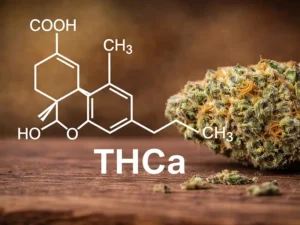
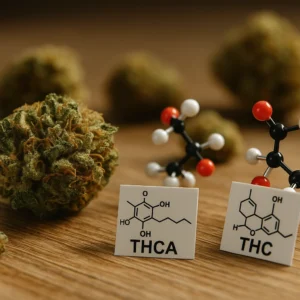
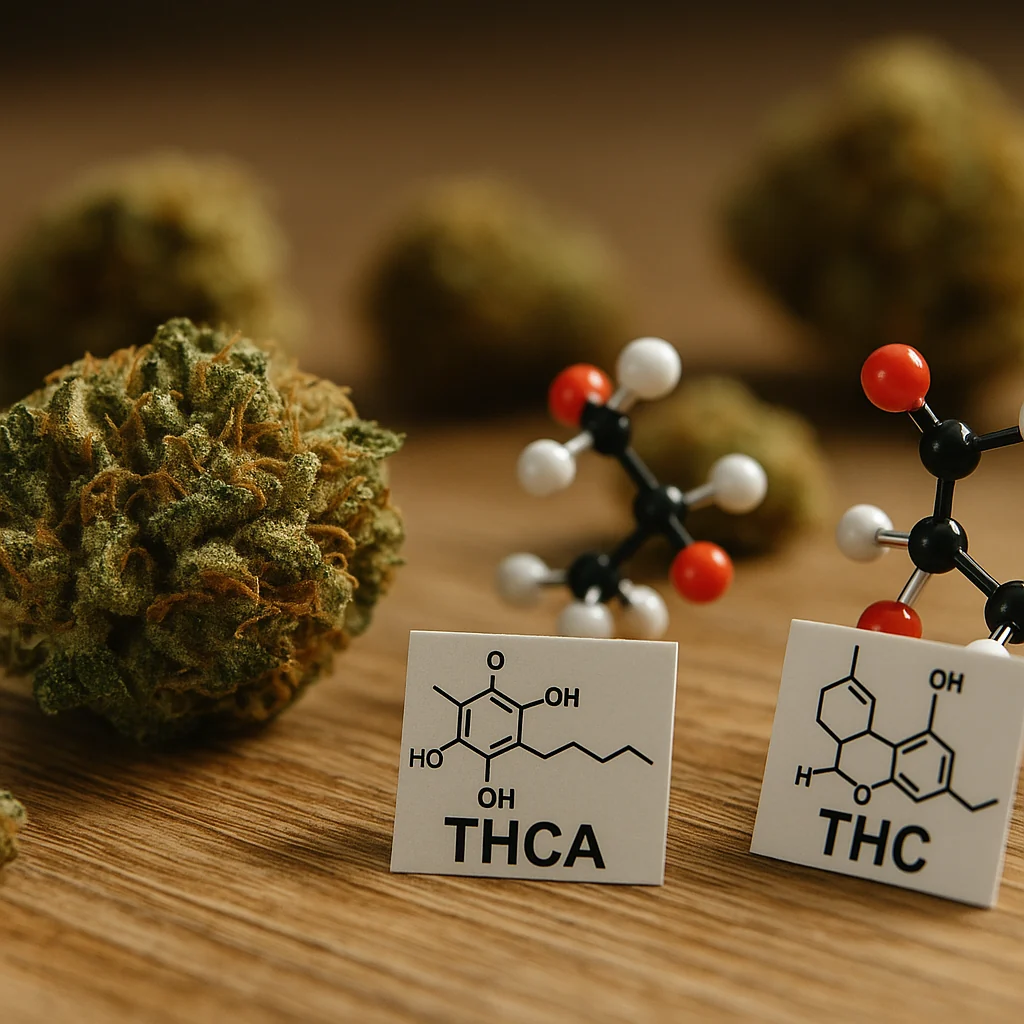
THCA contains an additional carboxyl group that is removed during decarboxylation. This chemical change converts THCA into delta-9 THC.
That difference in molecular structure helps explain why unheated THCA does not produce the same intoxicating effects as THC, while heated THCA-rich flower can produce THC-related effects.
2. Psychoactive effects
THCA in its unheated form is not generally considered intoxicating in the same way as delta-9 THC. THC, by contrast, is psychoactive and can impair attention, memory, judgment, and coordination.
However, describing THCA flower as non-intoxicating without explaining what happens during heating can be misleading. When THCA-rich flower is smoked or vaped, the resulting exposure can include THC.
3. Laboratory testing
A laboratory report may list THCA and delta-9 THC as separate measurements. Some reports also calculate a potential total THC value to estimate the amount of THC that could be produced from the THCA present.
One commonly used calculation is:
Potential total THC = delta-9 THC + (THCA × 0.877)
The factor 0.877 accounts for the mass lost when THCA converts into THC. This is an estimate of chemical potential, not a guarantee of the amount of THC that a person will absorb. Actual conversion and exposure depend on multiple factors.
4. Product labels and marketing
A product described as THCA flower may emphasize its THCA concentration, while a THC flower label may emphasize its delta-9 THC content or total THC.
These labels should not be treated as proof of safety, legality, or predictable effects. Different laboratories and jurisdictions may apply different testing methods and legal definitions.
5. Legal classification
THCA flower is not automatically legal simply because a seller calls it hemp-derived or advertises a low delta-9 THC percentage. Local laws may consider the product’s composition, potential THC content, plant material, intended use, and other factors.
The European Union Drugs Agency explains that rules governing low-THC cannabis products vary between countries and can involve regulations beyond controlled-drug legislation. Anyone considering a cannabis-related product should check the rules in the relevant country.
What Happens When THCA Flower Is Heated?
The conversion of THCA into THC is called decarboxylation. During this process, heat causes THCA to lose a carboxyl group, producing delta-9 THC.
This is one of the most important concepts to understand when comparing THCA vs THC flower.
Before heating, a sample may contain substantial THCA and relatively little delta-9 THC. After sufficient heating, some of that THCA can convert into THC. This means that the cannabinoid profile before consumption may differ from the profile after heating.
The conversion is not necessarily complete. Temperature, heating duration, moisture, the material’s composition, and other conditions affect the result. Smoking and vaping also involve additional processes, so the amount of THC actually delivered to the body cannot be calculated precisely from the THCA percentage alone.
For further scientific background, see the European Union Drugs Agency’s explanation of cannabis composition and THCA testing.
How to Read a THCA or THC Flower Lab Report
A certificate of analysis (COA) can help you understand a product’s measured cannabinoid content. When available, review the report carefully rather than relying exclusively on a product description.
Look for the following information:
- THCA percentage: The measured concentration of tetrahydrocannabinolic acid.
- Delta-9 THC percentage: The measured concentration of delta-9 THC in the tested sample.
- Total THC calculation: Check how the laboratory defines and calculates total THC.
- Laboratory identity: Look for the testing laboratory’s name and contact information.
- Sample identification: Confirm that the report identifies the relevant product or batch.
- Testing date and methods: Check when the sample was tested and which methods were used.
- Additional contaminant testing: Where relevant, look for results covering pesticides, heavy metals, residual solvents, microbial contamination, or other potential contaminants.
A COA is useful evidence about the tested sample, but it does not guarantee that every item in a batch is identical. Nor does a laboratory report establish that a product is lawful in every country.
If a report is missing, difficult to verify, or inconsistent with the product label, be cautious about treating the advertised cannabinoid percentages as established facts.
THCA Flower vs THC Flower: Which Is Stronger?
There is no reliable answer based on the product name alone.
The apparent strength of cannabis flower depends on its cannabinoid composition, the amount consumed, the method of consumption, and how an individual responds. THCA-rich flower can generate THC when heated, so its potential intoxicating effects should not be judged only by its pre-heating delta-9 THC percentage.
For a fair comparison, examine the THCA concentration, delta-9 THC concentration, calculated total THC where appropriate, and the laboratory’s testing information. Even then, laboratory percentages cannot predict an individual’s experience precisely.
It is also important not to equate a higher cannabinoid percentage with a safer or more suitable product. THC can impair driving and other activities requiring attention and coordination. Avoid driving or operating machinery while impaired, and remember that the effects of cannabis can last longer than expected.
The US Centers for Disease Control and Prevention’s cannabis FAQ provides additional information about THCA, THC, and the potential intoxicating effects of heated THCA products.
Is THCA Flower Legal in Europe?
The legality of THCA flower depends on the country and the specific product. There is no single rule that makes every THCA flower product legal throughout Europe.
National laws may distinguish between industrial hemp, controlled cannabis, cannabinoid extracts, finished consumer products, and products intended for smoking or other uses. Rules can also change, so information that was accurate previously may no longer be current.
A low delta-9 THC figure does not, by itself, settle the legal question. The legal treatment of THCA, the method used to calculate THC content, and restrictions on particular product types can all be relevant.
Before buying, possessing, importing, or transporting a cannabis-related product, consult current official guidance for the country concerned. Do not assume that a product sold online in one country can lawfully be delivered to or possessed in another.
For an overview of the European regulatory landscape, consult the EUDA’s FAQ on cannabis laws in Europe and its guidance on commercial cannabis-derived products.
Frequently Asked Questions About THCA vs THC Flower
Is THCA flower the same as THC flower?
No. THCA and delta-9 THC are chemically different cannabinoids. However, heating THCA can convert it into THC, meaning THCA-rich flower may produce intoxicating effects when heated.
Does THCA flower get you high?
Unheated THCA is not generally considered intoxicating like delta-9 THC. When THCA-rich flower is smoked or vaped, heat can convert THCA into THC, which can cause a high and impair functioning.
Is THCA flower safer than THC flower?
Neither label establishes that a product is safer. Safety depends on composition, contaminants, dose, individual susceptibility, and the way the product is used. A verified laboratory report may provide useful information, but it cannot eliminate all risks.
Can a THCA flower product have a low delta-9 THC result but a high total THC potential?
Yes. A product may contain a high concentration of THCA but relatively little delta-9 THC before heating. Because some THCA can convert into THC, total THC calculations may indicate substantially more potential THC than the delta-9 THC measurement alone suggests.
Is THCA flower legal everywhere in Europe?
No. National laws and product rules differ. Check current official guidance for the specific country, and do not rely solely on a seller’s claims about hemp origin or THC percentage.
Final Thoughts: Understanding THCA vs THC Flower
The main difference between THCA vs THC flower is the chemical form of the cannabinoid. THCA is the acidic precursor to THC, and sufficient heat can convert it into the intoxicating cannabinoid delta-9 THC.
When comparing products, look at the full cannabinoid profile, understand how total THC is calculated, review available laboratory reports, and check the laws that apply to your location. Marketing terminology alone cannot establish a product’s effects, safety, or legal status.
For more information, explore the resources at THCa King Europe, visit the shop, and read our THCA flower Europe guide for additional information about product evaluation and the importance of checking local requirements.