Does THCA Flower Get You High? What You Need to Know
Does THCA Flower Get You High?
One of the most frequently searched questions about THCA products is: “Does THCA flower get you high?”
The short answer is more nuanced than a simple yes or no.
THCA itself is not considered psychoactive in the same way as delta-9 THC. However, THCA can be converted into delta-9 THC through decarboxylation, particularly when cannabis flower is heated. The European Union Drugs Agency (EUDA) explains that THCA itself is not psychoactive, while heating can convert it into delta-9 THC, the main psychoactive cannabinoid in cannabis.
This distinction is essential when understanding THCA flower.
A product can contain predominantly THCA before heating, but the cannabinoid profile can change when heat is applied.
In this guide, we explain what THCA is, how it differs from THC, what happens during decarboxylation, why laboratory testing matters, and what European consumers and businesses should understand about THCA flower.
What Is THCA?
THCA stands for tetrahydrocannabinolic acid.
It is a naturally occurring acidic cannabinoid produced by cannabis plants. THCA is concentrated in the plant’s resin-producing trichomes, particularly on the flowers.
THCA is chemically related to delta-9 THC but is not the same compound.
Research describes THCA as the acidic precursor to delta-9 THC. When exposed to heat, THCA can lose a carboxyl group in a process known as decarboxylation, producing THC.
This is the key to understanding the question:
Does THCA flower get you high?
THCA vs THC: What Is the Difference?
THCA and THC are closely related cannabinoids, but they have different chemical structures and properties.
THCA
THCA is the acidic precursor naturally produced by the cannabis plant.
Delta-9 THC
Delta-9 THC is the primary psychoactive cannabinoid associated with the intoxicating effects of cannabis.
Decarboxylation
Decarboxylation converts THCA into THC, and heat significantly accelerates this chemical reaction.
In simplified form:
THCA + heat → THC
The transformation is why the distinction between raw THCA and heated cannabis flower is so important.
Does Raw THCA Flower Get You High?
THCA itself is not considered intoxicating in the same way as delta-9 THC.
The EUDA states that THCA itself is not a psychoactive substance. However, the agency also explains that THCA can be converted into delta-9 THC when cannabis is heated.
Therefore, simply looking at a product’s THCA percentage does not tell the entire story.
The form in which the cannabinoid exists matters.
A laboratory report might show:
- High THCA
- Low delta-9 THC
That indicates the product contains predominantly the acidic cannabinoid.
However, heating can change that cannabinoid profile through decarboxylation.
Why Does Heat Change THCA?
The reason is a chemical process called decarboxylation.
THCA contains a carboxyl group that can be removed when sufficient heat is applied.
The result is the formation of delta-9 THC.
Research on cannabis chemistry shows that heat accelerates the conversion of acidic cannabinoids such as THCA into their neutral forms.
This process can occur during various forms of cannabis processing.
It is therefore important to distinguish between:
Unheated THCA → predominantly THCA
and
Heated THCA → increased conversion to THC
The amount of conversion depends on factors such as temperature, time, moisture, and the specific material being processed.
Can THCA Turn Into THC?
Yes.
This is one of the most important facts to understand when researching whether THCA flower gets you high.
THCA is the acidic precursor of delta-9 THC. When exposed to heat, it can undergo decarboxylation and form THC.
This does not mean that every molecule of THCA automatically becomes THC.
The conversion can be incomplete and depends on processing conditions.
However, the underlying chemistry is well established.
What Is Decarboxylation?
Decarboxylation is the process through which acidic cannabinoids lose a carboxyl group.
For THCA, the simplified reaction is:
THCA → THC + CO₂
Heat accelerates this process.
Research has found that THCA decarboxylation becomes increasingly pronounced with heating, while prolonged exposure to heat can also contribute to cannabinoid degradation.
This is why the way cannabis flower is processed can influence its final cannabinoid composition.
Does THCA Flower Have the Same Effects as THC Flower?
THCA flower and THC-dominant flower should not automatically be considered identical products.
Before heating, THCA is not considered psychoactive in the same manner as delta-9 THC.
However, heating can convert THCA into THC.
As a result, the chemical profile of the material can change significantly when heated.
This is one reason consumers and businesses should avoid judging THCA flower solely from its label.
Instead, consider the complete cannabinoid profile and the product’s intended use.
Does THCA Flower Get You High When Heated?
Heating THCA-rich flower can cause THCA to decarboxylate into delta-9 THC.
Because delta-9 THC is the primary psychoactive cannabinoid in cannabis, heated THCA-rich material can produce intoxicating effects depending on the resulting THC exposure and other factors. The EUDA specifically notes that when THCA is decarboxylated into THC, it produces effects such as feeling “high,” relaxation, and altered perception.
The important distinction is therefore:
THCA itself ≠ THC
but
THCA can convert into THC when heated.
Why THCA Percentage Can Be Misleading
A product advertised as having a high percentage of THCA may appear to contain very little THC.
However, focusing only on the delta-9 THC number can provide an incomplete picture of the cannabinoid profile.
Because THCA can convert into THC, some regulatory and analytical frameworks consider both compounds.
The EUDA notes that certain EU food regulations calculate total delta-9 THC in hemp-seed-derived foods using:
Δ9-THC + 0.877 × Δ9-THCA
The 0.877 factor reflects the molecular conversion relationship between THCA and THC.
Importantly, this particular calculation relates to specified food products and should not automatically be treated as a universal legal formula for THCA flower in every European country.
Why Laboratory Testing Matters
If you are researching Does THCA flower get you high?, laboratory testing is an important part of understanding the product.
A professional Certificate of Analysis (COA) can provide information about:
- THCA
- Delta-9 THC
- CBD
- CBG
- Other cannabinoids
- Terpenes
- Pesticides
- Heavy metals
- Microbiological contaminants
A batch-specific COA provides much more useful information than relying on a product description alone.
For businesses purchasing THCA flower wholesale, laboratory documentation should be an essential part of supplier due diligence.
What Does a THCA Flower COA Tell You?
A good laboratory report should identify the product or batch being tested.
Important information may include:
Cannabinoid Profile
This shows the measured concentration of THCA, delta-9 THC, and other cannabinoids.
Batch Identification
The batch number allows buyers to connect the report with the actual product.
Laboratory Information
The testing laboratory should be clearly identified.
Testing Date
Recent testing provides more relevant information about the specific production batch.
Contaminant Testing
Depending on the market and product, testing can include pesticides, heavy metals, microbes, and other quality parameters.
Laboratory testing cannot determine every aspect of product quality, but it provides valuable objective information.
THCA Flower vs CBD Flower
It is also useful to distinguish THCA flower from CBD flower.
THCA Flower
THCA flower is characterized by a high concentration of tetrahydrocannabinolic acid.
CBD Flower
CBD flower is generally cultivated to produce higher levels of CBD and/or CBDA and low levels of THC.
The two products can look similar, but their cannabinoid profiles are different.
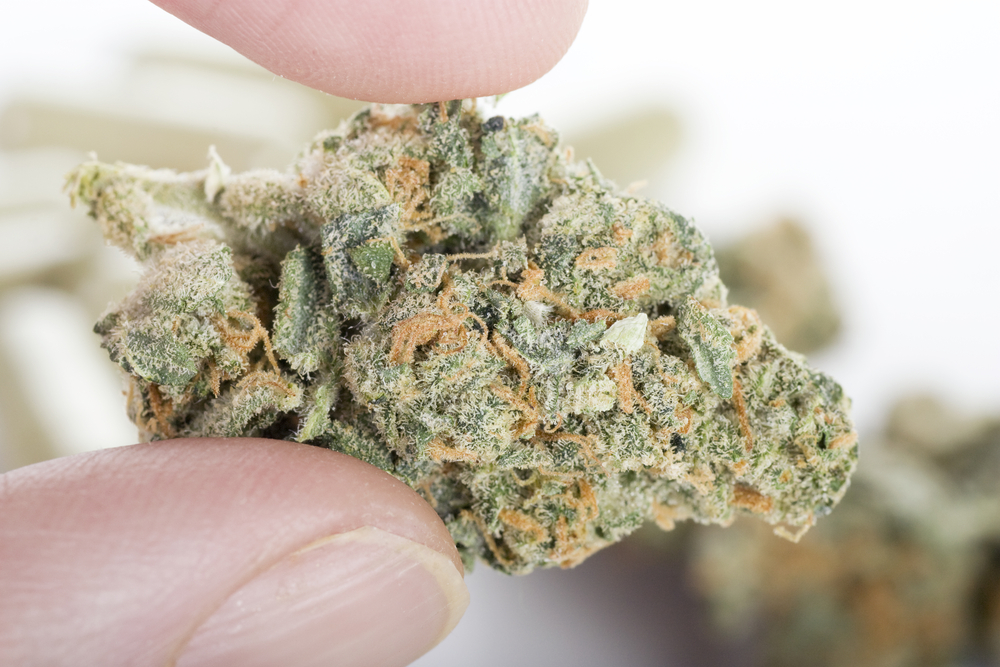
This is another reason why appearance alone cannot determine what a cannabis flower contains.
What About Terpenes?
THCA is only one component of cannabis flower.
Cannabis also contains aromatic compounds known as terpenes.
Terpenes contribute to the characteristic aroma and flavor of different cultivars.
Depending on genetics, a THCA flower can have notes described as:
- Fruity
- Citrus
- Sweet
- Earthy
- Herbal
- Floral
- Spicy
- Woody
Two products with similar cannabinoid concentrations can therefore have very different aromatic profiles.
Does THCA Flower Get You High? The Simple Explanation
For readers looking for a quick answer:
Before heating
THCA itself is not considered psychoactive like delta-9 THC.
During heating
THCA can undergo decarboxylation.
After conversion
The resulting delta-9 THC is psychoactive and can produce intoxicating effects.
The EUDA confirms this basic distinction between THCA and THC.
Therefore, the answer to “Does THCA flower get you high?” depends significantly on the cannabinoid form and whether decarboxylation occurs.
Is THCA Flower Legal in Europe?
The question of psychoactivity is separate from the question of legality.
THCA flower should not automatically be assumed to be legal throughout Europe.
The EUDA explains that low-THC cannabis products are treated differently across European countries and that national rules can impose additional restrictions.
The legal status of a specific product can depend on:
- Country
- Product classification
- THC concentration
- THCA concentration
- Testing methodology
- Intended use
- Import requirements
- National controlled-substance legislation
- Marketing and labeling rules
Therefore, businesses should verify the current regulations applicable to their specific market.
Why Businesses Should Pay Attention to THCA
For retailers, distributors, and wholesalers, THCA presents an important supply-chain consideration.
A professional buyer should not evaluate a product only according to its advertised THCA percentage.
Instead, consider:
THCA + Delta-9 THC + Testing + Product Classification + Local Law
This approach provides a more complete picture.
The EUDA also highlights the analytical challenges involved in determining THCA and THC content and notes that different analytical techniques can influence how these cannabinoids are measured.
Choosing Quality THCA Flower
If you are researching THCA flower, several quality factors deserve attention.
1. Current Laboratory Testing
Look for batch-specific laboratory reports.
2. Transparent Cannabinoid Information
Check both THCA and delta-9 THC.
3. Reliable Sourcing
Choose suppliers that can provide clear product information.
4. Proper Storage
Appropriate storage helps preserve flower quality and cannabinoid stability.
5. Consistent Genetics
Well-documented cultivars can help provide more consistent product characteristics.
6. Professional Documentation
Businesses should maintain appropriate records for their products and supply chains.
Popular THCA Flower Cultivars
The European THCA flower market includes numerous cultivars.
Examples include:
- Gelato
- Runtz
- Zkittlez
- Wedding Cake
- White Runtz
- Purple Punch
- Blue Dream
- Apple Fritter
- Ice Cream Cake
- Oreoz
- GMO
- Lemon Cherry Gelato
- Permanent Marker
- RS11
However, a cultivar name does not guarantee a specific cannabinoid concentration.
Always refer to the laboratory results for the actual batch.
Frequently Asked Questions
Does THCA flower get you high?
THCA itself is not considered psychoactive like delta-9 THC. However, heating THCA can convert it into delta-9 THC, which is psychoactive and can produce intoxicating effects.
Is THCA psychoactive?
THCA itself is generally described as non-psychoactive or non-intoxicating. Its conversion into delta-9 THC through decarboxylation is what creates the psychoactive cannabinoid.
Does THCA turn into THC?
Yes. THCA can convert into delta-9 THC through decarboxylation, especially when exposed to heat.
What is decarboxylation?
Decarboxylation is a chemical process in which THCA loses a carboxyl group and forms delta-9 THC.
Is THCA the same as THC?
No. THCA is the acidic precursor to delta-9 THC. They have different chemical structures.
Can you tell how much THCA is in flower by looking at it?
No. Appearance cannot reliably determine cannabinoid concentration. Laboratory testing is needed.
Is THCA flower legal in Europe?
Not necessarily. European countries can have different laws and restrictions concerning cannabis, hemp, THC, THCA, and cannabis-derived products.
Why is a COA important?
A Certificate of Analysis provides laboratory information about a particular batch, including cannabinoid concentrations and potentially other quality-control results.
THC King Europe and Premium THCA Flower
For businesses and buyers exploring the European THCA flower market, choosing a transparent and reliable supplier is essential.
THC King Europe focuses on premium THCA flower, product selection, wholesale supply, and professional B2B support.
A responsible purchasing process should always involve reviewing available laboratory documentation, understanding the cannabinoid profile, and checking the rules applicable to the destination market.
Final Answer: Does THCA Flower Get You High?
So, does THCA flower get you high?
The most accurate answer is:
THCA itself is not considered intoxicating in the same way as delta-9 THC. However, THCA can convert into delta-9 THC when heated through decarboxylation, and THC is the primary psychoactive cannabinoid responsible for the intoxicating effects associated with cannabis.
That is why understanding the difference between THCA and THC is so important.
For consumers and businesses, the best approach is to look beyond the product name and examine the complete cannabinoid profile, current laboratory testing, product documentation, and applicable local regulations.
The European regulatory environment can vary significantly between countries, so THCA products should never be assumed to have the same legal status everywhere in Europe.