Interest in indoor THCA flower has grown alongside wider interest in hemp, cannabis varieties and cannabinoid testing. When people research indoor-grown flower, they often want to understand what makes indoor cultivation different, how THCA relates to THC, what influences the appearance and composition of cannabis flowers, and how to evaluate laboratory information.
Indoor cultivation is a growing method in which plants are raised inside a controlled environment rather than directly outdoors. Growers may use artificial lighting, ventilation, climate-control equipment and other systems to manage environmental conditions. These systems can offer greater control over growing conditions, but the word “indoor” does not automatically mean that a flower is more potent, safer or better than greenhouse- or outdoor-grown material.
This guide from THCa King Europe explains the meaning of indoor THCA flower, the factors that influence product quality, the difference between THCA and THC, and the importance of independent laboratory testing.
This article is for general educational purposes. It does not certify any cannabis product as safe or lawful, and cannabis laws differ significantly between countries.
What Is Indoor THCA Flower?
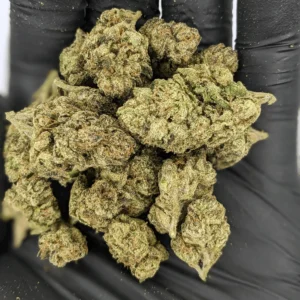
Indoor THCA flower refers to cannabis flower described as having been cultivated in an indoor growing environment and marketed for its tetrahydrocannabinolic acid (THCA) content.
THCA is a naturally occurring cannabinoid found in cannabis plants. In fresh and unheated plant material, cannabinoids commonly occur in their acidic forms. THCA is the acidic precursor to delta-9 THC. When exposed to heat, it can undergo a chemical reaction called decarboxylation, converting into THC.
This distinction is important when interpreting product descriptions and laboratory reports. A report showing a particular THCA percentage is not reporting the same thing as the delta-9 THC percentage.
The European Union Drugs Agency explains that THCA is produced in cannabis plants and can be converted into THC through decarboxylation. Its explanation of cannabis production and chemistry is available in its EU Drug Market: Cannabis – Production report.
For more cannabinoid education, visit the THCA Flowers guide and the broader THCA Flower Europe page.
What Does Indoor Cultivation Mean?
Indoor cultivation describes the production of plants within an enclosed or partly enclosed growing environment. Unlike outdoor cultivation, which is exposed to natural weather and seasonal changes, an indoor facility can use equipment to regulate environmental conditions.
Common features of indoor growing facilities include:
- Artificial lighting systems.
- Ventilation and air circulation.
- Temperature and humidity monitoring.
- Controlled growing spaces.
- Water and nutrient management systems.
- Measures intended to monitor plant health and environmental consistency.
The purpose of environmental control is to reduce some of the variability associated with changing outdoor conditions. However, indoor production also depends on responsible facility management, plant genetics, hygiene, monitoring and quality-control procedures.
The European Union Drugs Agency’s cannabis production overview discusses cannabis cultivation and the factors involved in production.
It is important to remember that a seller’s use of the word “indoor” is a claim about cultivation conditions. Buyers and researchers should not assume that the claim has been independently verified unless reliable documentation is available.
Indoor THCA Flower vs Greenhouse and Outdoor Flower
Indoor, greenhouse and outdoor cultivation are different production environments. Each has its own characteristics, and the growing method alone cannot establish the quality of the final material.
Indoor-grown flower
Indoor cultivation takes place within a controlled environment. Artificial lighting and environmental-management systems may reduce exposure to unpredictable weather conditions. The degree of control depends on the facility and its management.
Greenhouse-grown flower
Greenhouse cultivation takes place in a structure that uses natural sunlight, sometimes alongside supplementary lighting and environmental controls. Conditions can vary according to the structure, equipment and outside climate.
Outdoor-grown flower
Outdoor cultivation relies more directly on natural sunlight, seasonal conditions and the surrounding environment. Weather, soil conditions and other external factors can influence the growing environment.
There is no universal rule that indoor flower is always superior to greenhouse or outdoor flower. A meaningful comparison requires reliable information about the particular product, its cultivation claims, its laboratory results and its quality controls.
Explore our educational resources on premium THCA flower, exotic THCA flower and THCA flower strains for more information about common product terminology.
What Influences Indoor THCA Flower Quality?
The phrase “indoor THCA flower” describes a growing category, not a guaranteed quality grade. Several factors can influence the characteristics of a cannabis flower.
1. Plant genetics
Different cannabis varieties have different genetic characteristics. These can influence cannabinoid profiles, terpene composition, plant structure and other observable characteristics.
A strain name alone does not prove the chemical composition of a particular batch. Laboratory analysis is needed to establish what cannabinoids were detected in the tested sample.
2. Environmental consistency
An indoor facility may offer greater control over environmental conditions than an outdoor growing site. However, the existence of climate-control equipment does not prove that conditions were consistently maintained or that the resulting material meets a particular quality standard.
3. Harvest and post-harvest handling
The handling of harvested plant material can influence its physical condition and chemical stability. Heat, light, humidity and oxidation can affect cannabinoids over time. The United Nations Office on Drugs and Crime discusses cannabinoid decarboxylation and degradation in its Recommended Methods for the Identification and Analysis of Cannabis and Cannabis Products.
4. Contaminant controls
A product’s cannabinoid percentage does not reveal whether it contains unwanted contaminants. Separate testing may be required for pesticides, heavy metals, microbial contamination, residual solvents or other substances, depending on the product and relevant standards.
5. Reliable documentation
Clear batch identification, laboratory reports and traceable product information make it easier to assess claims. A professional-looking label or attractive product photograph is not a substitute for evidence.
THCA vs THC: Why the Difference Matters
THCA and THC are related but distinct compounds.
THCA is tetrahydrocannabinolic acid, the acidic precursor to THC found in cannabis plant material.
Delta-9 THC is the cannabinoid commonly associated with cannabis’s intoxicating effects.
CBD is cannabidiol, a separate cannabinoid with a different chemical structure and profile.
When THCA is exposed to heat, it can convert into delta-9 THC through decarboxylation. This is why a product’s THCA content can be relevant when considering its potential total THC.
The US Centers for Disease Control and Prevention explains this distinction in its Cannabis Frequently Asked Questions. The European Union Drugs Agency also discusses the relationship between THCA and THC in its cannabis production report.
A commonly used theoretical calculation is:
Total THC = delta-9 THC + (THCA × 0.877)
The 0.877 factor accounts for the molecular-mass change associated with decarboxylation. This estimate does not replace the analytical method or legal definition used in a particular country.
How to Understand an Indoor THCA Flower Laboratory Report
A Certificate of Analysis (COA) is a document showing the results of tests performed on a submitted sample. It can help explain the sample’s cannabinoid profile and, where included, results for selected contaminants.
When reviewing a COA, consider the following information.
Cannabinoid profile
Look for separate results for THCA, delta-9 THC, CBD and other cannabinoids. The report should make clear whether figures are expressed as percentages, milligrams or another unit.
Total THC
Check whether the laboratory reports total THC and how it was calculated. Some testing methods measure THCA and THC separately, while others may use a process that accounts for conversion.
The US Department of Agriculture’s hemp laboratory testing guidelines explain why testing methods must account for the potential conversion of THCA into THC in the relevant US hemp-testing framework. Those guidelines are not European law, but they illustrate an important analytical principle.
Sample and batch identification
A useful report should identify the sample, testing laboratory, test date and analytical method. Check whether the batch identification on the report corresponds to the product being assessed.
Contaminant testing
A cannabinoid panel does not necessarily include every possible contaminant. Check which additional tests were actually performed rather than assuming that a cannabinoid result means a product has passed every safety test.
The National Institute of Standards and Technology’s cannabis laboratory report discusses the importance of reliable and comparable laboratory measurements.
A COA is evidence about the submitted sample and the tests listed in the report. It does not prove that every item in a batch is identical, that every possible contaminant was tested or that the product is legally authorised in a particular country.
Is Indoor THCA Flower Legal?
The legal status of indoor THCA flower depends on the country and the exact product. Indoor cultivation does not create a legal exemption, and the word “hemp” does not automatically make every cannabis-derived product lawful.
Different jurisdictions use different definitions, THC thresholds, licensing requirements and rules for finished products. Some countries regulate cannabis flower broadly, while others distinguish certain low-THC hemp products from controlled cannabis. Rules for cultivation may also differ from rules for possession, importation, processing, retail sale or advertising.
The European Union’s agricultural hemp framework should not be confused with a universal authorisation for finished THCA flower products. The European Commission’s hemp overview explains the agricultural context, while the European Union Drugs Agency’s cannabis laws FAQ provides broader information about national differences.
Before making decisions involving a cannabis-derived product, check the current official rules in the country concerned and seek qualified legal advice where necessary.
For country-specific educational reading, explore:
- THCA Flower Germany
- THCA Flower France
- THCA Flower Netherlands
- THCA Flower Spain
- THCA Flower Portugal
- THCA Flower Switzerland
- THCA Flower Ireland
These articles provide educational information and should not be interpreted as legal approval for any product or transaction.
Common Misconceptions About Indoor THCA Flower
Several assumptions can lead to confusion when researching indoor-grown cannabis flower.
Misconception 1: Indoor always means better quality.
Indoor cultivation can provide more control over growing conditions, but the final quality still depends on genetics, facility management, handling, testing and other factors.
Misconception 2: A high THCA percentage proves a product is safe.
Cannabinoid concentration does not establish the absence of pesticides, microbes, heavy metals or other contaminants.
Misconception 3: THCA and THC are identical.
They are different chemical compounds, although THCA can convert into THC through decarboxylation.
Misconception 4: A laboratory report proves legality.
A COA provides analytical information. Legal classification and authorisation are separate questions.
Misconception 5: All European countries apply the same hemp rules.
National legislation differs. A product’s status in one country does not automatically apply elsewhere.
Frequently Asked Questions About Indoor THCA Flower
What is indoor THCA flower?
Indoor THCA flower is cannabis flower described as being cultivated in an indoor environment and marketed according to its THCA content. The term describes a growing method and cannabinoid-related product category, not a guaranteed quality grade.
Is indoor THCA flower better than outdoor flower?
Not automatically. Indoor cultivation may offer greater environmental control, but quality depends on multiple factors, including genetics, growing conditions, post-harvest handling and laboratory testing.
What is the difference between indoor and greenhouse THCA flower?
Indoor cultivation takes place in an enclosed growing environment, while greenhouse cultivation uses a structure that may combine natural sunlight with additional environmental controls. Neither description independently proves quality or legal compliance.
Does THCA turn into THC?
Yes. THCA can convert into delta-9 THC through decarboxylation, a chemical process associated with exposure to heat. The CDC and EUDA provide further scientific explanations.
Does a high THCA percentage mean high quality?
No. A cannabinoid percentage is only one measurement. It does not independently establish freshness, contaminant status, batch consistency or legal compliance.
How can I check an indoor THCA flower COA?
Review the laboratory identity, sample reference, test date, analytical method, individual cannabinoid results and any contaminant tests. Confirm that the report corresponds to the sample or batch being assessed.
Is indoor THCA flower legal throughout Europe?
No single rule makes all indoor THCA flower legal throughout Europe. National laws differ, and product classification, composition, intended use and transaction type can all matter.
Final Thoughts on Indoor THCA Flower
Indoor THCA flower is a term that combines a cultivation description with a cannabinoid-related product category. Indoor growing environments can offer greater control over certain conditions, but that alone does not guarantee superior quality, safety or legal status.
A more informed assessment considers the product’s documented origin, cannabinoid profile, laboratory methods, contaminant testing and the laws of the destination country. Understanding the distinction between THCA and THC is particularly important because THCA can convert into THC through decarboxylation.
For further educational information, visit THCa King Europe, browse the THCA Flowers guide or explore the THCa King Europe blog.