THCA vs Delta 8: What’s the Difference?
THCA vs Delta 8: A Complete Guide
The world of cannabinoids is constantly evolving, and consumers are now encountering far more than traditional THC and CBD products. Two compounds that generate particular interest are THCA and Delta-8 THC.
But what is the difference between them?
Is THCA the same as Delta-8? Is Delta-8 stronger? Does THCA become Delta-8 when heated? And what should European consumers and businesses know before purchasing cannabinoid products?
The answer starts with chemistry.
THCA and Delta-8 THC are different cannabinoids, although they are closely related.
THCA is an acidic cannabinoid naturally produced by the cannabis plant. Delta-8 THC is a psychoactive THC isomer that occurs naturally in cannabis in much smaller quantities and can also be produced through processing of other cannabinoids.
This guide explores THCA vs Delta 8 in detail, including their chemical differences, effects, potency, product types, testing requirements and the regulatory considerations that matter in Europe.
What Is THCA?
THCA stands for tetrahydrocannabinolic acid.
It is an acidic cannabinoid naturally produced by the cannabis plant. During cannabinoid biosynthesis, CBGA can be converted into THCA and other acidic cannabinoids.
One of the most important characteristics of THCA is that it can undergo decarboxylation.
When THCA is exposed to heat, it can convert into Delta-9 THC, the principal psychoactive cannabinoid associated with cannabis.
In simplified terms:
This distinction is extremely important when comparing THCA flower with products that already contain psychoactive THC.
The EUDA explains that when cannabis is heated, THCA is converted into THC, meaning the amount of THC available after heating depends not only on the THC already present but also on THCA in the plant material.
What Is Delta-8 THC?
Delta-8 THC, also written as Δ8-THC, is a cannabinoid closely related to Delta-9 THC.
It is a THC isomer, meaning it has the same molecular formula as Delta-9 THC but differs in molecular structure.
Naturally occurring Delta-8 THC is found in cannabis in much smaller amounts than Delta-9 THC. The EUDA also notes that Delta-8 THC can appear in newer cannabinoid products as a result of processing naturally occurring cannabinoids.
This is an important distinction between traditional cannabis flower and some modern Delta-8 products.
When a commercial product contains a relatively high concentration of Delta-8 THC, it is important to understand how that cannabinoid was produced and to look for appropriate laboratory documentation.
THCA vs Delta 8: Quick Comparison
| Feature | THCA | Delta-8 THC |
|---|---|---|
| Full name | Tetrahydrocannabinolic acid | Delta-8 tetrahydrocannabinol |
| Cannabinoid type | Acidic cannabinoid | THC isomer |
| Naturally occurring? | Yes | Yes, but usually in small amounts |
| Psychoactive itself? | Not considered psychoactive like THC | Yes |
| Effect of heat | Can convert to Delta-9 THC | Already exists as Delta-8 THC |
| Common products | THCA flower, extracts and concentrates | Delta-8 formulations, extracts and other products |
| Laboratory testing | Important | Especially important |
| European legal status | Depends on country/product | Depends on country/product |
| Product composition | Should be verified by testing | Should be verified by testing |
The most important takeaway is simple:
THCA is an acidic precursor, while Delta-8 THC is already a THC isomer.
THCA vs Delta 8: Are They the Same?
No.
Although the names are similar, THCA and Delta-8 THC are not the same compound.
THCA is the acidic form associated with the natural biosynthesis of THC-type cannabinoids.
Delta-8 THC is an already decarboxylated THC isomer.
It is also important not to confuse either compound with Delta-9 THC.
The three terms describe different cannabinoids:
- THCA
- Delta-8 THC
- Delta-9 THC
Understanding these differences is essential when reading product labels, certificates of analysis and cannabinoid profiles.
Does THCA Turn Into Delta 8?
This is a common question when researching THCA vs Delta 8.
THCA is primarily known for converting to Delta-9 THC through decarboxylation.
However, the EUDA notes that THCA can also be converted into Delta-8 THC through chemical processes. Its cannabis market analysis describes Delta-8 THC among cannabinoids that can be produced by processing naturally occurring cannabinoids.
For everyday consumers, the most important distinction is:
Heating THCA-rich cannabis primarily increases the availability of Delta-9 THC.
Therefore, it would be misleading to simply say that heating THCA flower “turns it into Delta-8.”
THCA vs Delta 8: Is THCA Psychoactive?
THCA itself is not considered psychoactive in the same way as Delta-9 THC.
However, this does not mean that THCA-rich flower should automatically be considered non-intoxicating in every situation.
When THCA is heated, it can convert into Delta-9 THC.
That is why the intended use and method of processing matter.
A product containing a high amount of THCA can therefore have a substantially different cannabinoid profile after heating.
The EUDA specifically describes THCA as non-psychoactive itself while explaining that it can be converted to Delta-9 THC.
Is Delta-8 THC Psychoactive?
Yes.
Delta-8 THC is a psychoactive cannabinoid.
Current European food-safety information from EFSA states that Delta-8 THC can affect cognitive and psychomotor abilities and increase heart rate in a way similar to Delta-9 THC.
This is one of the most important differences between THCA vs Delta 8.
THCA is an acidic precursor that can become THC when heated, while Delta-8 THC itself is already psychoactive.
THCA vs Delta 8: Effects
The effects of cannabinoids can vary depending on the compound, concentration, product formulation, route of exposure and individual factors.
Delta-8 THC is psychoactive and can affect cognitive and psychomotor performance.
EFSA’s assessment found that Delta-8 THC has effects and a mode of action sufficiently similar to Delta-9 THC that it considered their potency similar for the purposes of its safety assessment.
THCA is different because the molecule itself does not produce the same psychoactive effect as Delta-9 THC.
However, when heated, THCA can contribute to the formation of Delta-9 THC.
This is why comparing the two based solely on a percentage printed on a label can be misleading.
Is Delta-8 Stronger Than THCA?
There is no simple “stronger” answer because THCA and Delta-8 THC are different cannabinoids.
For THCA flower, the THCA percentage describes the amount of THCA present in the product.
For a Delta-8 product, the Delta-8 percentage describes the amount of Delta-8 THC already present.
Those figures should not be treated as equivalent measurements of potency.
A better comparison considers:
- Cannabinoid concentration
- Delta-9 THC concentration
- THCA concentration
- Delta-8 THC concentration
- Product formulation
- Route of exposure
- Laboratory results
EFSA’s current assessment is particularly relevant because it concluded that Delta-8 and Delta-9 THC have similar potency for its safety evaluation rather than supporting simplistic claims that Delta-8 is always a fixed percentage weaker.
THCA Flower vs Delta-8 Products
THCA flower is generally associated with naturally occurring THCA in cannabis flower.
Delta-8 products can be more varied.
They may include different formulations, extracts or flower products containing Delta-8 THC.
Because Delta-8 occurs naturally only in relatively small amounts, higher-concentration commercial Delta-8 products may involve processing of other cannabinoids.
The EUDA identifies Delta-8 THC among newer cannabinoids that may be produced by processing naturally occurring cannabinoids and refers to such compounds as semi-synthetic cannabinoids.
For consumers, this makes transparency especially important.
Why the Manufacturing Process Matters
When purchasing a cannabinoid product, knowing the final cannabinoid percentage is useful, but it is not the whole story.
This is especially true for products containing cannabinoids that may be produced through additional processing.
A responsible supplier should be able to provide appropriate information about:
- Product composition
- Cannabinoid content
- Manufacturing process where relevant
- Batch information
- Laboratory analysis
- Contaminant testing
The EUDA’s 2026 reporting also highlights significant variability in some semi-synthetic cannabinoid products and notes that laboratory analysis has identified products containing undeclared cannabinoids.
This makes independent testing particularly valuable.
THCA vs Delta 8: Why Lab Testing Matters
A Certificate of Analysis (COA) can help consumers and businesses understand exactly what is in a cannabinoid product.
A useful laboratory report may provide information about:
Cannabinoids
- THCA
- Delta-9 THC
- Delta-8 THC
- CBD
- CBDA
- CBG
- CBN
- CBC
Terpenes
Depending on the test, the report may also show the product’s terpene profile.
Contaminants
Testing may also address relevant contaminants such as:
- Heavy metals
- Pesticides
- Microbial contamination
- Mycotoxins
- Residual solvents
The exact testing requirements depend on the product and applicable regulations.
How to Read a COA
Before buying THCA flower or a Delta-8 product, look at more than the headline percentage.
1. Product Name
Make sure the COA corresponds to the actual product.
2. Batch Number
A batch-specific report is preferable to generic documentation.
3. Testing Date
Check when the sample was analyzed.
4. Cannabinoid Panel
Look for the actual cannabinoid concentrations.
5. Delta-9 THC
This can be particularly important when evaluating hemp-derived products.
6. Delta-8 THC
For Delta-8 products, verify that the claimed concentration matches the laboratory result.
7. THCA
For THCA flower, check the measured THCA percentage.
8. Safety Testing
Where applicable, check whether the product has been screened for relevant contaminants.
THCA vs Delta 8: What About Terpenes?
Cannabinoids are only one part of the cannabis plant’s chemical profile.
Terpenes are aromatic compounds that contribute to the characteristic scent and flavor of different cultivars.
Common cannabis terpenes include:
- Myrcene
- Limonene
- Caryophyllene
- Linalool
- Pinene
- Humulene
This is why two flowers with similar cannabinoid percentages can still have very different aromas.
When evaluating premium THCA flower, looking at the terpene profile can therefore provide additional information about the product beyond its THCA percentage.
THCA vs Delta 8: Does Appearance Tell You Anything?
Not reliably.
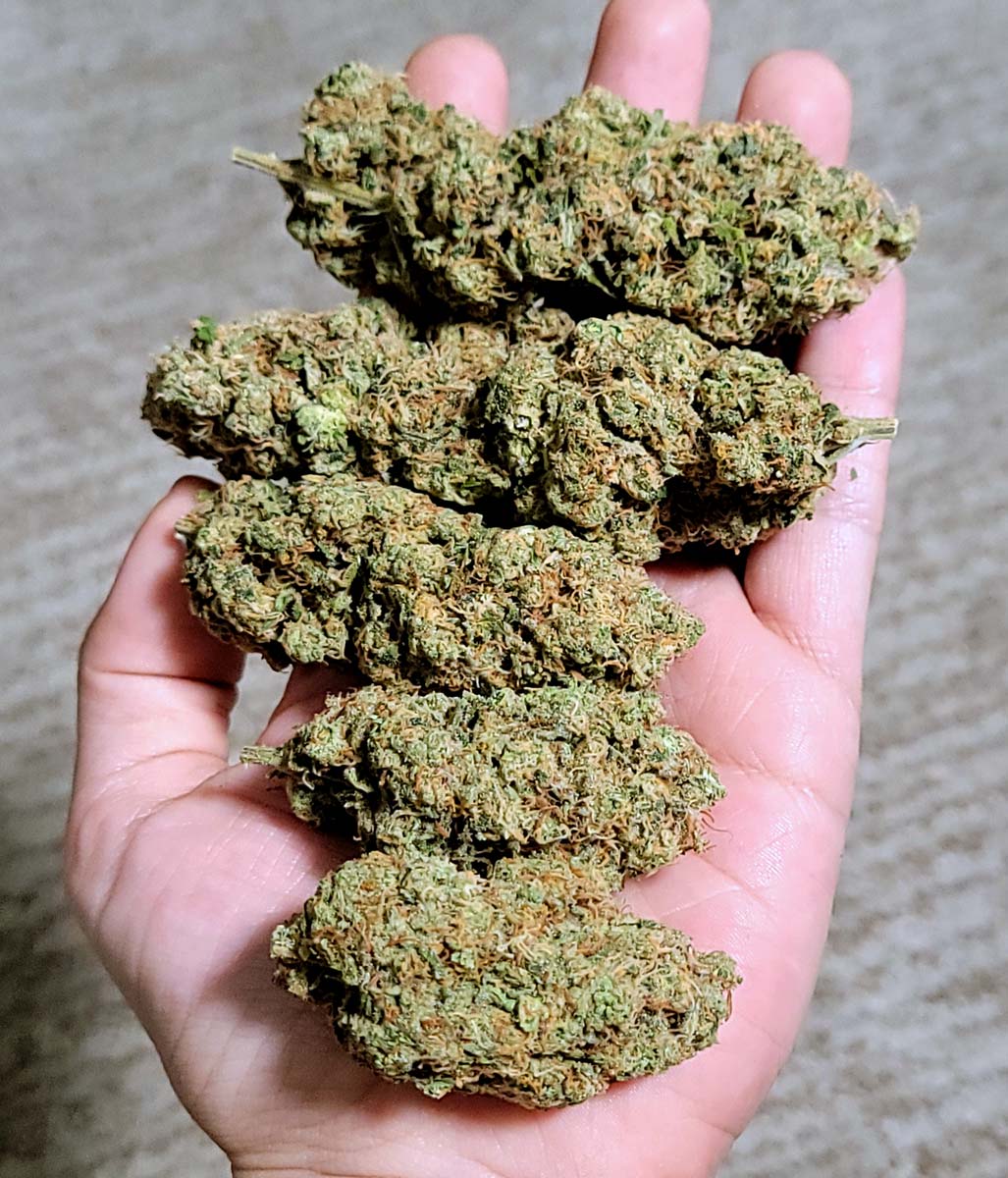
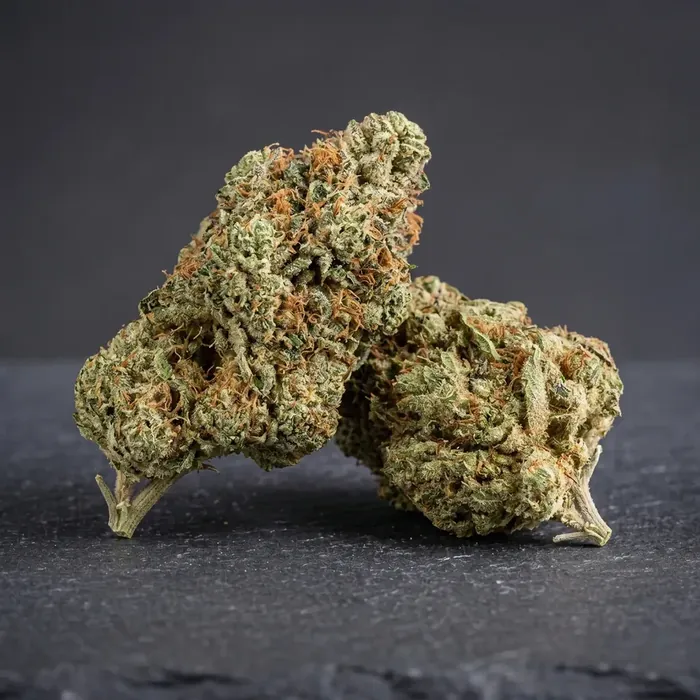
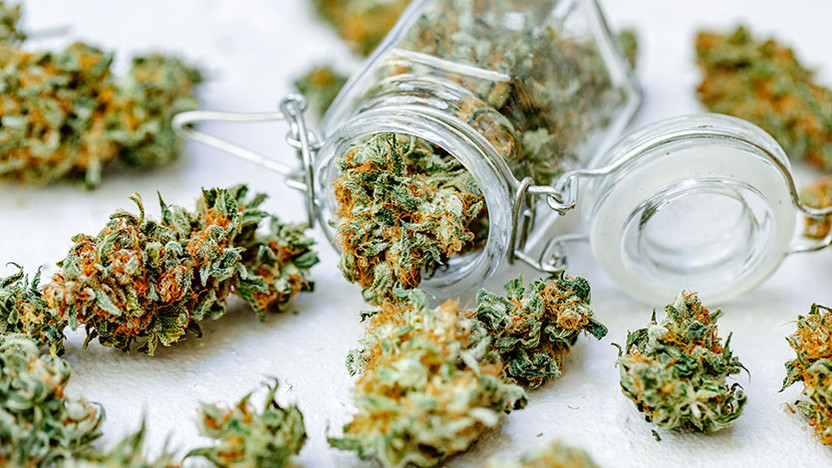
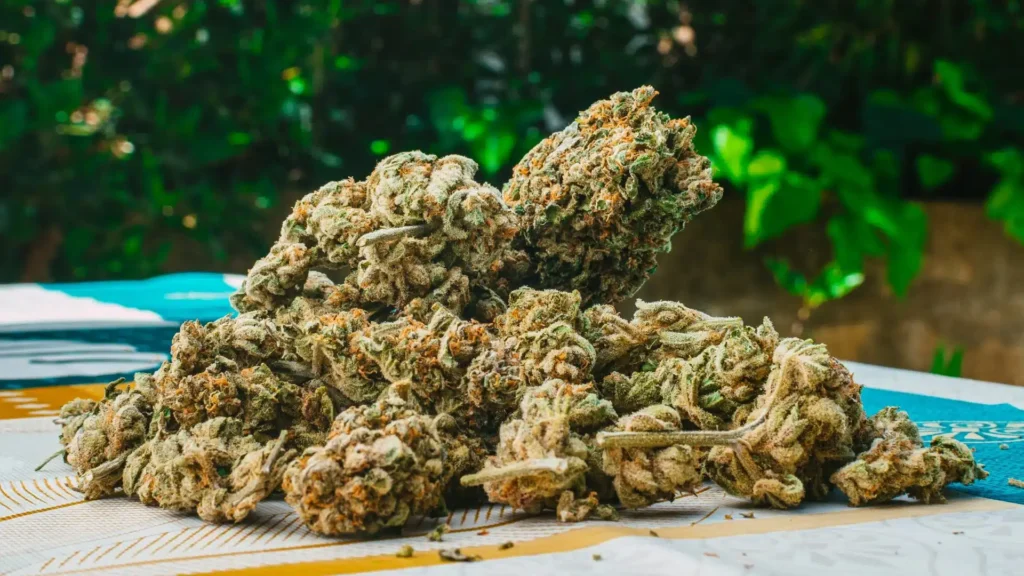
THCA flower and other hemp-derived flower products can look remarkably similar.
Both can have:
- Green buds
- Orange pistils
- Dense structures
- Visible trichomes
- Strong aromas
- Resinous surfaces
However, appearance cannot tell you the exact cannabinoid concentration.
A flower with abundant trichomes is not automatically a flower with a specific THCA or THC percentage.
Laboratory testing is far more reliable for cannabinoid content.
THCA vs Delta 8: Natural vs Processed
The distinction between natural occurrence and commercial production is particularly interesting.
THCA is naturally produced by cannabis plants as part of their cannabinoid biosynthesis.
Delta-8 THC also occurs naturally, but generally at much lower levels.
Because naturally occurring Delta-8 concentrations are small, some commercial products use additional processing to obtain higher concentrations.
The EUDA specifically reports that some newer cannabinoids appearing on the European market are produced by processing naturally occurring cannabinoids and categorizes these as semi-synthetic cannabinoids.
Therefore, when comparing THCA vs Delta 8, it is useful to consider not only what cannabinoid is present, but also how that cannabinoid reached the final product.
THCA vs Delta 8: Which Is Better?
There is no universally “better” cannabinoid.
It depends on what someone is trying to understand or purchase.
Someone researching THCA flower may be interested in:
- Naturally occurring THCA
- Flower genetics
- Terpenes
- Cannabinoid profiles
- Laboratory testing
Someone researching Delta-8 THC may instead be focused on:
- Delta-8 concentration
- Product formulation
- Manufacturing information
- Laboratory verification
- Psychoactive properties
The most useful approach is not to ask which cannabinoid is automatically better.
Instead, ask:
What is in the product, how was it produced, and is the product appropriate and lawful for its intended market?
THCA vs Delta 8 in Europe
European consumers and businesses should be particularly careful with statements such as “legal in Europe.”
There is no single blanket rule that makes every THCA or Delta-8 product legal throughout Europe.
The legal treatment can depend on factors such as:
- Country
- Product type
- Cannabinoid concentration
- Intended use
- Manufacturing method
- Import requirements
- National controlled-substance legislation
- Food regulations
- Product labeling requirements
The EUDA’s current FAQ on cannabis laws in Europe was revised on 21 April 2026 and covers recreational, medical and commercial cannabis-derived products, highlighting the importance of the specific legal context.
Therefore, businesses selling or importing cannabinoid products should verify the rules applicable to the specific destination country rather than relying on a general “EU legal” claim.
Is THCA Flower Legal in Europe?
There is no universal yes-or-no answer.
THCA flower needs to be evaluated according to the laws applicable in the country where it is sold, imported or possessed.
One important issue is that THCA can convert into THC.
The EUDA explains that when cannabis is heated, THCA contributes to the total amount of THC available after conversion.
Consequently, businesses should not assume that a product is automatically lawful simply because its laboratory report lists a low level of Delta-9 THC while containing substantial THCA.
The exact legal calculation and product classification depend on the applicable jurisdiction.
Is Delta-8 THC Legal in Europe?
Again, the answer depends on the country and product.
Delta-8 THC is psychoactive, and EFSA’s assessment published in 2025 found that Delta-8 and Delta-9 THC have similar potency for its safety assessment.
EFSA also established an acute reference dose for the combined intake of Delta-8 and Delta-9 THC in the context of food safety and stated that the European Commission and Member States would consider whether regulatory measures are needed for Delta-8 THC in food.
This should not be interpreted as a universal authorization for Delta-8 products.
The legal status must be assessed according to the specific product and country.
THCA vs Delta 8 for European Businesses
For wholesalers, retailers and distributors, due diligence is essential.
Before sourcing a product, businesses should consider:
Product Documentation
Is the product properly documented?
Laboratory Testing
Are current batch-specific COAs available?
Cannabinoid Profile
Are THCA, Delta-8 THC and Delta-9 THC clearly reported?
Manufacturing
Is the production process sufficiently transparent?
Product Classification
Is the intended use clear?
Destination Country
Does the product comply with the laws of the country where it will be sold?
Packaging and Labeling
Does the product meet the applicable local requirements?
A supplier should be able to provide meaningful documentation rather than relying solely on marketing claims.
THCA vs Delta 8: Key Differences at a Glance
| Question | THCA | Delta-8 THC |
| What is it? | Acidic cannabinoid | THC isomer |
| Naturally produced by cannabis? | Yes | Yes, but usually in small amounts |
| Psychoactive itself? | No, not in the same way as THC | Yes |
| Can heat change it? | Yes, it can decarboxylate into Delta-9 THC | It remains Delta-8 THC |
| Commonly associated with | THCA flower | Delta-8 formulations |
| Does percentage alone determine potency? | No | No |
| Is lab testing important? | Yes | Yes |
| Does legality vary by country? | Yes | Yes |
| Should businesses verify local laws? | Absolutely | Absolutely |
Common Mistakes When Comparing THCA vs Delta 8
Mistake 1: Treating THCA and THC as Identical
They are chemically different.
THCA can, however, convert into THC through decarboxylation.
Mistake 2: Assuming THCA Automatically Means Non-Intoxicating
THCA itself is not psychoactive in the same way as THC, but heating THCA can create Delta-9 THC.
Mistake 3: Assuming Delta-8 Is Simply “Weak THC”
Delta-8 is a distinct THC isomer with its own properties.
EFSA considers its potency similar to Delta-9 THC for its safety assessment.
Mistake 4: Buying Based Only on Percentage
A cannabinoid percentage does not tell the complete story.
Mistake 5: Ignoring the Manufacturing Process
This is particularly important for products containing concentrated or semi-synthetic cannabinoids.
Mistake 6: Assuming “Legal in Europe” Means Legal Everywhere
European national regulations can differ.
Mistake 7: Ignoring Laboratory Testing
The label and the actual contents of a product should not be assumed to be identical without appropriate testing.
THCA vs Delta 8: Frequently Asked Questions
What is the main difference between THCA and Delta-8 THC?
THCA is an acidic cannabinoid naturally produced by cannabis. Delta-8 THC is a psychoactive THC isomer.
Is THCA the same as Delta-8?
No. They are different cannabinoids with different chemical structures and properties.
Does THCA turn into Delta-8 THC when heated?
THCA primarily decarboxylates into Delta-9 THC when heated. The EUDA also describes chemical conversion pathways that can produce Delta-8 THC, but ordinary heating of THCA should not simply be described as converting it into Delta-8.
Does THCA get you high?
THCA itself is not considered psychoactive like Delta-9 THC. However, heating THCA can convert it into Delta-9 THC, which is psychoactive.
Is Delta-8 THC psychoactive?
Yes. EFSA identifies Delta-8 THC as psychoactive and reports effects on cognitive and psychomotor abilities.
Which is stronger: THCA or Delta-8?
There is no simple comparison because they are different cannabinoids. Product concentration, formulation and method of use all matter.
Is Delta-8 THC weaker than Delta-9 THC?
Marketing often describes Delta-8 as weaker, but EFSA’s 2025 safety assessment concluded that Delta-8 and Delta-9 have similar potency for the purposes of that assessment.
Is THCA natural?
Yes. THCA is naturally produced by cannabis plants as part of their cannabinoid biosynthesis.
Is Delta-8 natural?
Delta-8 THC occurs naturally in cannabis, but generally in small quantities. Higher-concentration commercial products may involve additional processing of naturally occurring cannabinoids.
Is THCA flower legal in Europe?
The answer depends on the country, product composition, intended use and applicable regulations. There is no universal Europe-wide answer for every THCA flower product.
Is Delta-8 legal in Europe?
Its legal status varies according to the country and product. Businesses should check current national requirements before importing or selling Delta-8 products.
Why should I check a COA?
A COA can help verify cannabinoid concentrations and, depending on the test, provide information about terpenes and contaminants.
Final Verdict: THCA vs Delta 8
The comparison between THCA vs Delta 8 becomes much easier when the fundamental chemistry is understood.
THCA is a naturally occurring acidic cannabinoid produced by cannabis. It is not psychoactive in the same way as Delta-9 THC, but it can convert into Delta-9 THC when exposed to heat.
Delta-8 THC is a THC isomer that is already psychoactive. Although it occurs naturally in cannabis, it is generally present only in small quantities, meaning some commercial Delta-8 products involve additional cannabinoid processing.
For consumers and businesses, the most important factors are therefore:
- Cannabinoid profile
- THCA concentration
- Delta-8 THC concentration
- Delta-9 THC concentration
- Terpene profile
- Laboratory testing
- Batch documentation
- Manufacturing process
- Product classification
- Country-specific regulations
If you’re researching THCA flower, premium THCA flower, THCA flower online, or cannabinoid products for the European market, always look beyond the headline cannabinoid percentage.
A transparent product with reliable laboratory documentation gives buyers much more useful information than a marketing claim alone.
For European businesses, legal due diligence is equally important. Current EUDA information confirms that cannabis-derived products can fall under different regulatory contexts, while national rules continue to matter.
For more information about THCA flower and cannabinoid products for the European market, visit THC King Europe.