
THCA vs THC: What Is the Difference?
THCA vs THC: The Complete Guide
If you are researching cannabis, hemp or modern cannabinoid products, you have probably encountered the terms THCA and THC.
Although the names are very similar, THCA and THC are not the same compound.
So, what is the difference between THCA vs THC?
The simplest explanation is this:
THCA is the acidic precursor to THC, while THC is the psychoactive cannabinoid that is primarily responsible for the intoxicating effects associated with cannabis.
THCA occurs naturally in cannabis plants. When THCA is exposed to heat, it can undergo a chemical process called decarboxylation, converting it into THC. The European Union Drugs Agency (EUDA) identifies THCA as one of the abundant cannabinoid acids naturally produced by cannabis and explains that heating converts THCA into THC.
This difference is particularly important when comparing THCA flower vs THC flower, understanding cannabinoid percentages, evaluating laboratory reports and researching the European cannabinoid market.
In this guide, we will explain THCA vs THC in simple terms and explore their chemistry, effects, potency, conversion, product types, testing and legal considerations.
What Is THCA?
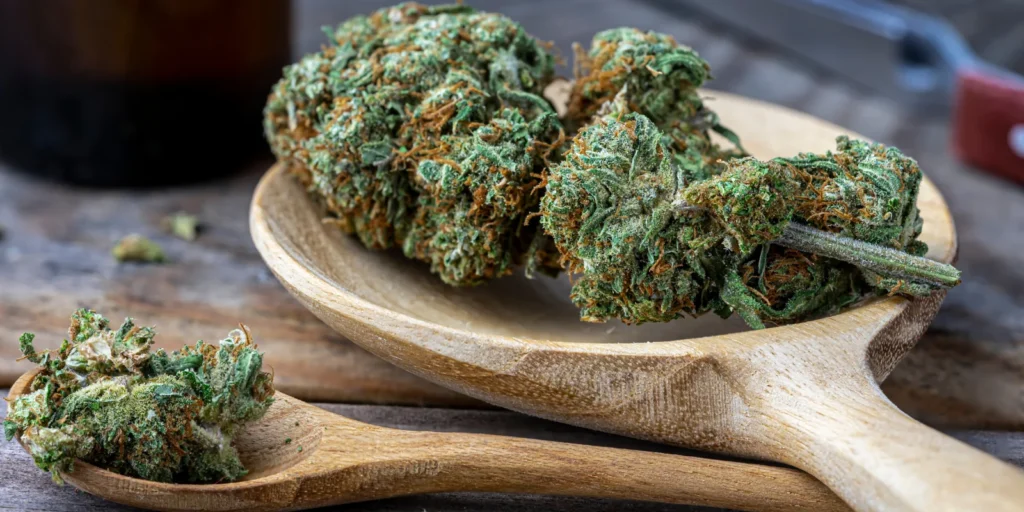
THCA stands for tetrahydrocannabinolic acid.
It is a naturally occurring acidic cannabinoid produced by cannabis plants.
During the plant’s natural cannabinoid biosynthesis, CBGA is converted into cannabinoid acids including THCA. According to the EUDA, THCA is one of the two most abundant cannabinoid acids found in cannabis, alongside CBDA.
Fresh cannabis flower can therefore contain substantial amounts of THCA while containing comparatively smaller amounts of active Delta-9 THC.
This is one reason why laboratory reports for cannabis and hemp flower often list both:
- THCA
- Delta-9 THC
These numbers describe different chemical forms of the cannabinoid.
What Is THC?
THC usually refers to Delta-9-tetrahydrocannabinol, commonly abbreviated as Delta-9 THC or simply THC.
It is the primary psychoactive cannabinoid in cannabis.
The EUDA describes Delta-9 THC as the main psychoactive constituent of cannabis.
Unlike THCA, THC is already in its active form and does not need to undergo decarboxylation before producing its characteristic psychoactive effects.
This is the fundamental distinction behind the search term THCA vs THC.
THCA vs THC: The Key Difference
The easiest way to understand the relationship is to think about the chemical structure of the two compounds.
THCA = acidic cannabinoid precursor
THC = decarboxylated, psychoactive cannabinoid
When THCA is heated, it loses a carboxyl group in a process known as decarboxylation.
The simplified reaction is:
The EUDA explains that decarboxylation generally occurs through heating, including processes such as smoking, vaporising or baking.
This is why heating cannabis flower changes its cannabinoid profile.
THCA vs THC at a Glance
| Feature | THCA | THC |
|---|---|---|
| Full name | Tetrahydrocannabinolic acid | Delta-9-tetrahydrocannabinol |
| Naturally present in cannabis | Yes | Yes |
| Acidic form | Yes | No |
| Psychoactive itself | Not in the same way as THC | Yes |
| Requires decarboxylation | To become THC | No |
| Effect of heat | Converts toward THC | Already active |
| Commonly measured in flower | Yes | Yes |
| Found in THCA flower | High levels may be present | Usually lower levels depending on product |
| Laboratory testing | Important | Important |
| Legal status in Europe | Depends on country/product | Depends on country/product |
The most important point is that THCA and THC should not be treated as interchangeable terms.
THCA vs THC: Is THCA the Same as THC?
No.
This is one of the most common misconceptions surrounding THCA flower.
THCA is chemically related to THC but is the acidic precursor.
The cannabis plant naturally produces THCA in its trichomes. When the material is heated, THCA can decarboxylate and form Delta-9 THC.
Therefore:
However:
THCA can become THC through decarboxylation.
That distinction is important for consumers, retailers, laboratories and businesses working with cannabinoid products.
Does THCA Turn Into THC?
Yes.
This is arguably the most important fact to understand about THCA vs THC.
When THCA is heated, it undergoes decarboxylation.
The heat causes the acidic molecule to lose carbon dioxide, resulting in THC.
This can happen during processes such as:
- Smoking
- Vaporising
- Cooking
- Baking
- Other forms of controlled heating
The EUDA specifically states that decarboxylation usually takes place through heating and that THCA converts into THC during this process.
This is why a THCA-rich cannabis flower can have a very different cannabinoid profile after heating.
What Is Decarboxylation?
Decarboxylation is a chemical reaction in which a carboxyl group is removed from a molecule.
In the context of cannabis, it is the process that converts acidic cannabinoids into their more active forms.
For example:
and
CBDA → CBD
The process is naturally influenced by heat and time.
This is an important concept for anyone researching:
- THCA flower
- THC flower
- Hemp flower
- Cannabis chemistry
- Cannabinoid testing
- THCA potency
- THC potency
THCA vs THC: Effects
One of the biggest differences between THCA and THC concerns psychoactivity.
THCA itself is not considered psychoactive in the same way as Delta-9 THC.
THC, on the other hand, is psychoactive and is responsible for much of the intoxicating effect associated with cannabis.
The EUDA explains that when THCA is decarboxylated into THC, it produces effects such as feeling “high,” relaxation and altered perception.
This means that simply looking at a flower’s THCA percentage without considering how the product is used can give an incomplete picture.
Does THCA Get You High?
This is one of the most frequently asked questions about THCA.
THCA itself is not considered intoxicating in the same way as Delta-9 THC.
However, THCA can convert into THC when heated.
Therefore, the distinction between the chemical form in the unheated product and the cannabinoid profile after heating is extremely important.
The EUDA confirms that THCA is non-psychoactive in its original acidic form but can be converted into THC through decarboxylation.
This is also why descriptions such as “THCA is simply non-psychoactive THC” are technically incomplete.
THCA vs THC: Which Is Stronger?
There is no simple answer based only on the percentage printed on a label.
THCA and THC are different chemical forms.
For example, a flower may contain a high percentage of THCA and a much smaller percentage of Delta-9 THC.
That does not mean the THCA number can simply be ignored.
Once the product is heated, some of the THCA can convert to THC.
The EUDA notes that when cannabis is smoked, the total amount of THC consumed is related to both the THC and THCA originally present because THCA is converted into THC during heating.
Therefore, THCA percentage and THC percentage should be interpreted together.
THCA vs THC Potency
Potency is another area where consumers can become confused.
If a laboratory report says:
THCA: 20%
and:
Delta-9 THC: 0.3%
the product does not simply have a “0.3% THC profile” in every practical context.
The THCA content represents additional cannabinoid material capable of conversion during heating.
This is why professional laboratory testing and clear labeling are important.
The EUDA notes that measuring THCA and THC can present analytical challenges and that laboratory methods themselves can influence how THCA and THC are measured.
How Much THC Can THCA Produce?
A commonly used theoretical conversion relationship is approximately:
THC potential ≈ THC + (THCA × 0.877)
The 0.877 factor reflects the molecular weight difference associated with the loss of carbon dioxide during decarboxylation.
The EUDA cites this type of calculation in the context of regulatory measurement, noting that total Delta-9 THC can be expressed as:
Delta-9 THC total = Delta-9 THC + 0.877 × Delta-9 THCA
for certain hemp-derived food products under EU food-contaminant rules.
However, this should be understood as a theoretical conversion calculation, not a guarantee that every practical heating process converts 100% of THCA into THC.
Actual conversion can vary depending on:
- Temperature
- Time
- Moisture
- Product structure
- Heating method
- Storage
- Processing conditions
THCA Flower vs THC Flower
The difference between THCA flower and THC flower is primarily related to their cannabinoid composition.
THCA Flower
THCA flower generally refers to cannabis or hemp flower marketed around its high THCA content and comparatively low Delta-9 THC content.
The plant naturally produces THCA.
THC Flower
THC flower contains a higher concentration of active Delta-9 THC.
The exact legal classification and permitted THC levels depend on the jurisdiction.
The important point is that both products can contain THCA and THC simultaneously.
The difference is usually the relative concentration of each cannabinoid.
Why Does Fresh Cannabis Contain THCA?
The cannabis plant naturally synthesises cannabinoids in their acidic forms.
THCA is produced in the plant’s glandular trichomes.
The EUDA explains that THCA and CBDA are synthesised in the glandular trichomes and that their production is influenced by plant genetics and growing conditions.
This means THCA is not necessarily something artificially added to cannabis flower.
It is a naturally occurring cannabinoid acid.
THCA vs THC and Cannabis Genetics
Genetics play an important role in determining cannabinoid profiles.
Different cannabis varieties can produce different ratios of:
- THCA
- CBDA
- THC
- CBD
- CBG
- Other cannabinoids
The EUDA notes that cannabis varieties can produce high levels of THCA, high levels of CBDA or mixtures of the two, with genetics playing an important role.
This is one reason why different strains and cultivars can have very different laboratory profiles.
THCA vs THC: Why Laboratory Testing Matters
If you want to understand a cannabinoid product accurately, a Certificate of Analysis (COA) is one of the most useful documents to examine.
A reliable laboratory report can show the actual cannabinoid composition of a particular batch.
Depending on the product and laboratory, a COA may list:
- THCA
- Delta-9 THC
- Delta-8 THC
- CBD
- CBDA
- CBG
- CBN
- CBC
Some laboratories also test for:
- Terpenes
- Pesticides
- Heavy metals
- Microbial contamination
- Mycotoxins
- Residual solvents
A laboratory result is much more useful than relying solely on marketing terminology.
How to Read a THCA Flower COA
When evaluating THCA flower, consider the following information.
1. THCA Percentage
This shows the measured amount of THCA in the sample.
2. Delta-9 THC Percentage
This shows the amount of active Delta-9 THC measured in the sample.
3. Total THC
Some laboratories provide a calculated total or potential THC value.
Check exactly how the laboratory defines this number.
4. Testing Date
A recent test is generally more useful than outdated documentation.
5. Batch Number
Ideally, the COA should correspond to the exact production batch.
6. Laboratory Information
Look for clear information about the laboratory that performed the analysis.
7. Contaminant Testing
Depending on the product, safety testing can provide additional information.
THCA vs THC: Why Percentages Can Be Misleading
Imagine two hypothetical products.
Product A
- THCA: 20%
- Delta-9 THC: 0.2%
Product B
- THCA: 2%
- Delta-9 THC: 15%
The products have very different cannabinoid profiles.
Looking only at the Delta-9 THC number does not provide the complete picture.
Likewise, looking only at THCA does not tell you everything about a product’s psychoactive potential after heating.
This is why professional cannabinoid analysis considers multiple measurements.
THCA vs THC: The Role of Heat
Heat is the bridge between THCA and THC.
Without decarboxylation, THCA remains primarily in its acidic form.
With sufficient heating, THCA can convert into THC.
This is why different consumption and processing methods can produce different cannabinoid profiles.
The EUDA specifically identifies smoking, vaporising and baking as examples of heating processes capable of promoting decarboxylation.
For anyone researching THCA flower, this is one of the most important concepts to understand.
THCA vs THC: Storage and Aging
Time and storage can also influence cannabinoid profiles.
Cannabinoids can undergo chemical changes over time, especially when exposed to factors such as:
- Heat
- Light
- Oxygen
- Moisture
Proper storage is therefore important for maintaining product quality and consistency.
For commercial products, controlled storage and batch testing can help ensure that the product remains within its intended specifications.
THCA vs THC: What About Terpenes?
THCA and THC are not the only important components of cannabis flower.
Terpenes contribute significantly to the aroma and flavor profile of different cultivars.
Common cannabis terpenes include:
- Myrcene
- Limonene
- Caryophyllene
- Linalool
- Pinene
- Humulene
Two flowers can have similar THCA percentages but very different terpene profiles.
For this reason, anyone researching premium THCA flower should consider the complete product profile rather than focusing on one cannabinoid percentage.
THCA vs THC: Are They Natural?
Both THCA and Delta-9 THC occur naturally in cannabis.
However, they appear in different forms and concentrations.
The plant predominantly synthesises cannabinoid acids such as THCA, which can then be converted into neutral cannabinoids through decarboxylation.
The EUDA describes THCA as a naturally occurring cannabinoid acid and explains its conversion into THC.
Therefore, THCA is not simply a synthetic version of THC.
It is a natural component of the cannabis plant.
THCA vs THC: Is THCA Legal?
This is where the subject becomes more complicated.
THCA should not automatically be described as legal simply because it is different from THC.
European laws concerning cannabis and cannabinoid products vary by:
- Country
- Product type
- THC concentration
- Intended use
- Manufacturing process
- Import status
- Applicable national legislation
The EUDA’s current FAQ on cannabis laws in Europe was revised on 21 April 2026 and highlights the different legal contexts applying to cannabis and cannabis-derived products across Europe.
In addition, the EUDA notes that some low-THC cannabis products can be sold in certain European countries under specific conditions, while national legislation can still differ.
Therefore, businesses should always verify the rules applicable to the specific destination country.
Is THCA Flower Legal in Europe?
There is no single answer that applies to every European country.
A product’s legal status may depend on:
- Its total cannabinoid composition
- Delta-9 THC level
- THCA level
- Product category
- Intended use
- National cannabis legislation
- Import requirements
- Labeling rules
One particularly important consideration is that THCA can convert into THC.
The EUDA explains that some regulatory calculations take both Delta-9 THC and Delta-9 THCA into account.
Therefore, simply looking at a low Delta-9 THC percentage may not always be enough to determine whether a product meets the requirements of a particular market.
THCA vs THC for European Businesses
For wholesalers, retailers and distributors, understanding the difference between THCA and THC is especially important.
Before sourcing a product, businesses should consider:
Product Composition
What cannabinoids are actually present?
Laboratory Testing
Is there a current, batch-specific COA?
THC Calculation
Does the relevant regulation require consideration of THCA as well as Delta-9 THC?
Product Classification
Is the product intended as a flower, food, cosmetic, supplement or another category?
Destination Market
What does the law of the specific country require?
Documentation
Can the supplier provide reliable product and testing documentation?
The EUDA stresses that national approaches to low-THC cannabis products are not uniform across Europe.
THCA vs THC: Common Misconceptions
Myth 1: THCA and THC Are the Same
False.
They are chemically related but different forms of a cannabinoid.
Myth 2: THCA Can Never Produce THC
False.
Heating can decarboxylate THCA into THC.
Myth 3: THCA Flower Contains No THC
Not necessarily.
THCA flower can contain measurable Delta-9 THC as well as THCA.
The exact amounts should be verified through laboratory testing.
Myth 4: A Low Delta-9 THC Percentage Automatically Means a Product Is Legal
False.
Legal classification can depend on the complete product composition and national regulations.
Myth 5: The THCA Percentage Is the Same as the THC Percentage
False.
THCA and THC are different chemical forms and should be reported separately.
Myth 6: All THCA Flower Has the Same Potency
False.
Cannabinoid concentrations vary by genetics, cultivation, processing and storage.
THCA vs THC: Frequently Asked Questions
What is THCA?
THCA is tetrahydrocannabinolic acid, a naturally occurring acidic cannabinoid produced by cannabis plants.
What is THC?
THC generally refers to Delta-9-tetrahydrocannabinol, the primary psychoactive cannabinoid in cannabis.
What is the difference between THCA and THC?
THCA is the acidic precursor of THC. When heated, THCA can undergo decarboxylation and convert into THC.
Does THCA turn into THC?
Yes. Heating can convert THCA into Delta-9 THC through decarboxylation.
Does THCA get you high?
THCA itself is not considered psychoactive in the same way as THC. However, heating THCA can produce THC, which is psychoactive.
Is THC naturally found in cannabis?
Yes. Delta-9 THC is a naturally occurring cannabinoid and the primary psychoactive constituent of cannabis.
Is THCA stronger than THC?
They should not be compared simply by percentage because they are different chemical forms. THCA can, however, contribute to THC formation when heated.
What is THCA flower?
THCA flower generally refers to cannabis or hemp flower marketed for its relatively high THCA content and comparatively low Delta-9 THC content.
What is the difference between THCA flower and THC flower?
The main distinction is their cannabinoid profile. THCA flower contains predominantly THCA in its acidic form, while THC flower contains a higher level of active Delta-9 THC.
Why does THCA flower become intoxicating when heated?
Heating promotes decarboxylation, converting THCA into Delta-9 THC.
Can a COA show THCA and THC separately?
Yes. Laboratory analysis can report THCA and Delta-9 THC as separate measurements, although analytical methods and reporting conventions vary.
Is THCA legal in Europe?
The legal status depends on the country, product and applicable regulations. There is no universal rule making every THCA product legal throughout Europe.
THCA vs THC: Final Verdict
The comparison THCA vs THC becomes much easier once the chemistry is understood.
THCA is the acidic cannabinoid naturally produced by the cannabis plant. THC is the psychoactive cannabinoid that can be formed when THCA undergoes decarboxylation.
The relationship can be summarized simply:
Cannabis produces THCA → heat causes decarboxylation → THC is formed
This is why THCA flower and THC flower can have very different cannabinoid profiles before heating while still being chemically connected.
For consumers and businesses, the most important things to consider are:
- THCA content
- Delta-9 THC content
- Potential THC after decarboxylation
- Cannabinoid profile
- Terpene profile
- Laboratory testing
- Batch documentation
- Product classification
- Country-specific regulations
When evaluating THCA flower, don’t rely on the THCA percentage alone. A complete laboratory report provides a much clearer picture of the product.
For businesses operating in Europe, legal due diligence is equally important. European rules differ between countries and can depend on the product category and intended use.
At THC King Europe, understanding cannabinoid composition, product quality and transparent testing is essential when researching THCA products for the European market.
Explore THC King Europe to learn more about THCA flower and cannabinoid products.